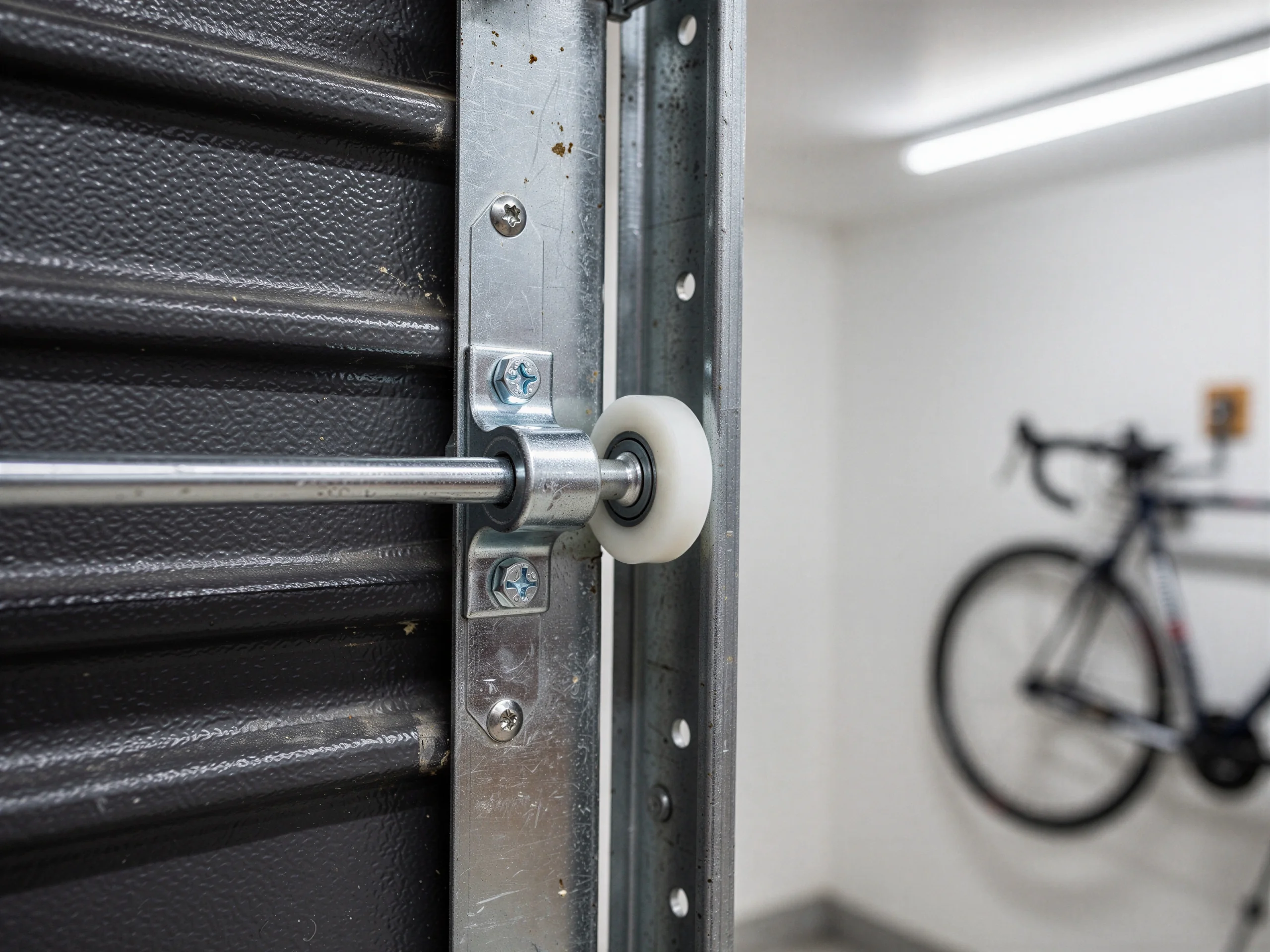
Dual roller types stocked
We carry standard 7-ball bearing rollers and the quieter options side by side so we're not making a special trip back for a part we should've had on the truck.
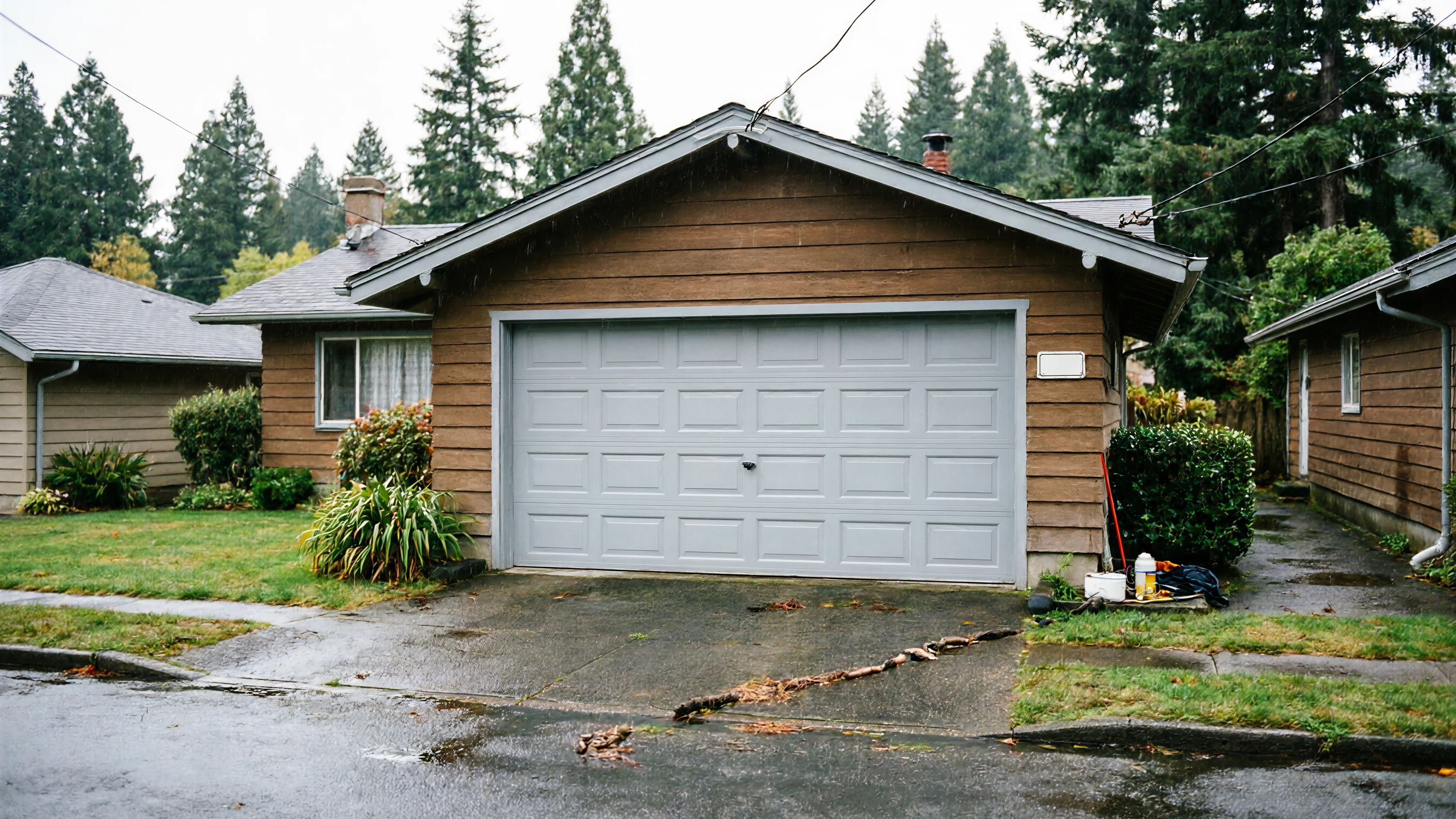
Sherwood, Happy Valley
Sherwood homes mostly date to the late 1990s, later than the broader Happy Valley area median of 1978. That gap changes which rollers wear out and when. We drive the 17 miles to fix it.
Local causes
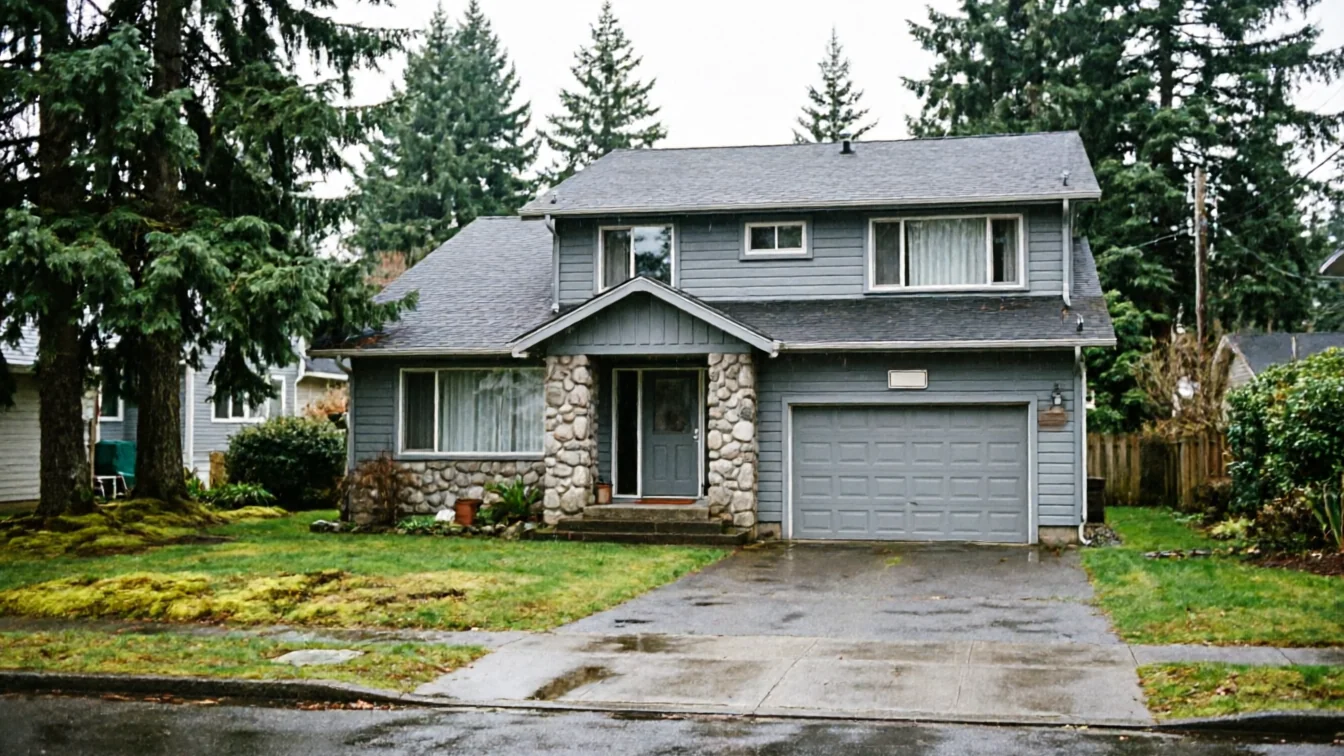
Most of the houses we're called to across the wider Happy Valley area were built around 1978, but Sherwood runs newer - the typical home here dates to about 1997. That twenty-year gap matters more than it sounds. A door built in the late '90s almost always shipped with nylon rollers on steel stems, not the older plastic-on-steel or all-steel setups you'll find in an older neighborhood. Nylon rollers run quieter for years, then fail in a different way: the roller wheel itself cracks or flat-spots rather than the stem bending or the bearing seizing. If your door is grinding or thumping on the way up and the house is from that late-90s build wave, you're almost certainly looking at worn nylon wheels, not a bent track. We're coming from Happy Valley, about 17 miles out, so when we quote the job we're quoting for this hardware generation, not guessing off an older door's parts list.
On the truck
For a late-90s door like the ones common in Sherwood, we stock nylon rollers in the stem lengths that match that era's track clearance, along with the sealed-bearing upgrade a lot of homeowners ask for once they learn steel rollers are louder but last longer under heavier use.
We carry standard 7-ball bearing rollers and the quieter options side by side so we're not making a special trip back for a part we should've had on the truck.
One honest limitation: if your door turns out to have an odd-depth track or a roller size outside the common stock range, we may need to order it, and that can add a day or two before we finish the job.
DIY or pro
Serving Happy Valley, OR
Swapping a single roller on the bottom bracket is a reasonable DIY job if the door is down, the spring is intact, and you're comfortable with a clamp on the track. Where it stops being a weekend job is the top rollers near the bent-track section by the opener arm - pull the wrong bracket there and a door this age, under full spring tension, can come down off the track fast. If more than two or three rollers are worn, that usually means the whole set is near end of life anyway, and replacing them one at a time just means you're back under the door again in a few months.
Warning signs
On a door from the late 1990s, listen for a rhythmic clack as the door travels - that's a flat spot on a nylon wheel hitting the track seam once per rotation. You might also see white or clear plastic shavings near the track, which is the wheel itself wearing down rather than the stem or bearing failing. If the door catches or hesitates at the same spot every time, that's usually one specific roller, not the whole run, and it's worth checking before you assume the opener is the problem.

The repair
We run the door manually first to find which rollers have play or flat spots, since on a door this age it's rarely a uniform failure.
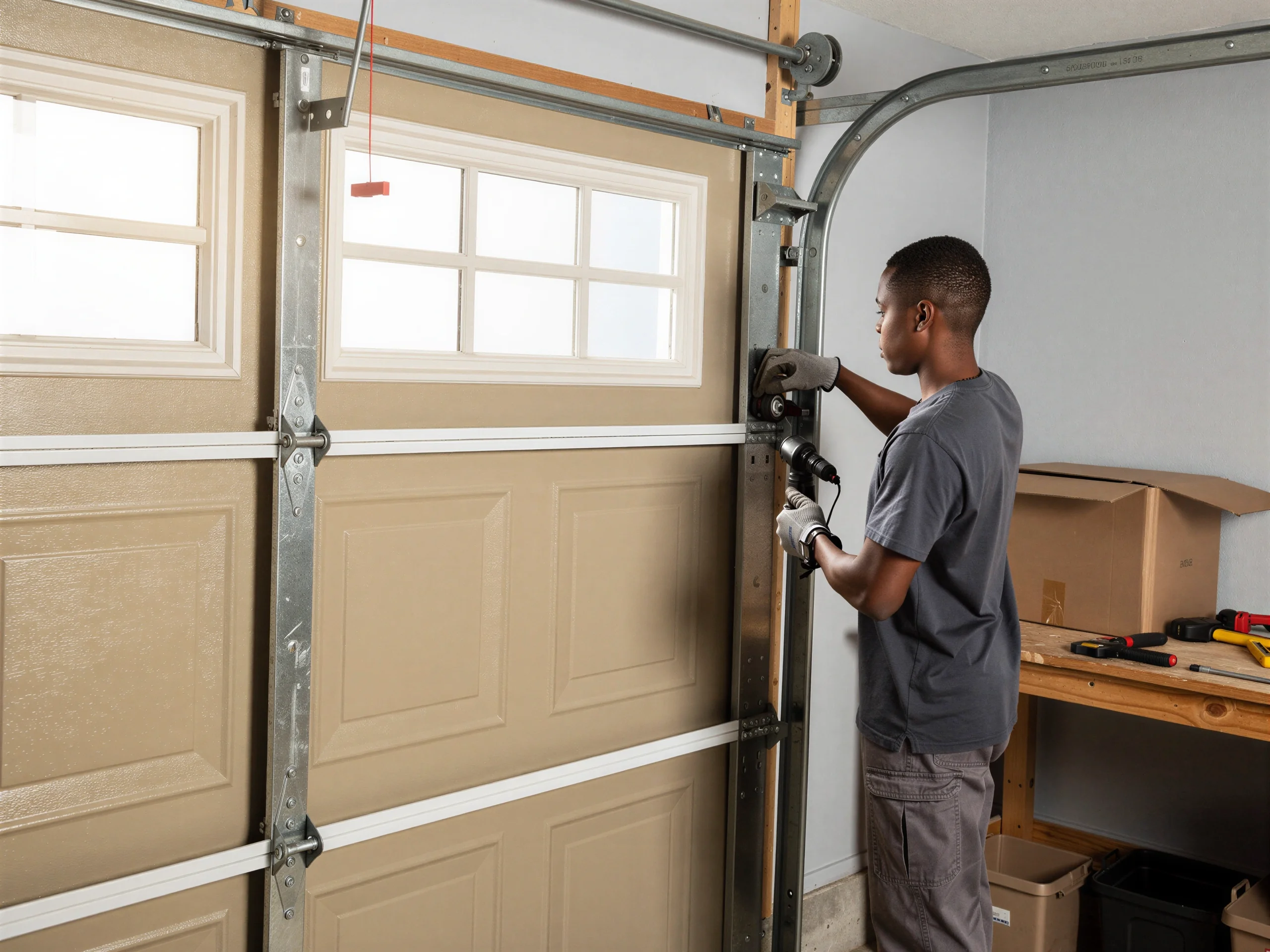
Then we release track tension at the section with the worn roller, pull the roller and bracket as a unit, swap in a matched nylon or sealed-bearing roller, and reset the track gap so the door rides straight instead of rubbing one side.
We check the full roller set end to end while we're in there - no point closing up the door and getting a call back next month for the roller two slots over.
Watch-outs
Climate here is mild with occasional freeze, which doesn't hammer rollers the way deep freeze-thaw cycles do, but it does mean any grease that's gone gummy with age can mask a roller problem as a track problem until we get hands on it. The other complication is specific to newer doors: if the track was ever mounted slightly out of square during the original build, a worn roller shows the misalignment faster than it would on an older, heavier door, so sometimes what looks like a one-roller fix turns into a track realignment too.
Questions
Most Sherwood homes date to around 1997, later than the roughly 1978 median across the wider service area, so they typically came with nylon rollers on steel stems rather than older steel or plastic-on-steel hardware. That changes both how the rollers fail and which parts we bring on the truck.
About 17 miles. We don't keep a branch or depot in Sherwood, so every job is a drive out from Happy Valley - worth knowing if you're comparing us to a company based closer to town.
Yes, if only one or two show wear. But on a door from the late '90s, if several rollers are flat-spotted or cracked, the rest are usually close behind, and replacing them in one visit is cheaper than repeat trips.
The area sits in a mild climate band with occasional freeze, which is easier on hardware than hard freeze-thaw cycles, but old grease can still gum up and hide a worn roller until the door is actually taken apart.
Explore more
Ready when you are
Happy Valley Garage Door Pros repairs and installs garage doors, springs and openers in Happy Valley, OR and the surrounding area.