Catching, jerking, or gaps
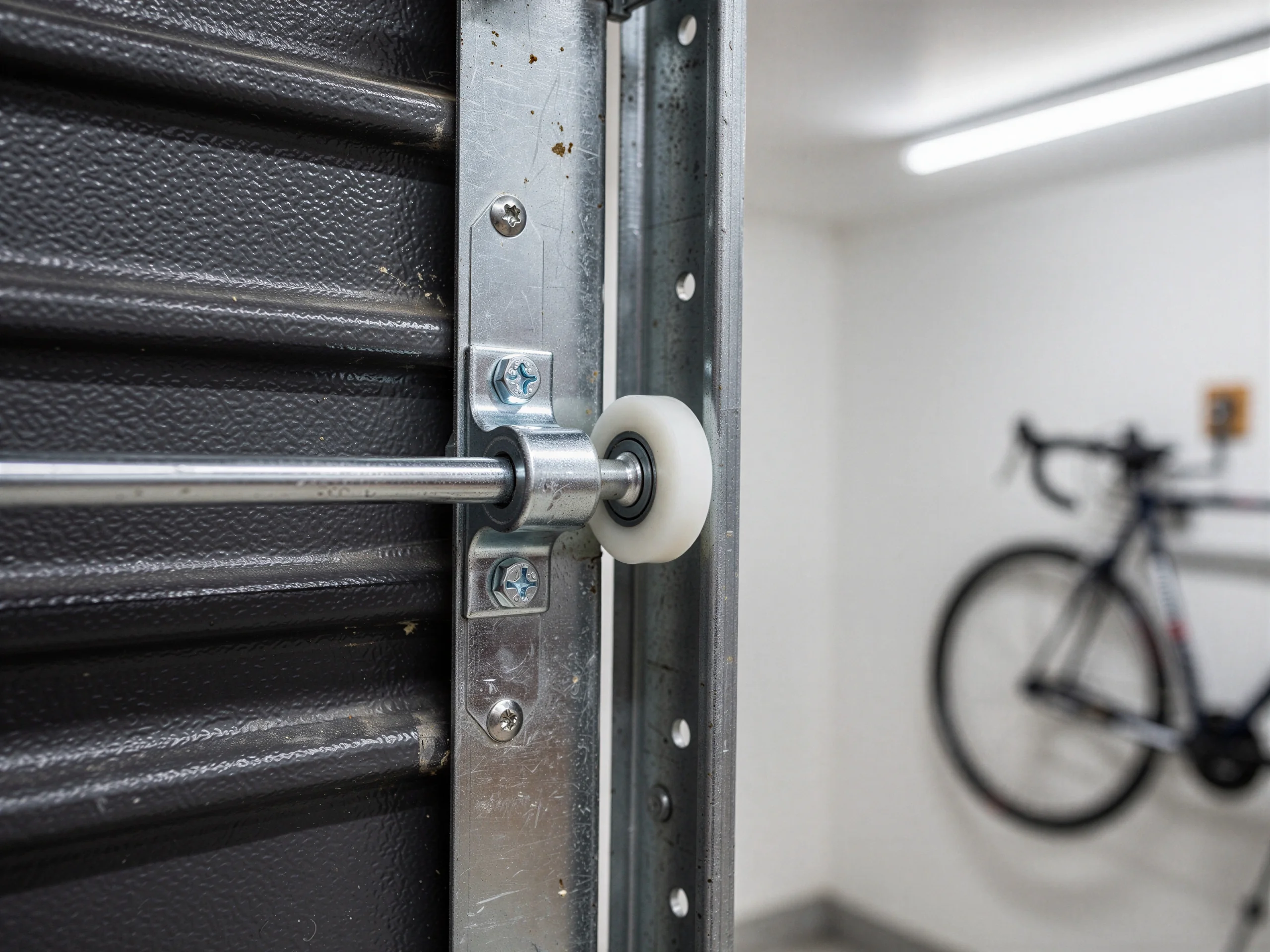
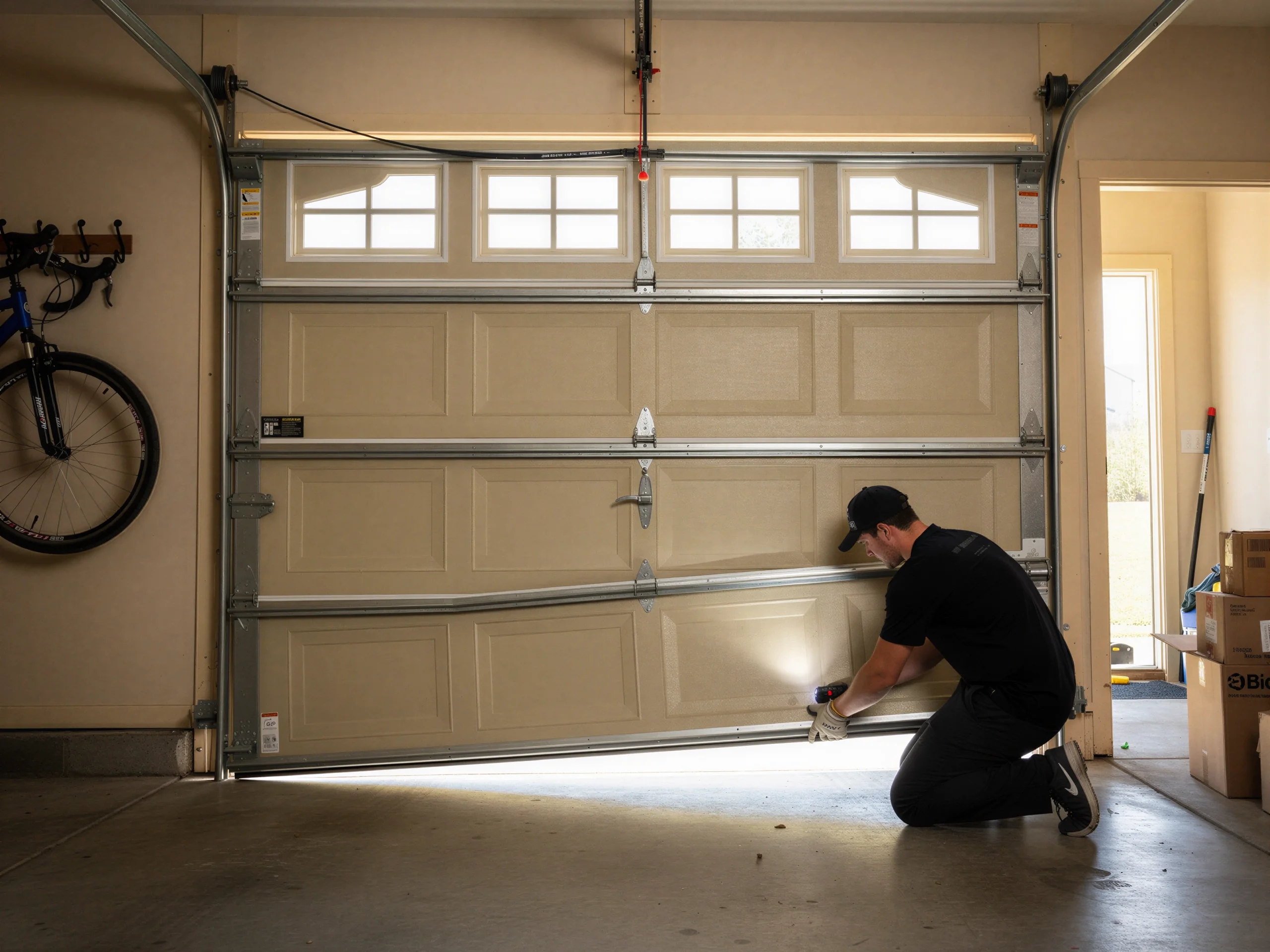
Some owners notice the door catching or jerking instead of gliding, or a gap where the roller has worn down enough that it's no longer riding square in the track.
Happy Valley, OR
Worn rollers on 1960s-2000s Happy Valley area doors cause grinding, binding, and track wear. We stock steel and nylon rollers and swap them same visit.
The repair
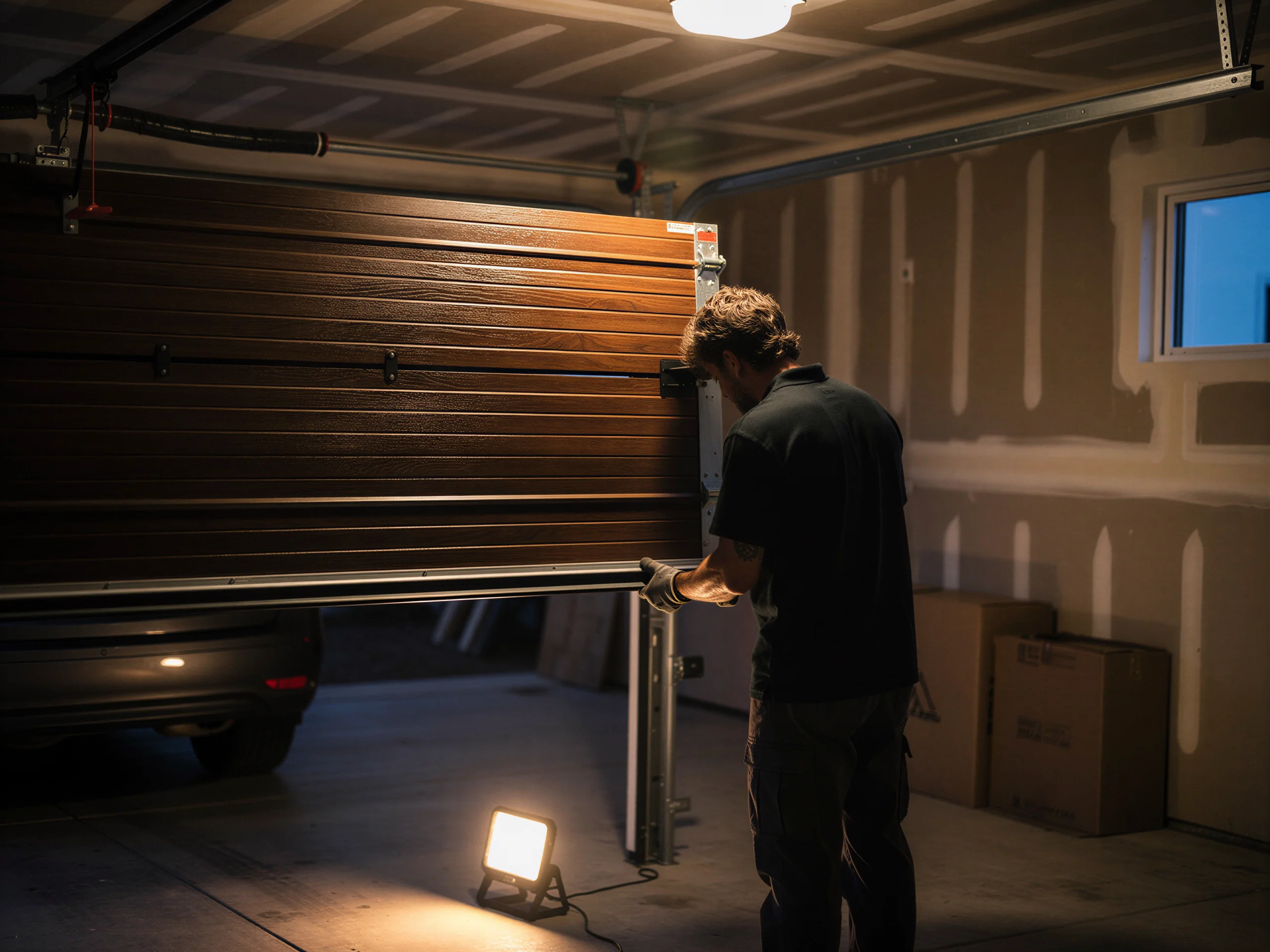
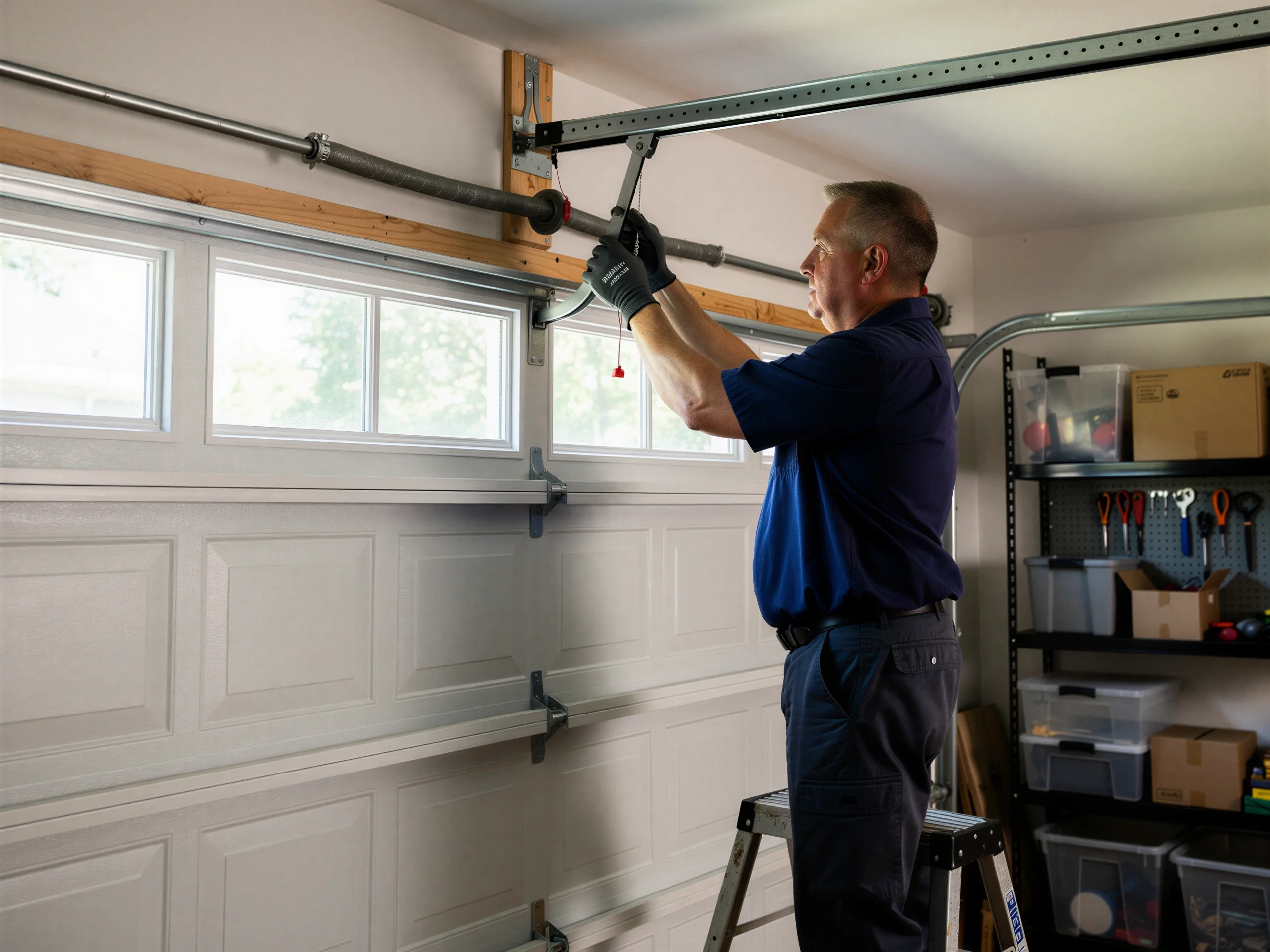
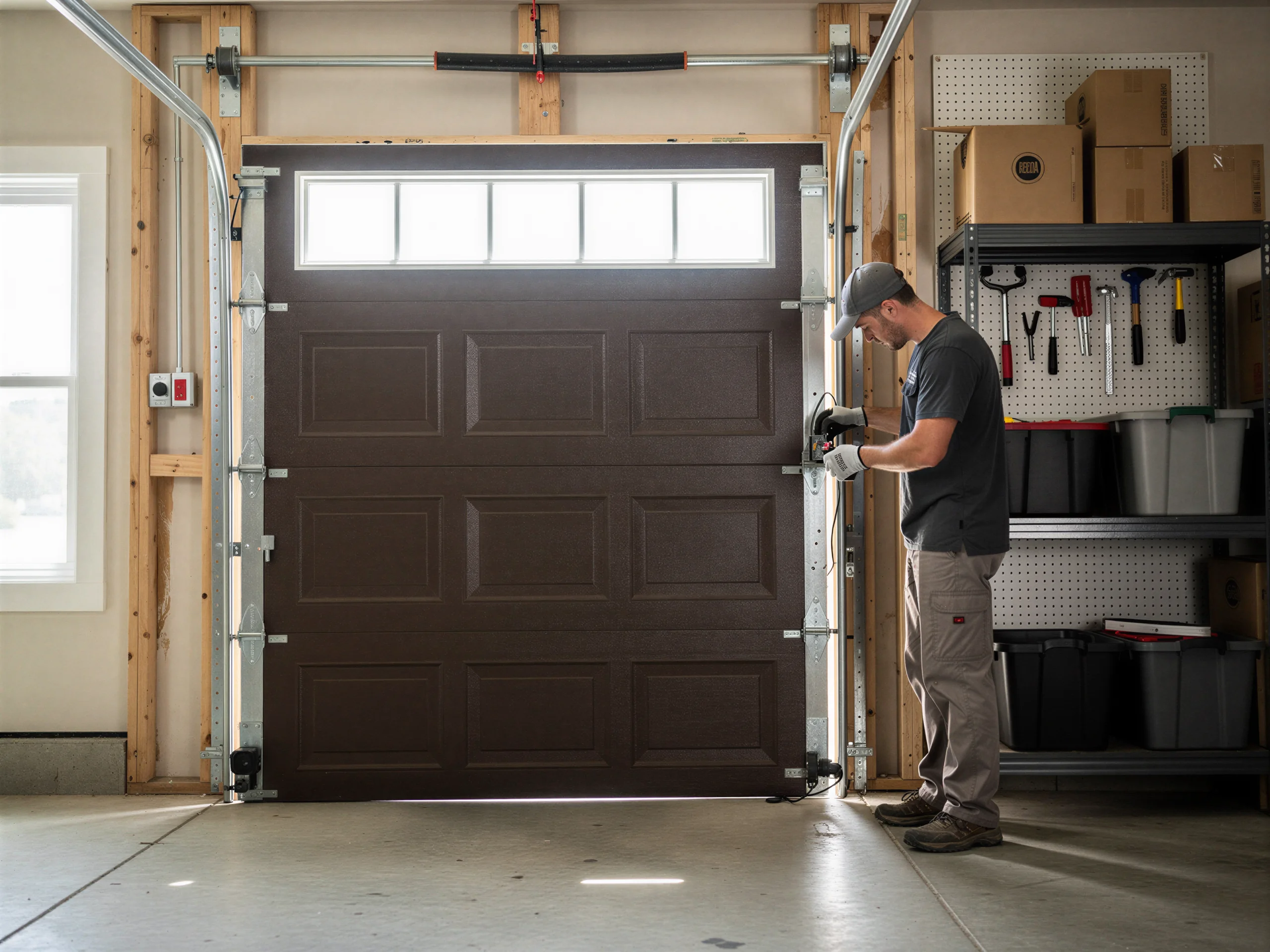
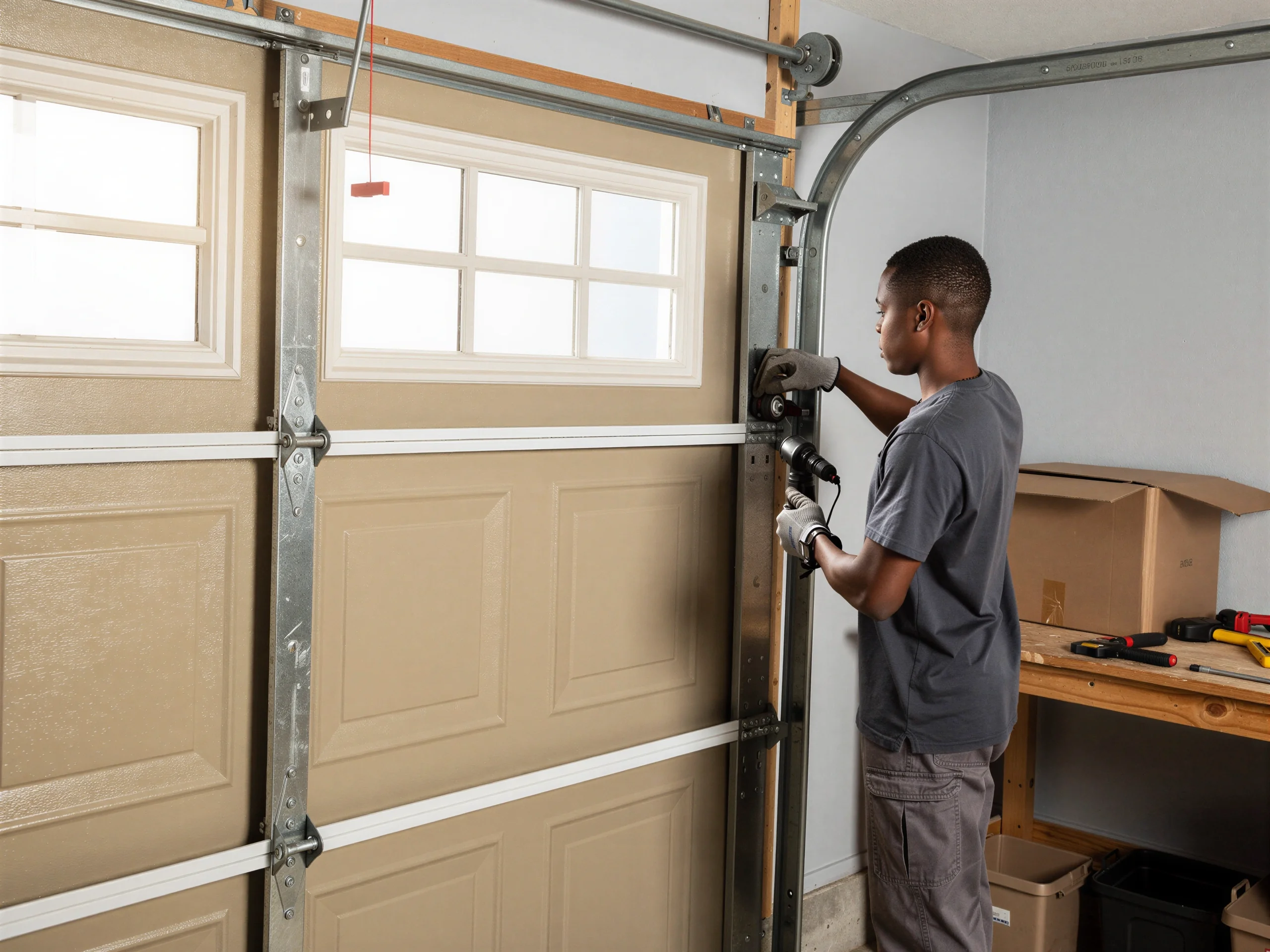
Roller replacement is a mechanical swap, not a tune-up. We pull the stems out of the hinges one at a time, working the door up and down to take the weight off whichever panel we're on, and set a new roller in each slot.
On a double door that's usually ten to twelve rollers; on a single, six to eight. If the track itself has been chewed up by a dragging roller, we straighten or replace that section too, because a new roller in a bent track will just go bad again in a few months.
Springs stay untouched unless something else is already wrong with them - this is a rollers-and-track job, and we tell you up front if we find a spring issue so you're not surprised by a second line item. Most jobs run one visit, done while you wait.
The one thing we won't do is sell you rollers you don't need: if your rollers are original steel from a door that's otherwise tight and quiet, sometimes the honest call is lubrication and a recheck in six months instead of a swap.
Warning signs
The usual complaint is noise - a grinding or clicking as the door travels, loudest right where the roller enters the curved part of the track near the top of the opening.
Some owners notice the door catching or jerking instead of gliding, or a gap where the roller has worn down enough that it's no longer riding square in the track.
On older doors across this service area, where housing stock runs 1964 through 2003 (median build year 1978, per F1/F2), a lot of these are original steel rollers on steel track from a door that's never been serviced.
Steel-on-steel wears faster than you'd think over four or five decades, and once a roller flattens on one side, it starts eating the track edge, which is when a cheap part turns into a track replacement. Nylon rollers from later retrofits wear differently - the roller face cracks or chips instead of flattening, and you'll hear a duller thud instead of a grind.
On the truck
We keep both steel ball-bearing rollers and sealed nylon rollers on the truck, in the stem lengths that match the hinge styles common on doors from this era across the service area - short stem for top and bottom fixtures, long stem (4 inch) for the intermediate hinges on taller sections.
Nylon is what we recommend for most houses here: it's quieter, it doesn't need the periodic oiling steel does, and it holds up fine in the mild winters this area gets.
For garages that see more day-to-day truck or heavy-vehicle traffic, steel ball-bearing rollers still make sense since they carry more cyclical load without flat-spotting. We also carry replacement track sections in the standard widths, since a worn roller often means a scored track by the time someone calls.
What we don't stock is every oddball roller size from doors built outside the usual 1964-2003 run - if your door is older or a specialty import, we'll tell you that on the first look rather than make you wait on a special order without warning.
Local causes
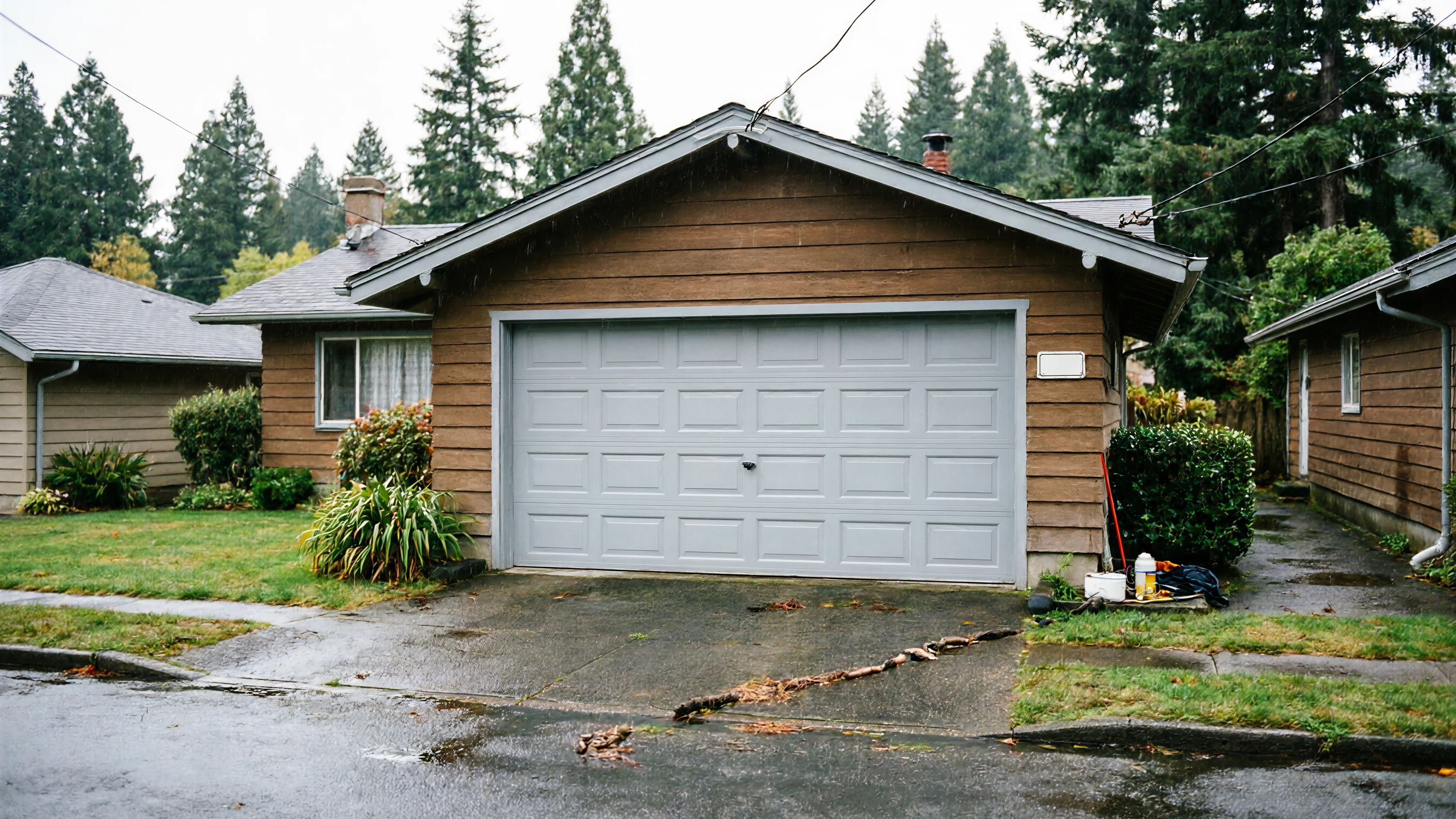
This area's climate band is mild with occasional freeze, which doesn't sound like a roller killer, but it means steel rollers go through repeated damp-then-dry cycles most of the year with the odd hard freeze thrown in. Moisture gets into the bearing, grit from the garage floor works into that moisture, and the roller wears unevenly instead of all at once - which is exactly the flat-spot-then-grind pattern we see on service calls. Add in that the bulk of the housing stock here dates to 1964-2003, meaning a large share of doors are old enough to be on their second or third roller set but young enough that owners assume the original hardware should still be fine. It isn't a dramatic failure like a snapped spring; it's a slow one, which is why most people wait until the grinding is loud enough to notice from inside the house before they call. By then the track usually needs attention too, not just the rollers.
Questions
Most single doors have six to eight rollers, doubles have ten to twelve. We replace the full set rather than mixing old and new, since rollers wear at close to the same rate and a mismatched set just shifts the noise and strain to whichever rollers are left original.
Mechanically, yes, if you're comfortable with the door under spring tension and working near the track. The part that trips people up is the track alignment check afterward - a roller that looks fine in your hand can still bind if the track has even a slight bend, and that's easy to miss without taking a level to it.
Usually, if rollers are the actual cause. If the noise is coming from hinges, the opener chain, or a spring that's starting to go, new rollers won't touch it. We check the whole run of the door before quoting, so you're not paying for a part that isn't the problem.
Nylon handles the mild, damp-leaning climate here better long-term since it doesn't need regular oiling and resists the moisture-plus-grit wear pattern steel rollers get. Steel still makes sense on garages with heavier daily vehicle traffic, where the extra load capacity matters more than the lower maintenance.
Explore more
Ready when you are
Happy Valley Garage Door Pros repairs and installs garage doors, springs and openers in Happy Valley, OR and the surrounding area.