Happy Valley, ORSame-day service/Free estimates/Licensed & insured(503) 389-4712
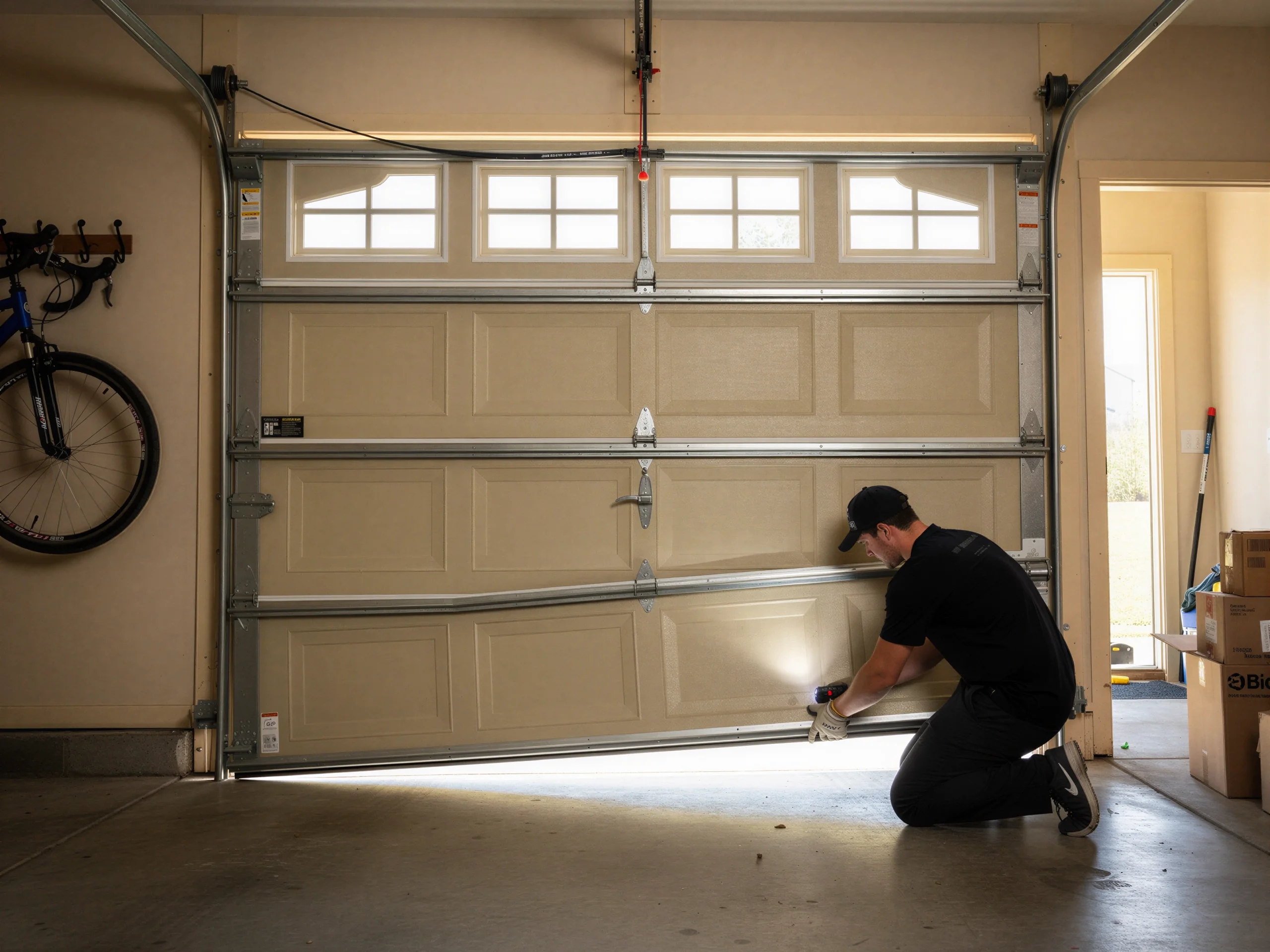
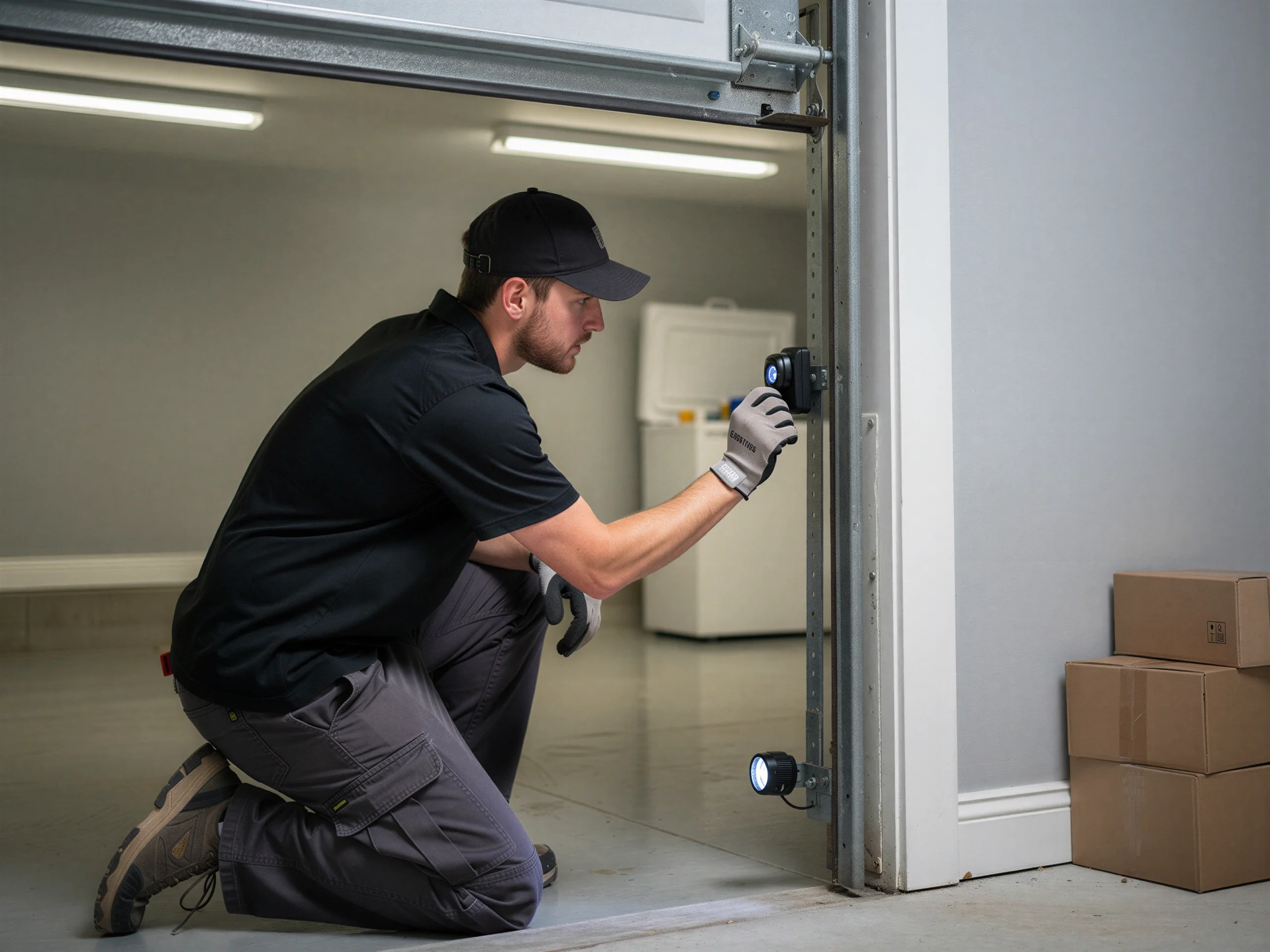
A technician kneels, inspecting the garage door safety sensors with a flashlight.

Happy Valley, OR

Garage Door Service for Happy Valley Homes

Garage door repair and tune-up service built for Happy Valley's 1960s-90s housing stock and mild, occasionally freezing climate. Springs, openers, tracks, rollers.

Serving Happy Valley, ORBackground-checked techsHonest, upfront pricingFast local response
Median 1978
When these doors went in
1964-2003
Happy Valley housing span
7 & 8 ft
Residential doors we stock
Under 1 hr
Most service calls

The repair

What the Fix Involves

A standard service call starts with running the door through a full cycle, listening for where it binds, and checking the spring tension before anything else.

  1. Halfway hold test

    On a torsion system that means pulling the door down by hand with the opener disconnected and watching whether it holds position at the halfway point. If it drops, the spring is under-wound or fatigued. On the extension-spring setups still common in Happy Valley's older sections, we check the safety cables and the pulley wear separately, since those wear at a different rate than the spring itself.

  2. Plumb and alignment checks

    Next comes the track and roller inspection - plumb, alignment, and roller condition - followed by hinge and hardware torque checks, since loose lag screws on original jambs are one of the most common callbacks we see. If the opener is original to the house, we test the force settings and the photo-eye alignment before touching anything mechanical, because a miscalibrated opener will mask or mimic a hardware problem.

  3. Lubrication and balance recheck

    We finish with lubrication of the moving metal parts - hinges, rollers, springs - and a balance recheck. Most service calls run under an hour once we know which system we're dealing with, though a full torsion spring replacement on a double door takes longer.

Warning signs

What You Are Seeing

The complaint we hear most from this area is a door that's noticeably heavier to lift by hand than it used to be, or an opener that strains and reverses partway up.

Spring fatigue on schedule

Both point to spring fatigue, which shows up on a predictable schedule given how much of the housing stock here dates to the 1964-2003 build window, with a median year of 1978. A spring rated for a few thousand cycles installed in a house built in the late 1970s has had four and a half decades to get there.

Drifting and uneven gaps

Other common signs: a door that drifts down a few inches after the opener stops, uneven gaps at the bottom corners, or a grinding sound from one side of the track that the other side doesn't make. That asymmetry usually means one roller or hinge has worn out of sequence with its twin, which happens gradually and is easy to miss until the door starts walking in the track.

Phantom photo-eye reversals

Less common but real: a door that reverses on photo-eye without anything visibly blocking it, often from the sensor brackets having shifted slightly on original wood jambs over the decades. We check that as part of the standard call, not as an upsell.

On the truck

Parts We Carry

We stock torsion and extension springs sized for the standard 7-foot and 8-foot residential doors that make up most of the 1960s-70s stock across this area, along with the steel rollers, hinges, and cable sets that wear out on that same schedule.

Quiet nylon roller option

Nylon rollers are available too, for owners who want quieter operation and are willing to trade a bit of load capacity for it. What we don't carry on the truck: obsolete hardware for doors with discontinued panel profiles, which does come up on some of the original units still running in the older built sections.

Sourcing versus replacing decision

If your door needs a part like that, we'll tell you straight whether it's worth sourcing or whether replacement makes more financial sense - and often, given the age of the hardware, replacement wins.

Common opener components stocked

We also carry standard opener logic boards, drive gears, and photo-eye sensor pairs for the major brands installed across the service area. Belt and chain drive components are both in stock, since both are common here depending on when the house was built and whether the opener's been swapped since.

Local causes

Why This Fails Locally

This area sits in a mild climate band that still sees occasional freeze, and that combination is harder on garage door hardware than either steady cold or steady mild weather alone. Steel springs and cables that are mostly fine in a stable climate get repeated small cycles of condensation and light frost here, which slowly works into any surface rust already started by the coastal-influenced humidity. It's not dramatic damage - it's cumulative, and it shows up as a spring that finally lets go on an otherwise ordinary morning.

The housing age compounds it. With most homes in this area dating to 1964-2003 and a median build year of 1978, a large share of the original hardware is well past any reasonable service life, torsion or extension. Owners in the newer built pockets closer to 2000 tend to call about opener logic and sensor issues; owners in the older 1960s-70s sections call more about springs, cables, and worn jamb hardware. Both patterns trace straight back to when the house went up, not to how it's been used.
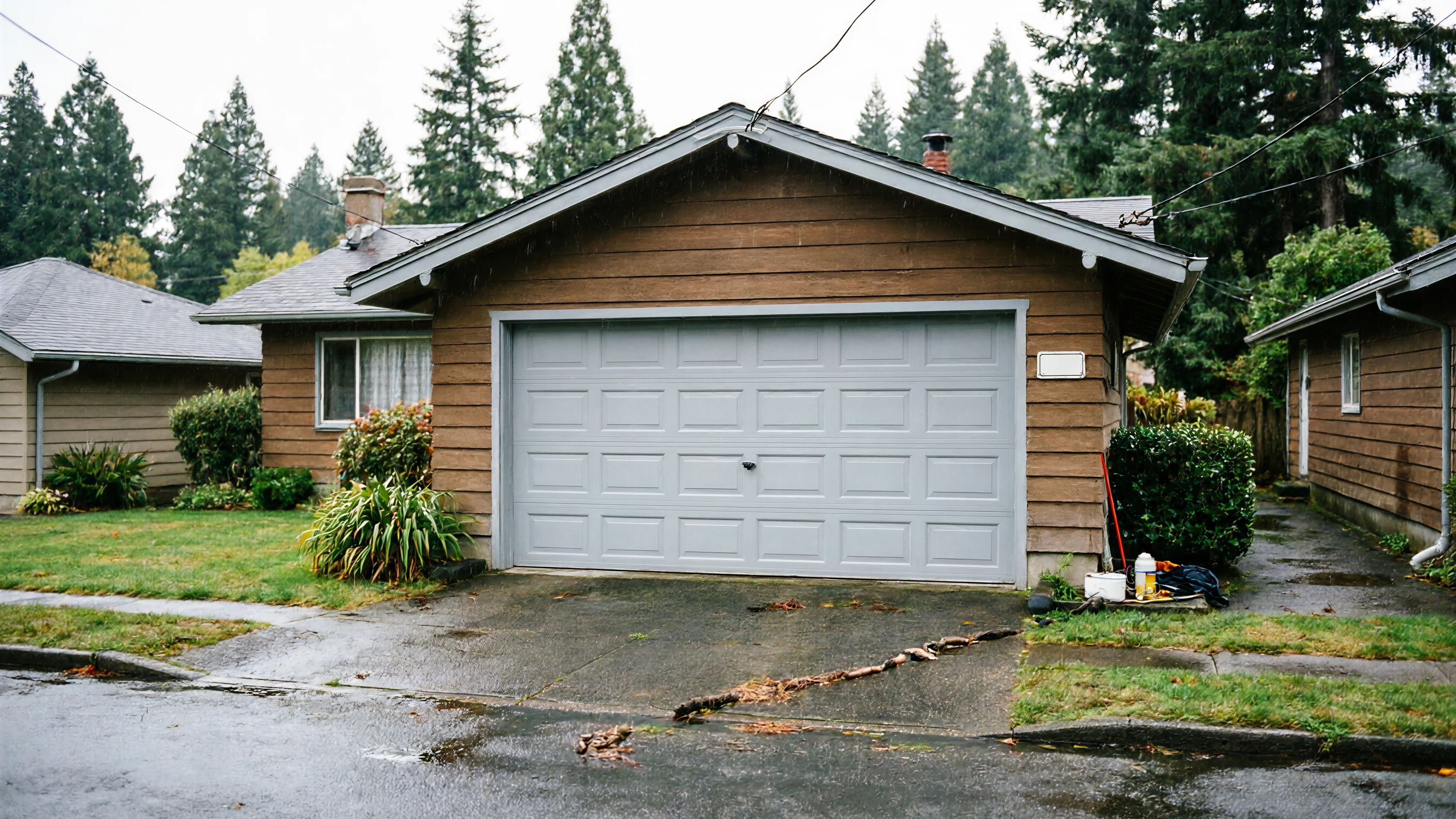
A light gray garage door is on a brown house with a wet driveway.

Questions

Common questions

How often should a garage door get serviced in Happy Valley?

Once a year is reasonable for most doors here, mainly because of the freeze-and-thaw cycling even in a mostly mild climate. If your house was built before the late 1980s and the spring hasn't been replaced, we'd lean toward checking it sooner rather than waiting for it to fail.

Why is my opener reversing for no reason?

Usually it's the photo-eye sensors slightly out of alignment, which happens as original wood door jambs settle over the decades. We check bracket position and sensor wiring as part of a standard call before assuming it's the logic board.

Is it worth fixing an old door or replacing it?

Depends on the hardware. If the panel profile is still available and the frame is sound, repair usually wins. If parts are discontinued, which does happen on some of the oldest doors still in service here, replacement is often the cheaper path over time.

Do you carry parts for original 1970s-era doors?

We carry the standard spring, roller, and cable sizes that fit most doors from that era. Some original panel hardware is discontinued and has to be sourced or replaced rather than repaired, and we'll tell you which situation you're in before starting work.

Explore more

Explore More Services In Happy Valley, OR

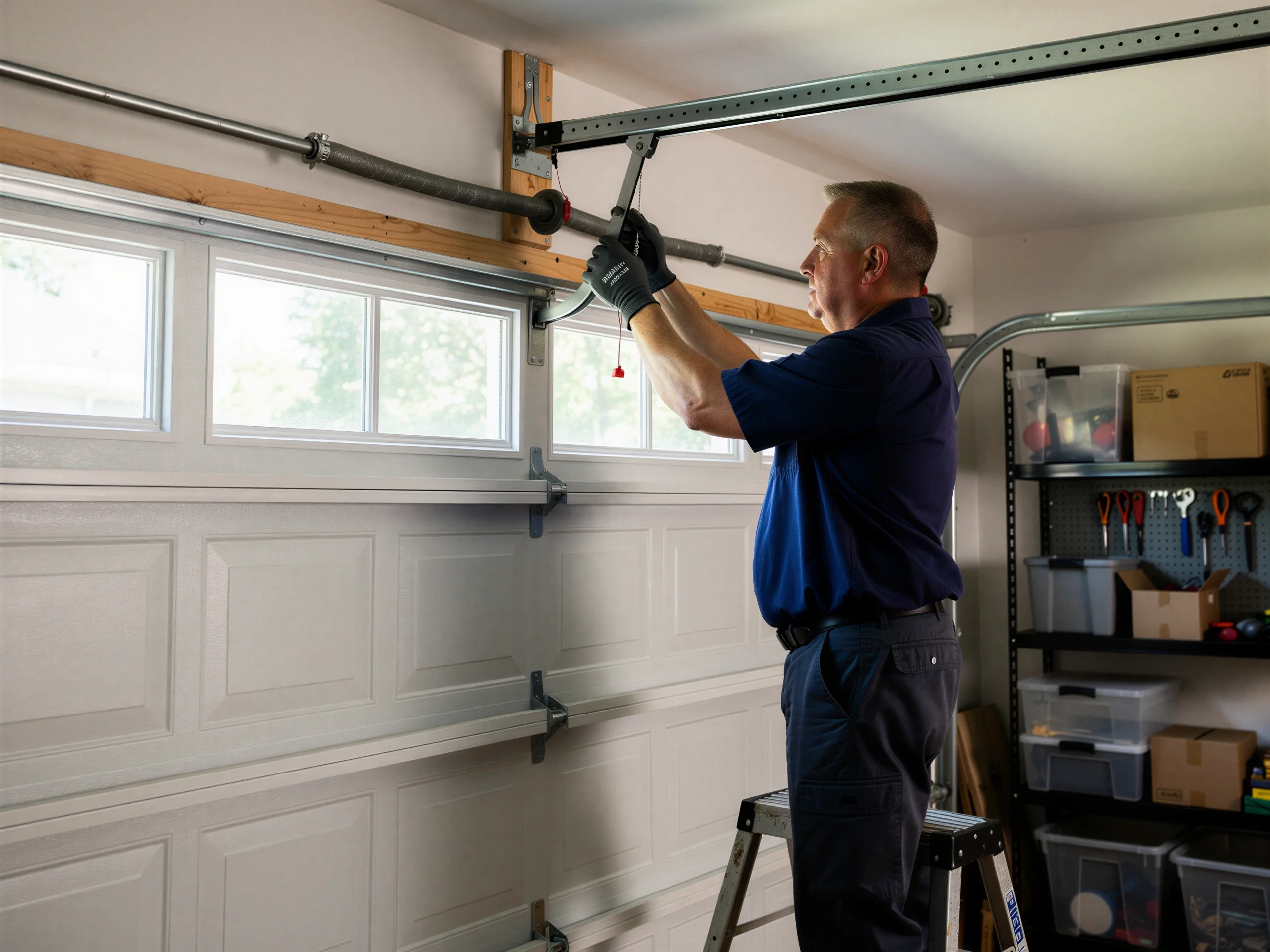
A technician on a ladder adjusts the torsion spring above a white garage door.

Opener Installation for Happy Valley Homes

Opener installation built around Happy Valley's 1964-2003 housing stock and mild, occasional-freeze climate. Learn more →
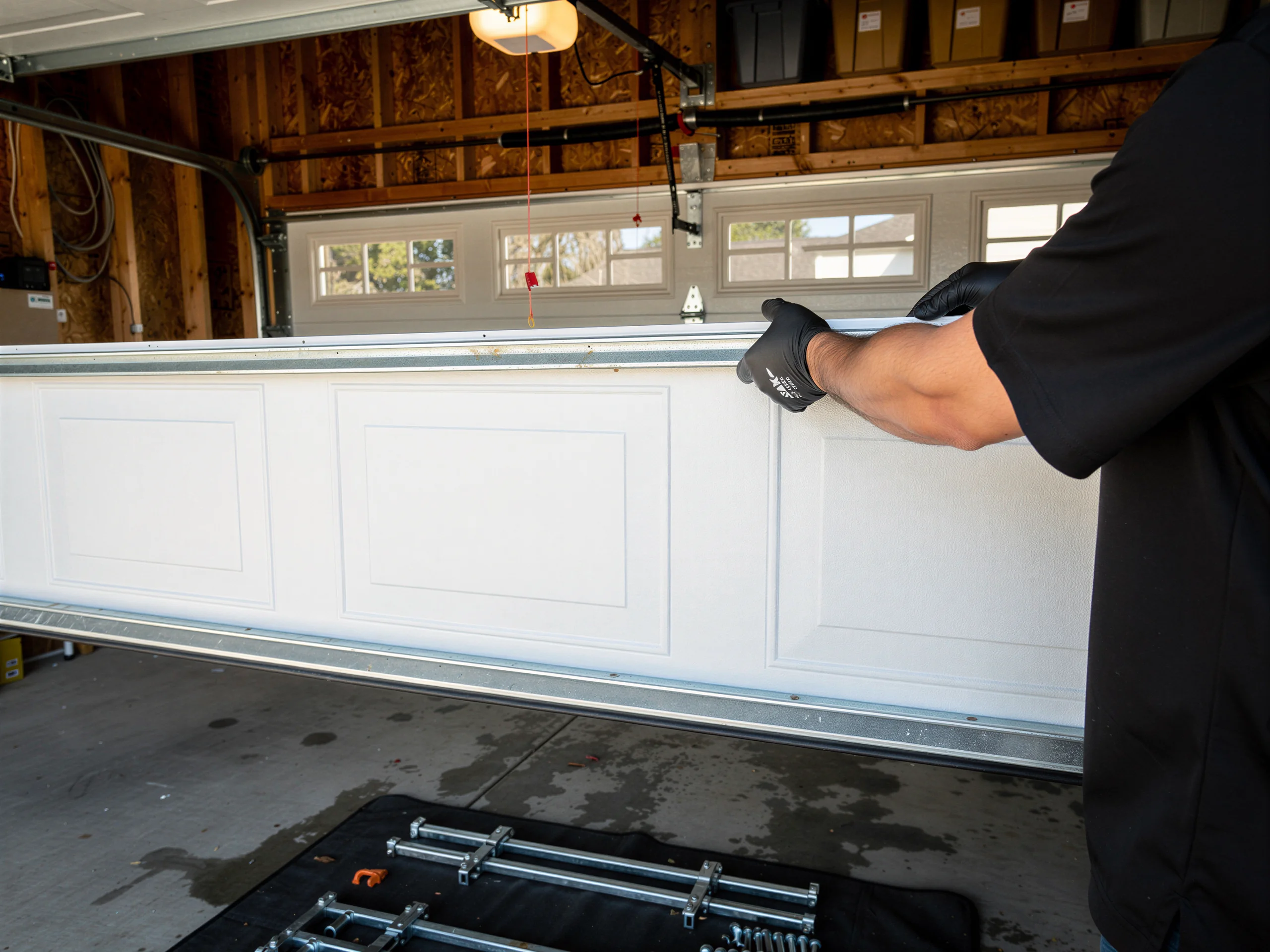
A technician in black gloves installs a white garage door panel.

Garage Door Panel Replacement for Happy Valley Homes

Dented or cracked garage door panel in Happy Valley? Learn more →
A technician kneels, inspecting a damaged beige garage door with a flashlight.

Garage Door Repair for Happy Valley Homes

Garage door repair for Happy Valley, OR homes built 1964-2003. Learn more →
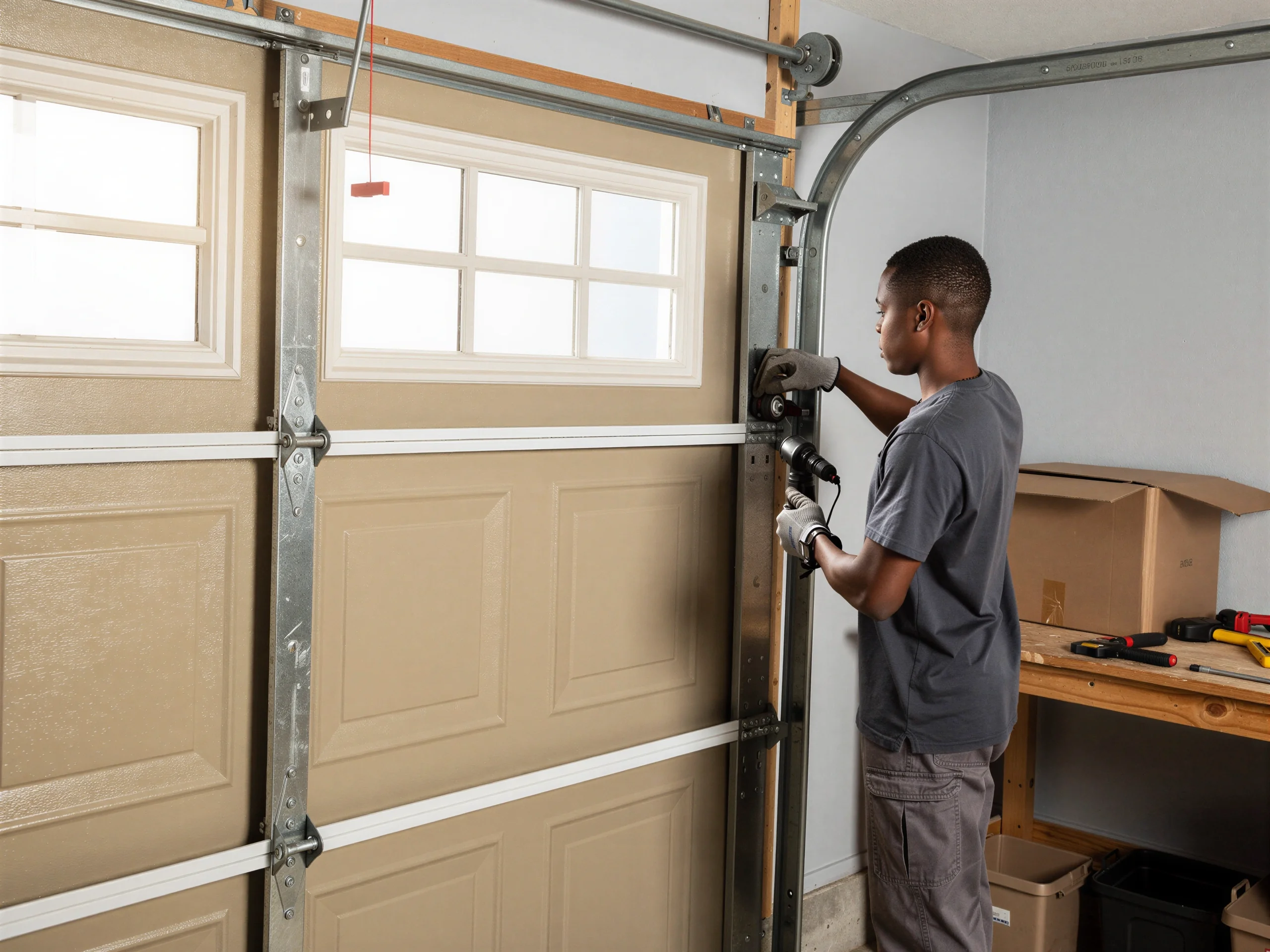
A technician works on a tan garage door with windows and metal tracks.

Garage Door Off Track Repair Around Happy Valley

Off-track garage doors are common across Happy Valley's 1964-2003 housing stock. Learn more →
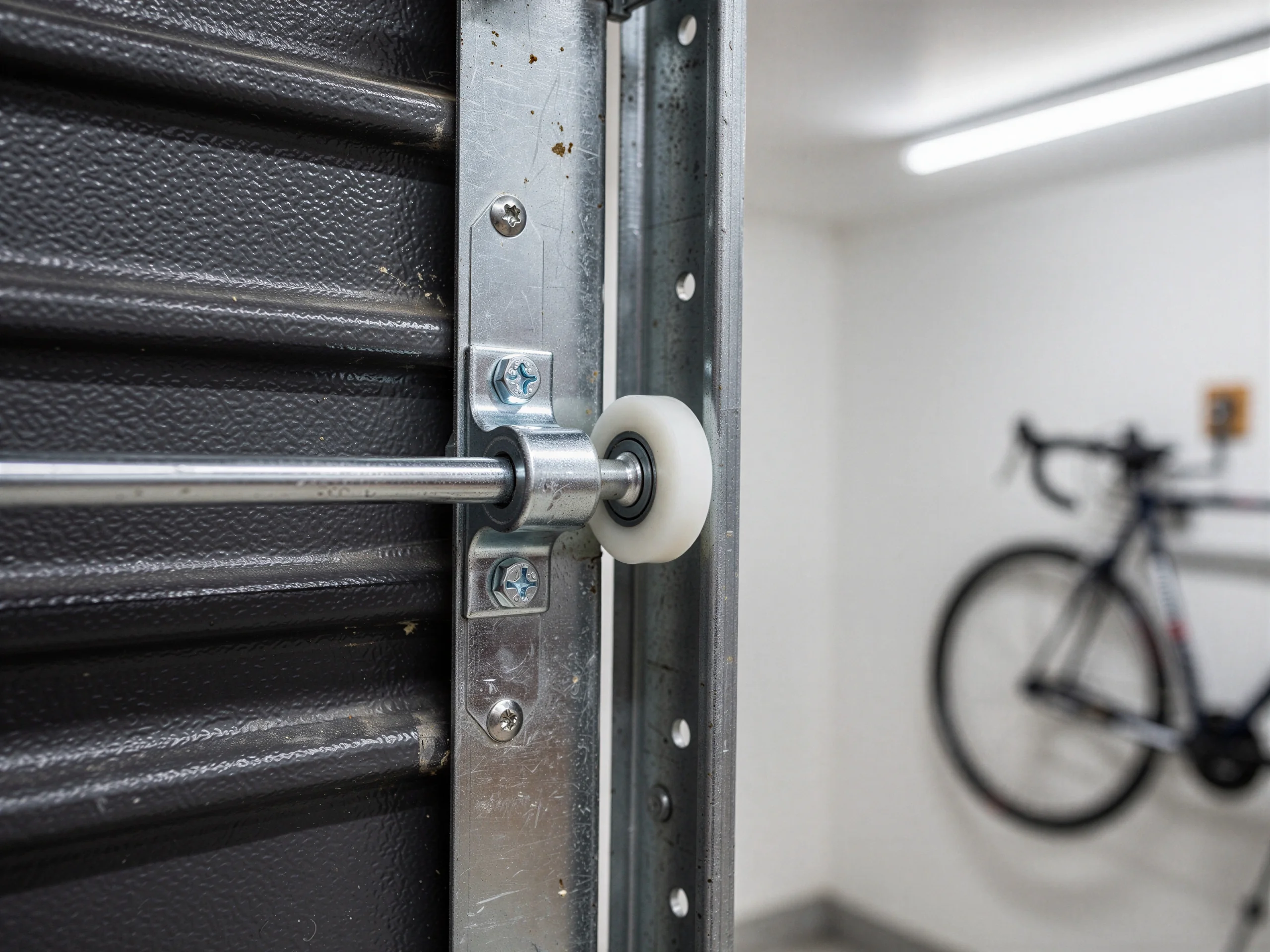
A garage door roller is visible on a metal track, with a bicycle in the background.

Garage Door Roller Replacement

Worn rollers on 1960s-2000s Happy Valley area doors cause grinding, binding, and track wear. Learn more →

Ready when you are

Need garage door service in Happy Valley?

Happy Valley Garage Door Pros repairs and installs garage doors, springs and openers in Happy Valley, OR and the surrounding area.

Call Now(503) 389-4712