
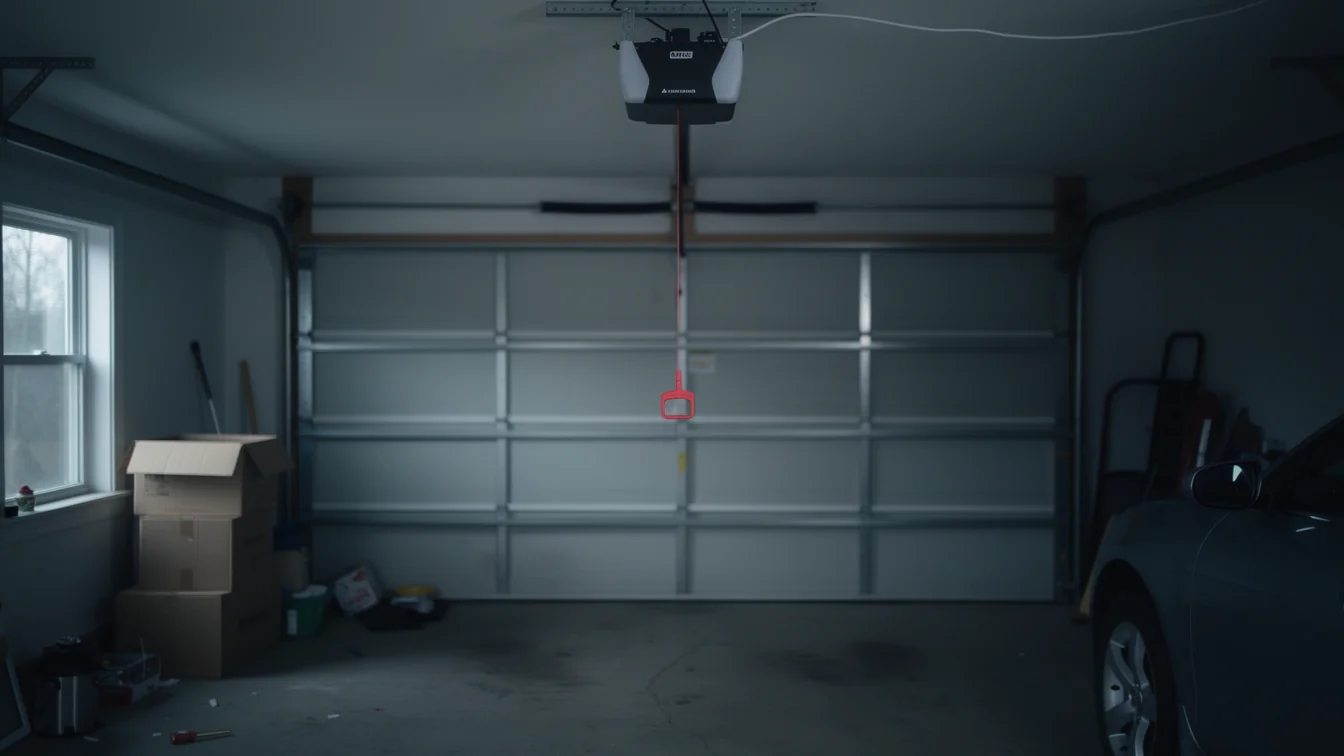
What Happy Valley Homeowners Should Know About Openers and Power Cuts
A look at how Happy Valley's 1964-2003 housing stock and mild-with-freeze climate affect garage door openers, battery backup, and what fails first during a power cut.
Read moreBlogHappy Valley, OR · 5 min read
A look at why older Happy Valley garage doors slip their track: 1960s-70s hardware, mild winters with freeze swings, and what actually fixes it versus what doesn't.
Local detail
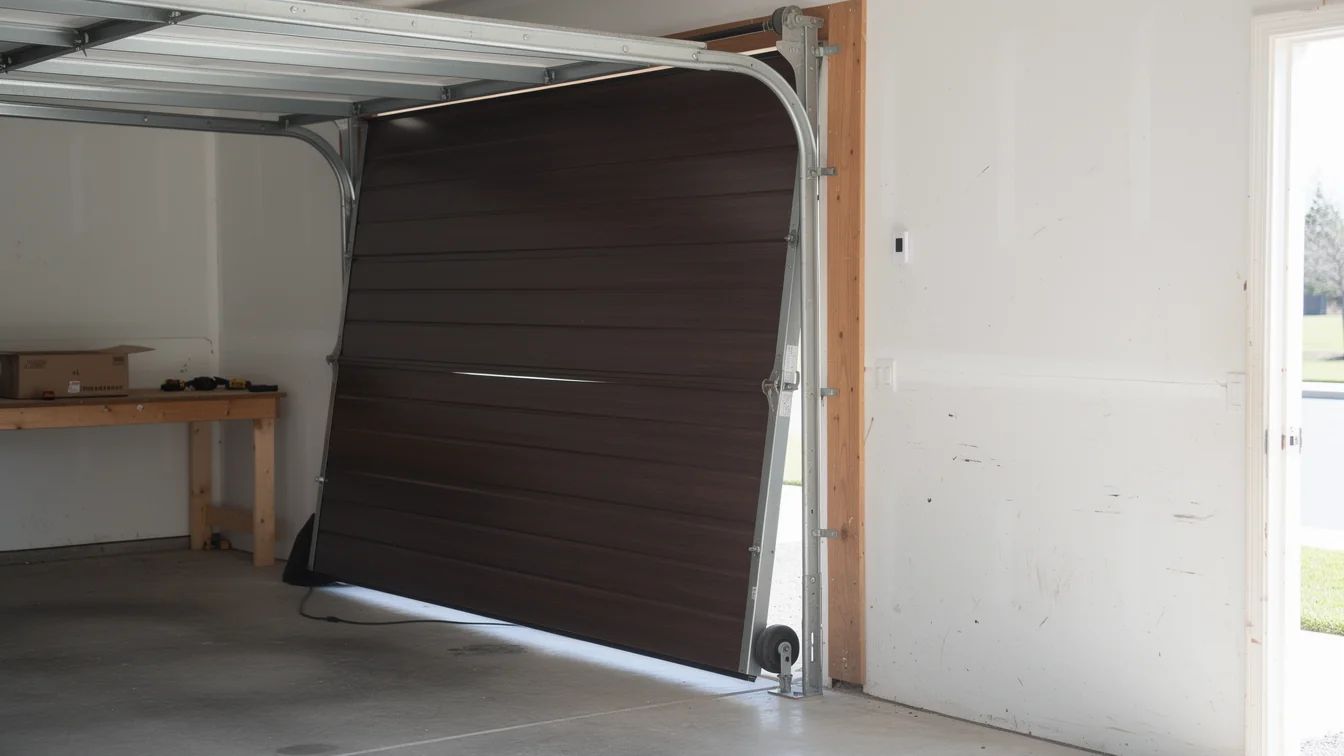
Start at the rollers, not the track. A door that's riding rough or has jumped the rail usually isn't a bent track problem first - it's a worn roller or a loose bracket that let the door wander until it caught an edge. On houses in this area built between 1964 and 2003, with the median landing around 1978, a lot of the track hardware is original or close to it. That's decades of thermal cycling on the same brackets.
Check where the vertical track meets the horizontal section - that bend point takes the most stress every time the door opens. On older one-piece and early sectional setups common to this housing stock, that bracket was often installed with lag screws into jamb wood that's had 40-plus years to shrink slightly around the fastener. A quarter-inch of play there is enough to let a panel roller climb out of the track on a fast close.
If the door looks level but still binds, look at the floor where the track mounts. Minor slab settling over decades of use can throw off the plumb line by a small amount - not enough to notice by eye, but enough to make a roller ride the lip of the rail instead of the channel. That's a track reset, not a track replacement, most of the time.
The area
This area sits in a mild climate band with occasional freeze, not the deep-freeze cycling you'd get further east. That matters for how track problems actually develop here. You don't get the slab heave that cracks a track mount overnight. What you get instead is slow: metal brackets expand a little in summer, contract a little on the handful of freeze nights each winter, and over enough years that cycle backs out screws a turn at a time until nobody notices until the day the door jumps the rail.
It's a different failure pattern than a true cold-climate town, and it's different again from someone building fresh in a new subdivision where the hardware hasn't had time to work loose yet. Here, age plus mild-but-not-static temperature swings is the main driver, not a single hard freeze event.
Humidity plays a smaller role too - enough moisture swing through the year to let wood jambs around older lag-screw mounts breathe slightly, which loosens the grip over time even without any single dramatic weather event. None of this shows up fast. It shows up as a door that's been a little noisier every year for the last five, right up until the morning it doesn't come off the track to the inside.
What we find
The common mistake is assuming an off-track door means a bent track, full stop, and that the fix is a new track. Sometimes that's true - a car bumper or a door panel folded hard enough will bend rail that can't be bent back safely. But on a lot of the off-track calls in houses from this 1960s-70s construction window, the track itself is fine. It's the mounting points that moved.
The other mistake is tightening the obvious screws and calling it done. If the jamb wood around a lag screw has loosened over 40-plus years, driving the same screw back in just buys a few months before it works loose again. The fix that holds is relocating the fastener to solid wood or adding a backer, not re-driving the original hole.
People also tend to force a stuck door past the point it should move, which is how a roller that's merely riding rough turns into one that's actually popped the rail. If a door hesitates or grinds on the way up, that's the moment to stop and look, not the moment to lean on the opener's force setting to push through it. I'll say plainly: once a panel has folded or the track is visibly kinked, that's a track-and-hardware job, not a tightening job, and trying to save it with patches usually costs more in the end.
How we work
Across this service area there are roughly 44,493 owner-occupied houses out of 87,301 households, and a large share of them sit in that same 1960s-through-70s construction window that defines the 24 named areas making up this stock. That's the base rate behind most off-track calls: age of hardware, not a single bad event.
We work this area and the nearby communities within a few miles - Damascus, Oatfield, Gladstone, Jennings Lodge, Oak Grove, and out toward Boring and Sandy. Houses a few miles out deal with the same mild-with-occasional-freeze pattern, but the mix of construction eras shifts some from one pocket to the next, which is part of why the same symptom doesn't always point to the same fix.
What we can't do is promise a same-day fix on every call - if a job needs a part that isn't a stock bracket or roller, that's a lead time question, and we'd rather tell you that up front than guess.
Questions
It's rarely sudden underneath - it's usually years of a loosening bracket or worn roller finally reaching the point where the door catches an edge and jumps. Houses from the 1960s-70s era common in this area often have original mounting hardware that's had decades of mild seasonal cycling to work loose, so the visible failure looks sudden even though the cause wasn't.
Not in a dramatic way - this area sits in a mild band with only occasional freeze, so you won't get the slab heave of a true cold-winter town. What it does is slowly back out screws and shrink jamb wood over many years of smaller temperature swings, which is a different and slower problem than a single hard freeze event.
A mild bend from a light bump can sometimes be straightened, but once a track has a hard kink or a panel has folded against it, bending it back isn't a safe long-term fix. At that point replacing the affected section is the honest answer rather than patching something that's going to come back.
Watch the door through one full cycle. If one side rides rough, clatters, or lags behind the other, that's often a worn roller or a loose bracket, not the rail itself. If the door catches hard at one specific spot every time, that's more likely a track alignment issue where the rail has shifted at the mounting point.
Recommendation
More garage door guides for Happy Valley homeowners.
A look at how Happy Valley's 1964-2003 housing stock and mild-with-freeze climate affect garage door openers, battery backup, and what fails first during a power cut.
Read more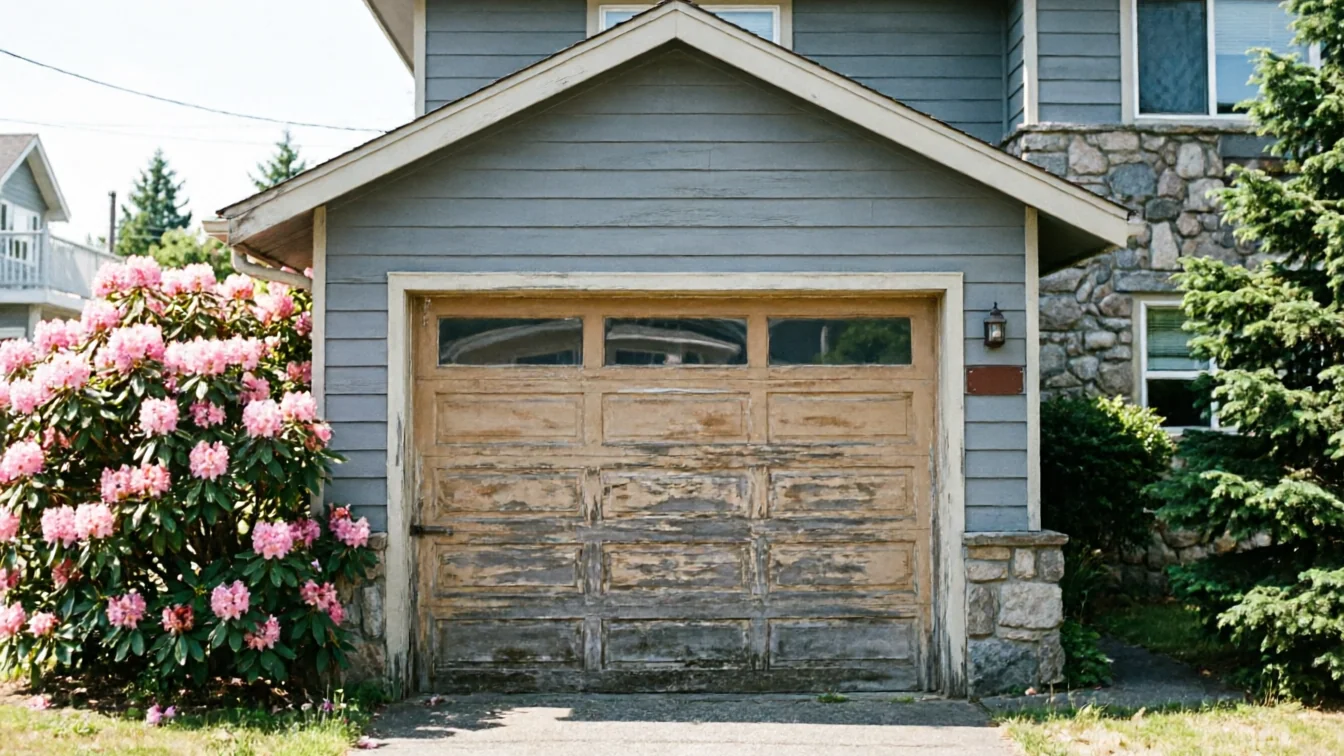
In Happy Valley homes built mostly between 1964 and 2003, deciding whether to repair or replace a garage door depends on the hardware era and the mild, damp Pacific Northwest climate here.
Read more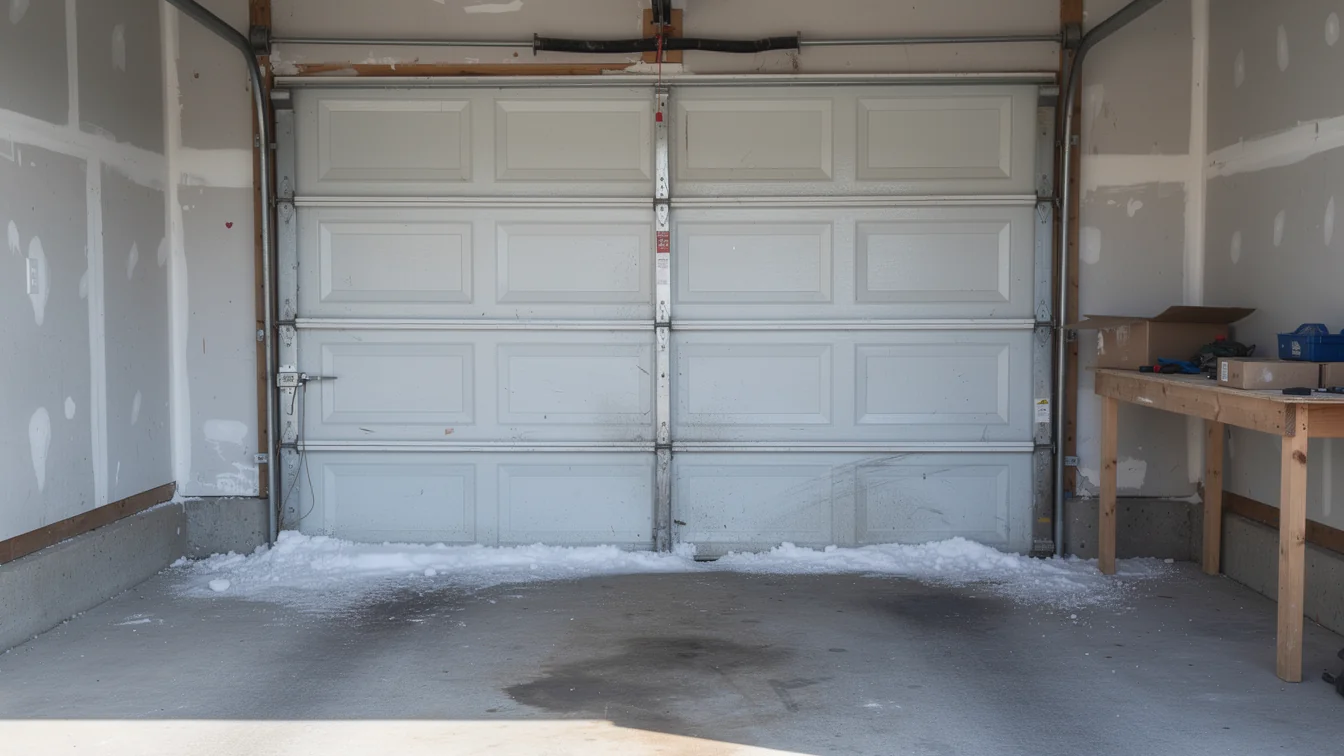
Most Happy Valley homes went up between 1964 and 2003.
Read moreReady when you are
Happy Valley Garage Door Pros repairs and installs garage doors, springs and openers in Happy Valley, OR and the surrounding area.