Era-matched common parts
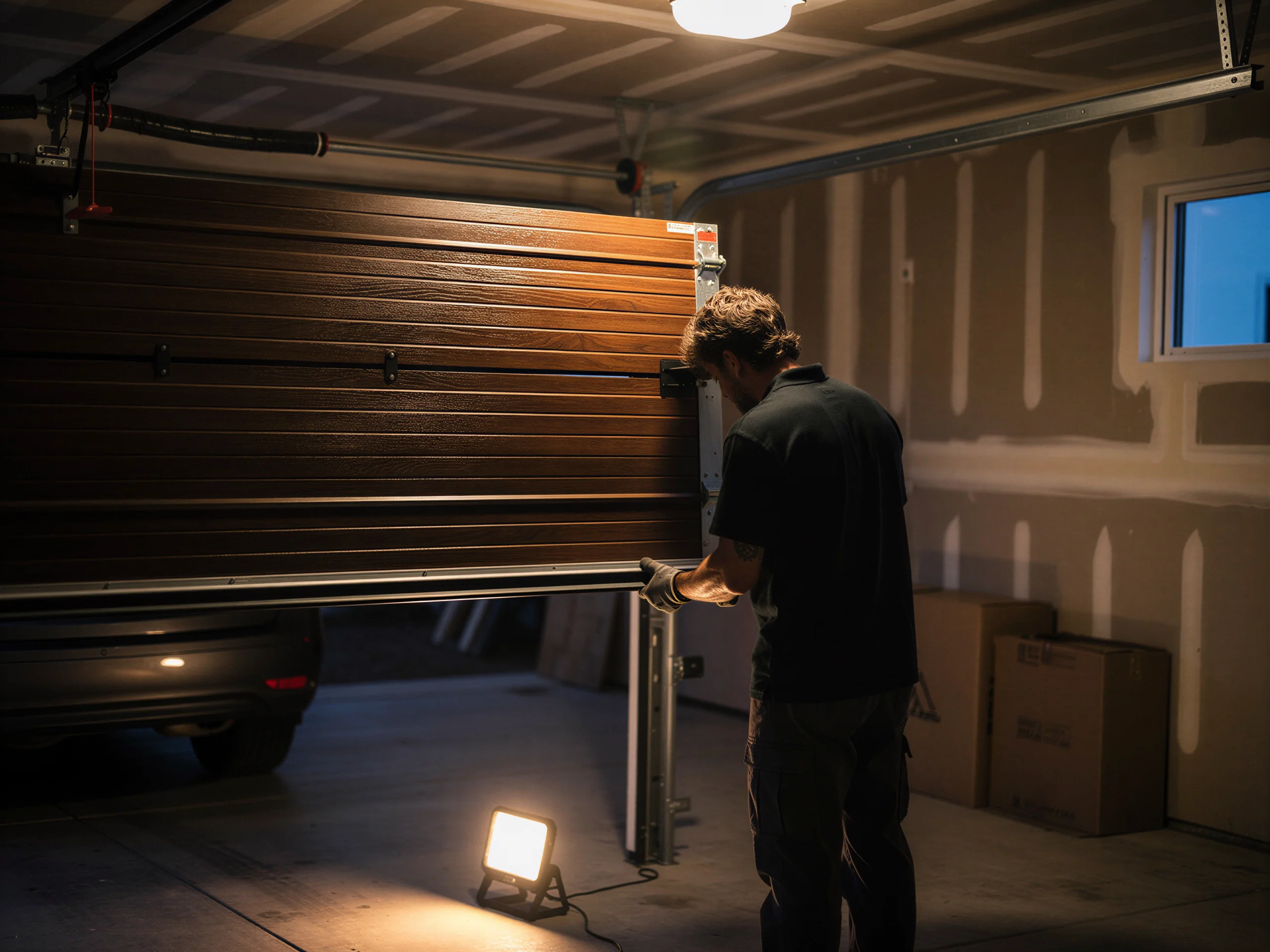
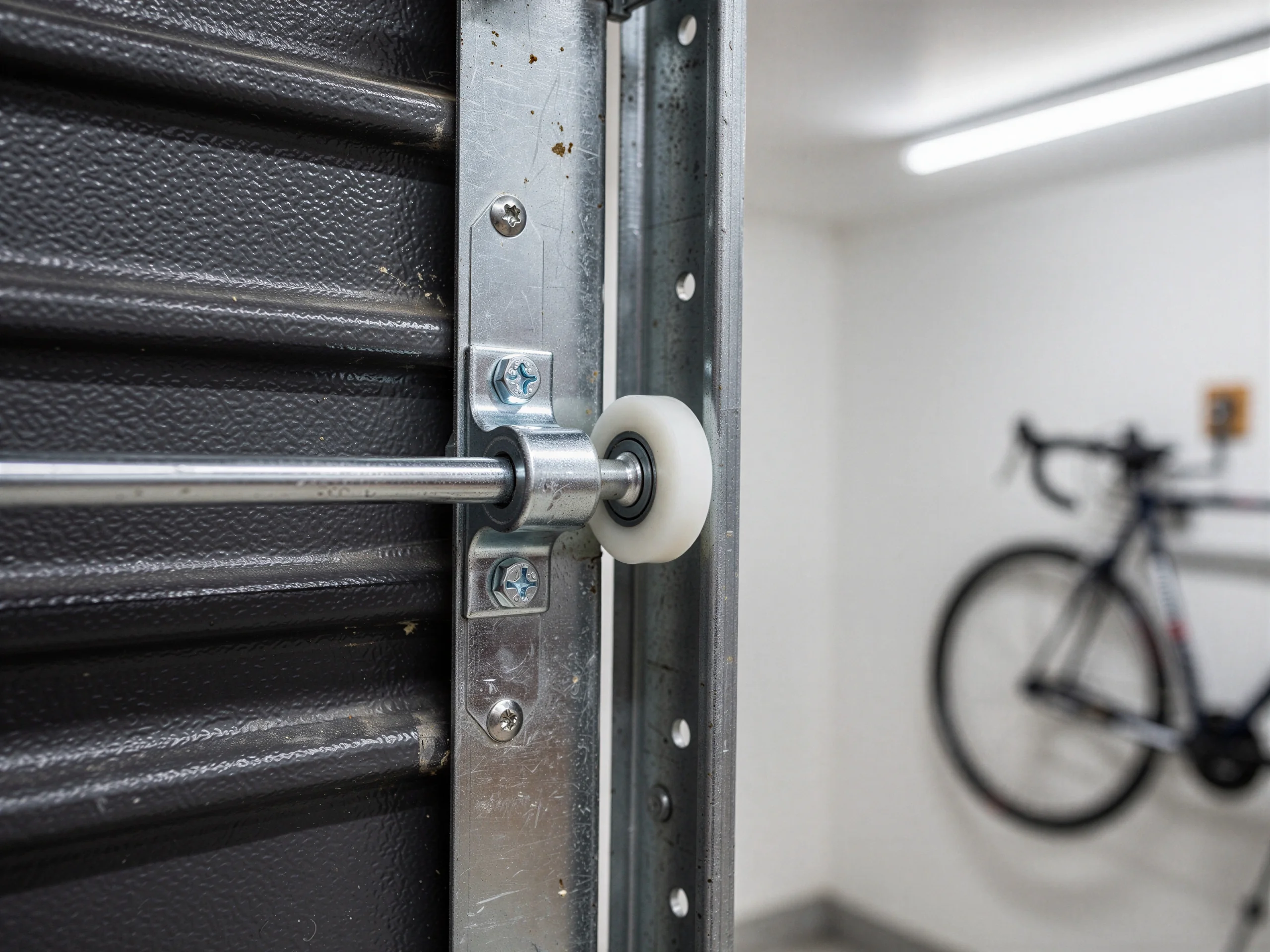
We carry common torsion spring sizes, standard nylon and steel rollers, extension and torsion cables, and photo-eye sensor pairs that fit the mounting brackets used on doors from that era.
Sherwood, Happy Valley
Sherwood's garage doors mostly date to the late 1990s, not the 1960s stock common nearby. Here's what breaks on that hardware and how Happy Valley Garage Door Pros fixes it.
Local causes
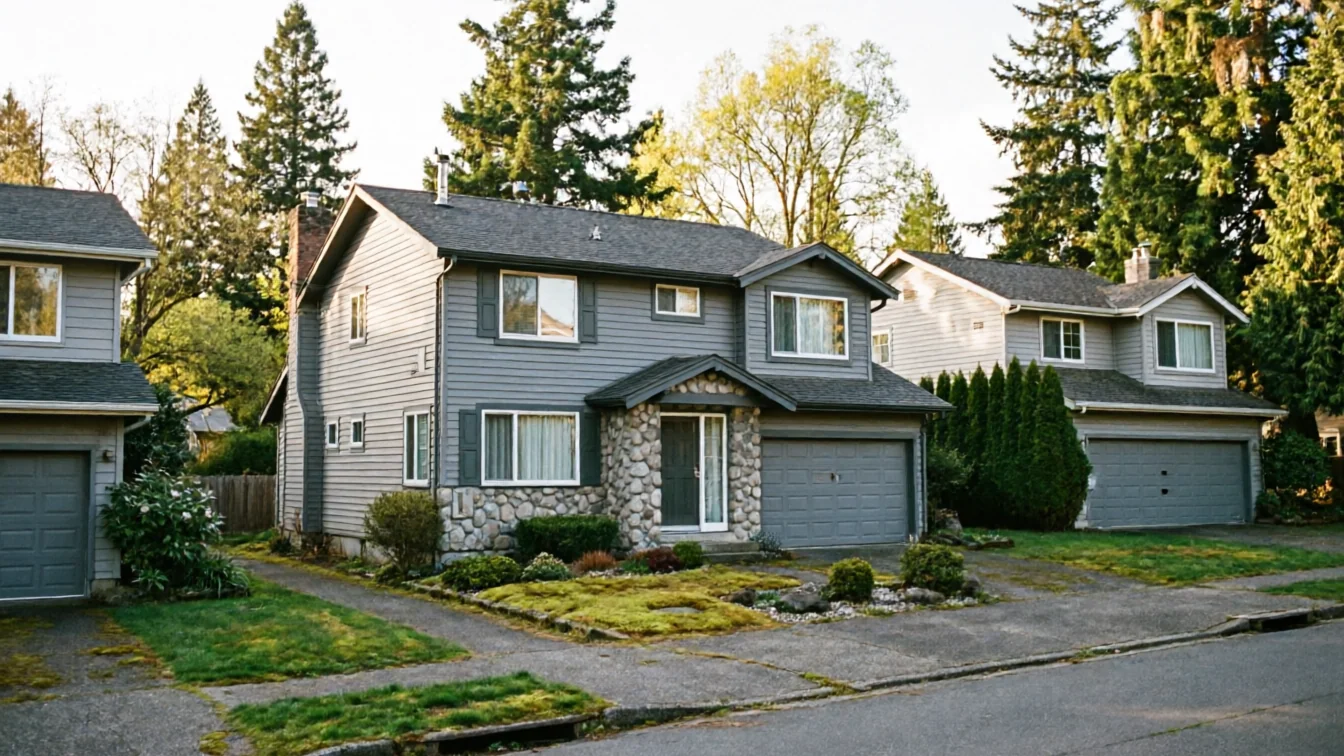
Most houses in Sherwood went up around 1997, well after the 1964-2003 build window that covers the wider service area (median year 1978 across that span). That gap matters. A door from 1978 is a different animal than one from 1997 - different steel gauge, different spring wind, different opener generation. Sherwood's stock is younger than the area norm, which means you're less likely to be fighting a 40-year-old door and more likely fighting a 25-to-30-year-old one that's hit the end of its factory parts' service life at the same time its owner assumed it had years left.
By the late 1990s, most new construction doors shipped with factory-set torsion springs and the first generation of circuit-board openers with photo-eye safety reversal, required nationally since 1993. Those boards and the early photo-eye sensors are now old enough to fail outright rather than just act flaky. On a door this age, a sudden refusal to close often isn't a sensor alignment problem you can nudge back into place - it's a board or sensor that's actually dying.
Sherwood also sits in a mild climate band with occasional freeze, so metal fatigue shows up as cracked plastic idler brackets and stiff, corroded rollers before it shows up as anything dramatic. The stock is young enough that owners don't expect this yet, which is exactly why it catches people off guard.
On the truck
For a late-1990s door, we're usually dealing with torsion springs in standard residential wind counts, steel roller-track hardware, and openers from the early reversal-equipment generation - chain and belt drives with circuit boards and photo-eye sensors rather than the older trolley-and-rail designs found on 1960s and 70s stock.
We carry common torsion spring sizes, standard nylon and steel rollers, extension and torsion cables, and photo-eye sensor pairs that fit the mounting brackets used on doors from that era.
What we don't carry on the truck is anything for doors built well before or after that window, like a 1960s one-piece swing-up track or a current model with a proprietary wall-mount opener. If your door falls outside the typical Sherwood build range, say so when you call so we know what to bring.
DIY or pro
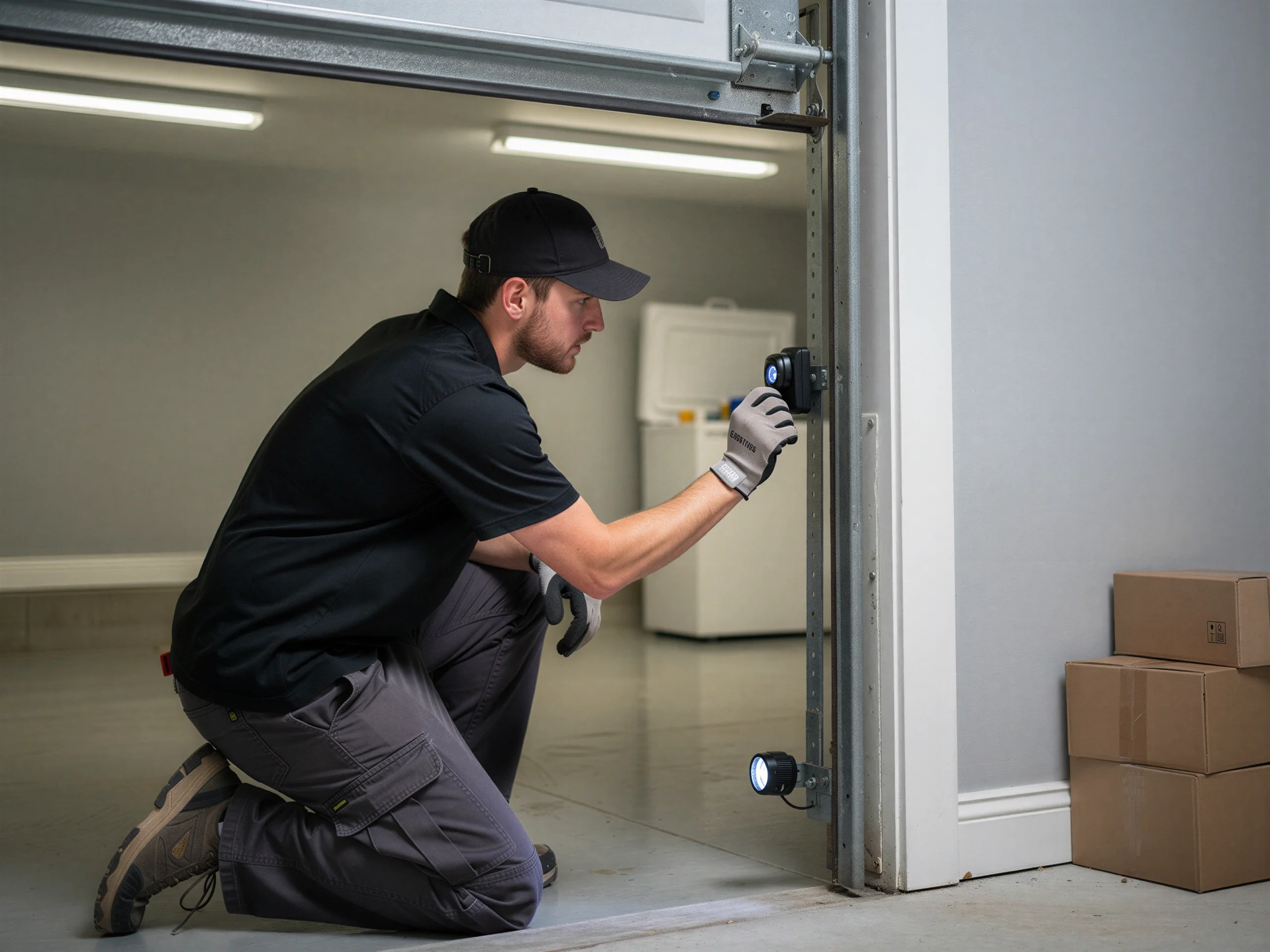
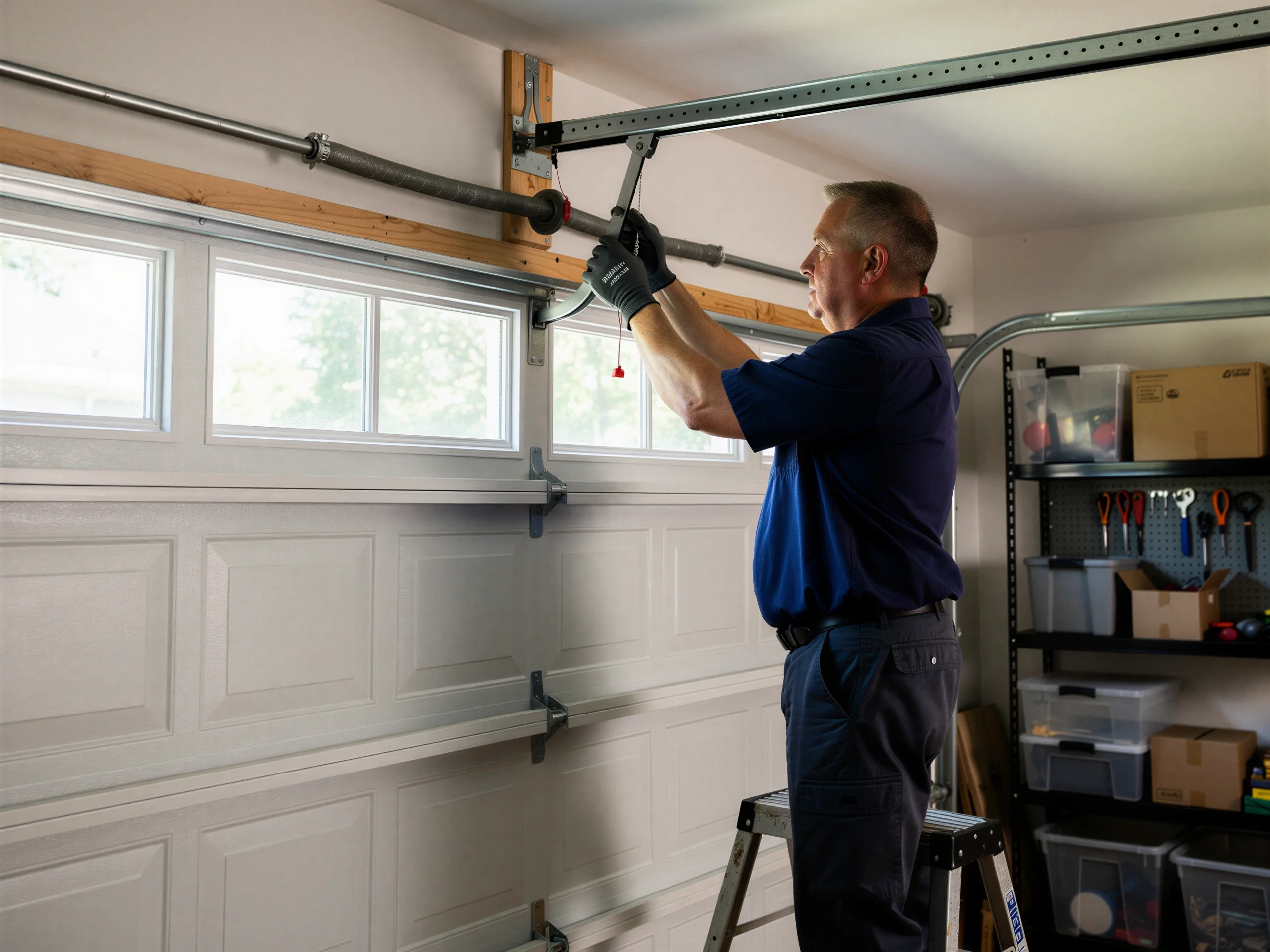
A dead photo-eye sensor or a loose bracket on a door from this era is often something a careful owner can handle - unplug the opener, check the sensor wiring, clean the lenses, re-align them so the LEDs both go solid. That's low-risk work.
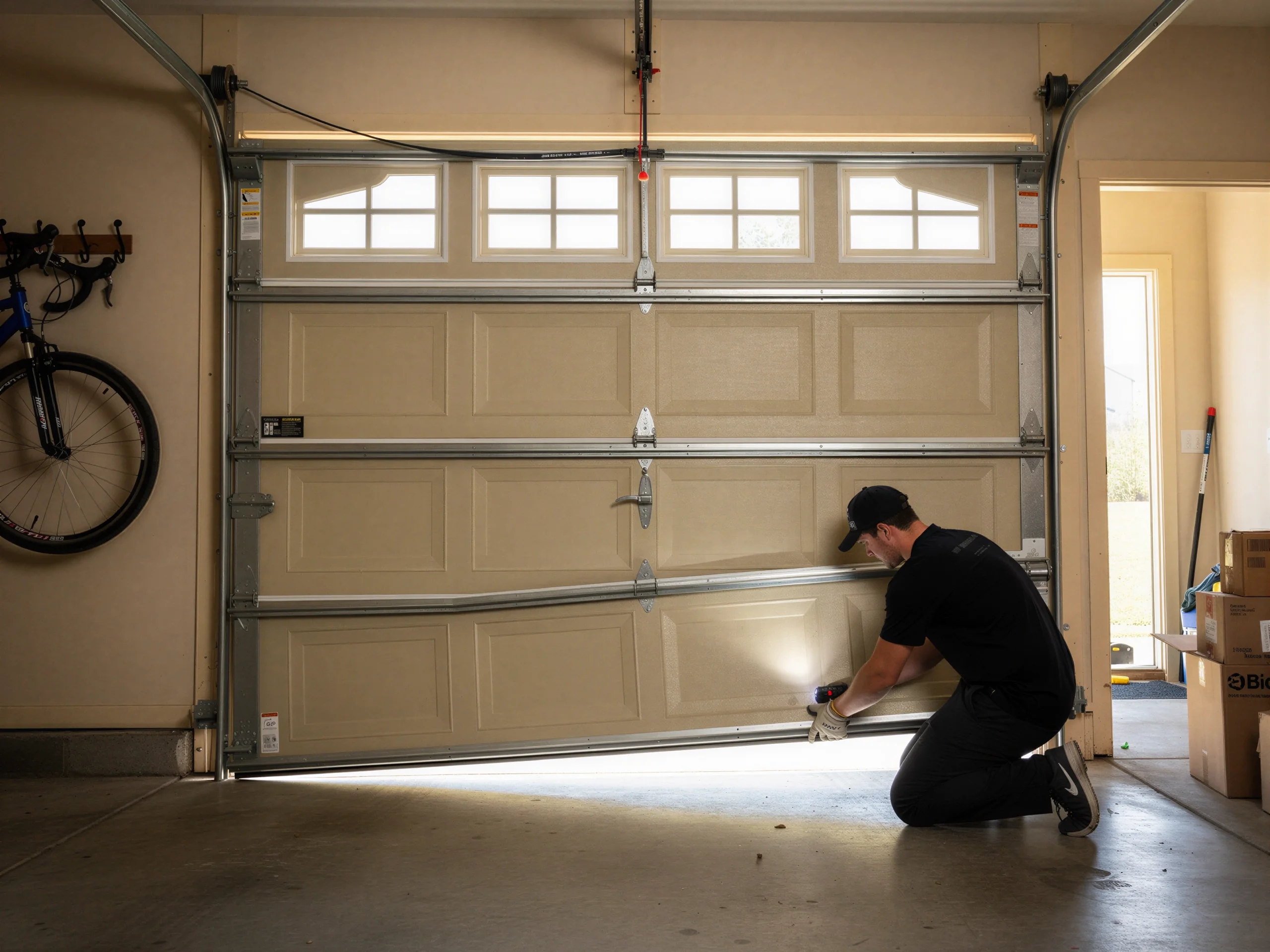
A torsion spring is not. These doors use torsion springs wound under real tension, and an owner without the right bars and a steady hand can get seriously hurt releasing or winding one. Same goes for a broken cable under load. If the door won't move, or one side is hanging lower than the other, stop and call - that's a spring or cable problem, not a DIY afternoon.
Warning signs
On a door built around 1997, the common emergency calls look like this: the opener runs but the door won't move (usually a broken torsion spring or a stripped drive gear), the door reverses immediately after closing (dying photo-eye sensor or a misaligned bracket, common once the sensors hit this age), or the door comes down hard and fast on one side (a snapped cable, which turns the door into dead weight on whatever's still attached).
Less urgent but still a call-now issue: grinding or popping noises from the track, which usually means a roller has finally given out after close to three decades of use.
None of these are things to leave overnight, especially a broken cable, since the door can fall further once the second cable takes the full load alone.
The repair
Serving Happy Valley, OR
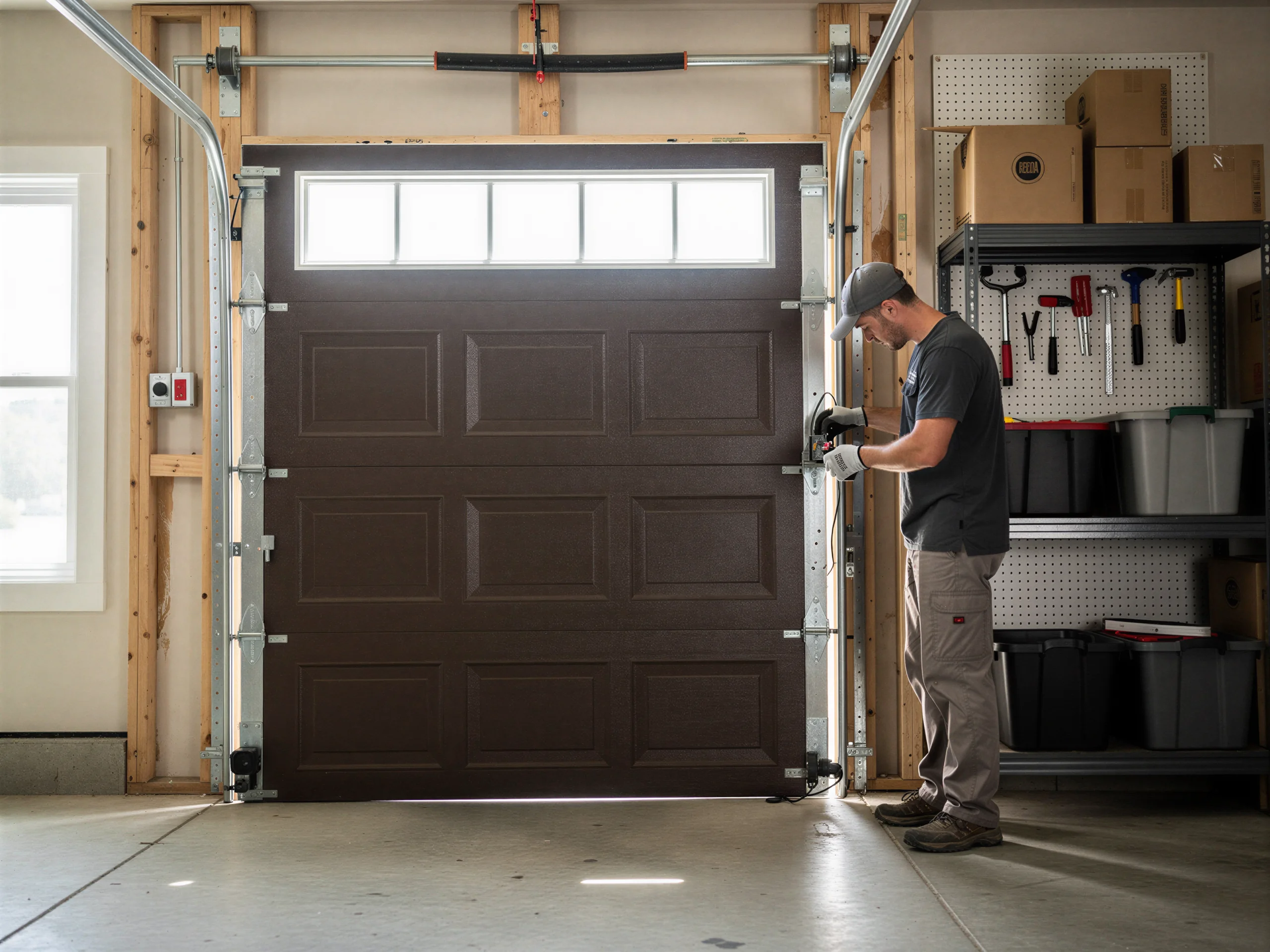
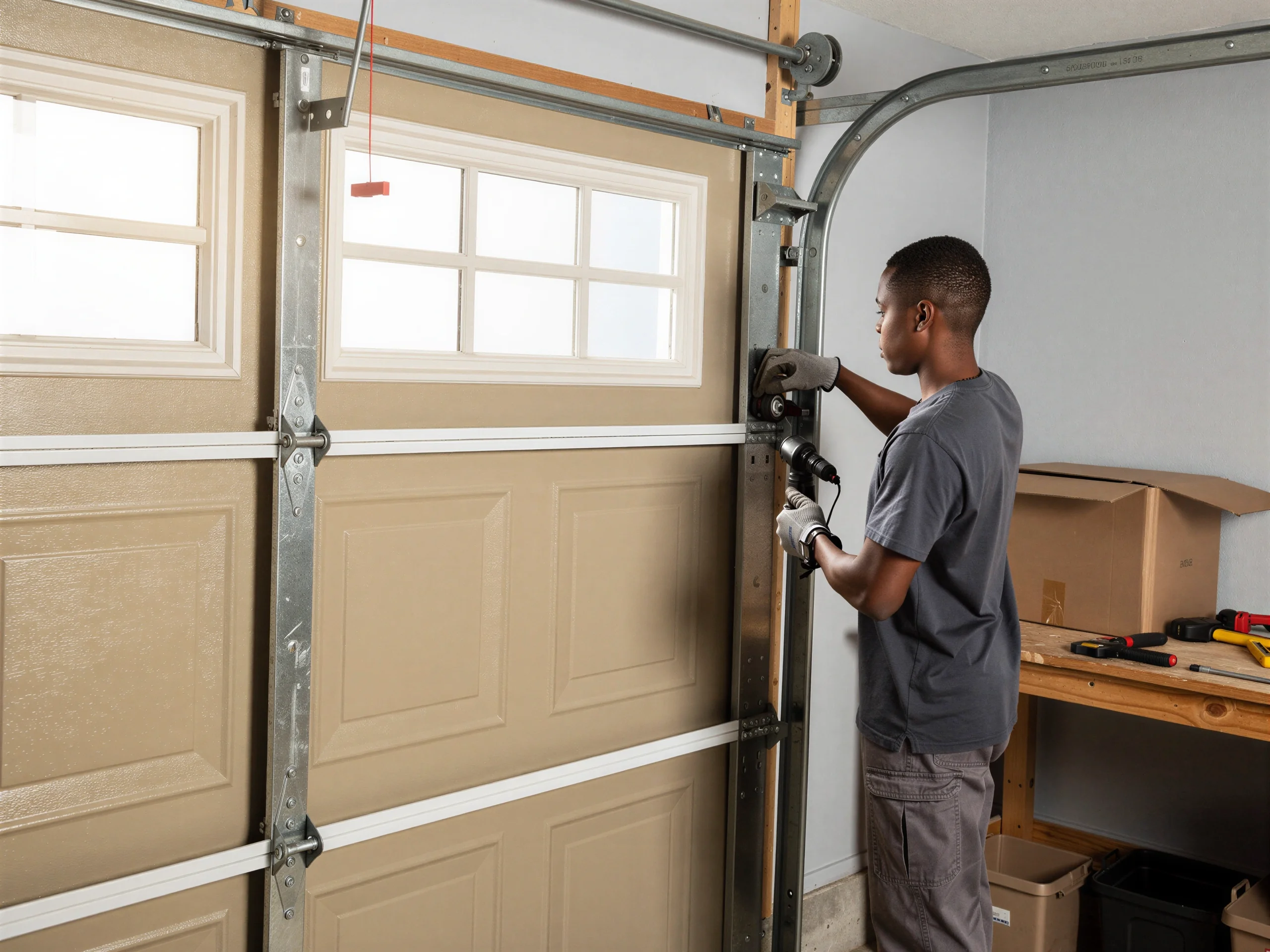
Spring replacement on a standard residential torsion setup means matching the spring to the door's weight and wind, winding it under controlled tension, and testing balance before we leave - a door that isn't balanced right will just wear out the opener that's compensating for it. A failed photo-eye pair gets replaced and re-aimed, not just swapped in blind; alignment is what actually stops false reversals.
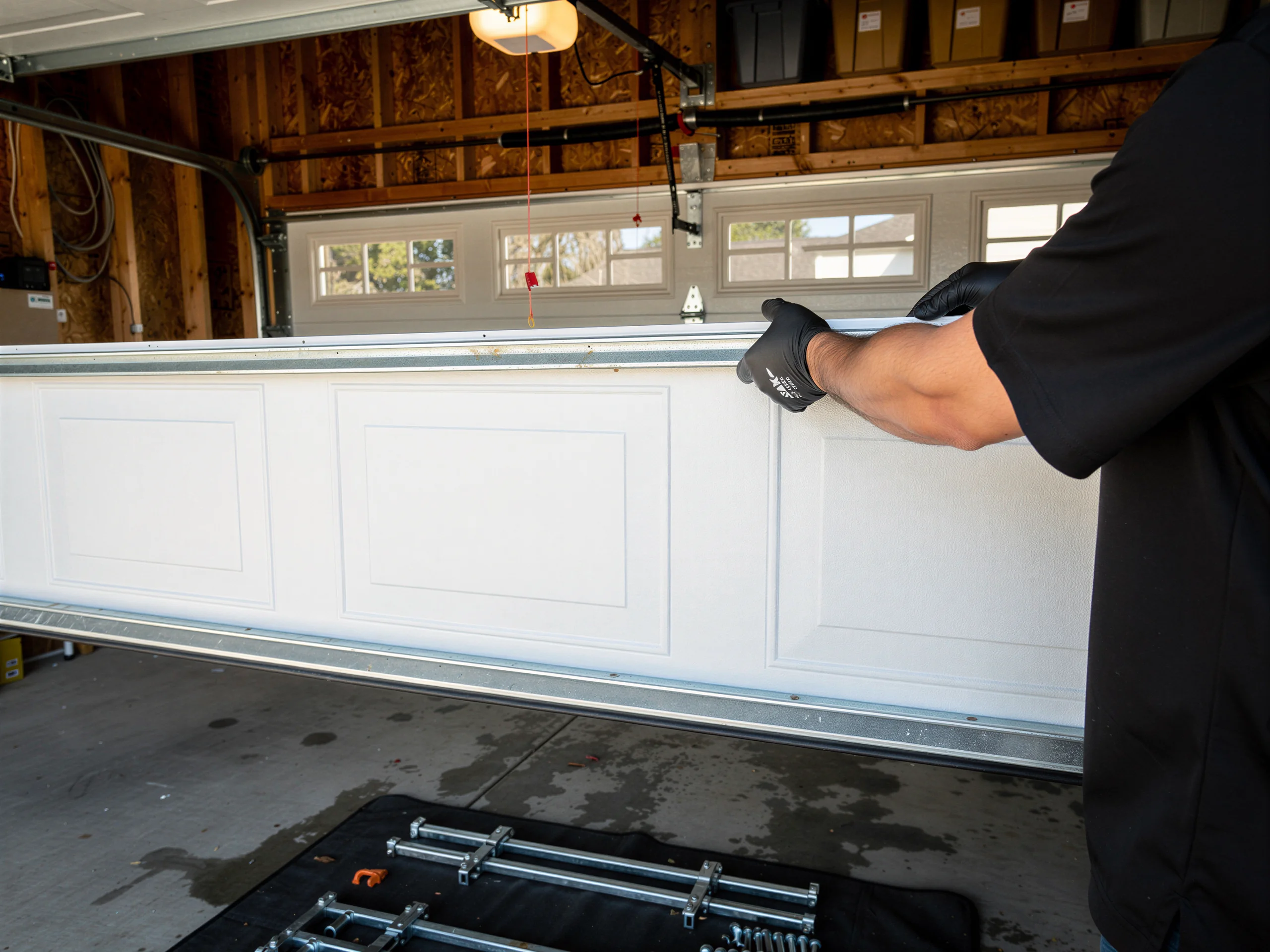
Cable replacement means lifting the door off the broken cable safely first, which on a one-car or two-car residential door is a controlled process, not a guess. For an opener board failure, if the board itself has failed rather than just the sensors, replacement openers in this class are a same-day part for us, not a special order.
Watch-outs
The one limitation worth saying plainly: we work out of Happy Valley, roughly 17 miles from Sherwood, so we're not a local depot with a truck sitting five minutes away.
We bring standard parts for doors in the common build range for this area, but if your door turns out to need something unusual - an odd-width custom panel, a discontinued opener model - that part may need to be ordered rather than installed the same visit.
Sherwood's household income runs higher than the broader service area average, and newer subdivisions here sometimes carry heavier insulated steel doors or wider double-door openings than the older stock elsewhere in the area.
Heavier doors need springs matched more precisely to their weight, so if a previous repair used a generic spring instead of one sized to your specific door, that's often the root cause of a repeat failure.
Questions
A door that age is right at the point where original torsion springs, cables, and early circuit-board openers reach the end of their typical service life. It's not a sign anything was done wrong - 25 to 30 years is a normal run for that hardware before the first big-ticket failure shows up.
No. We work out of Happy Valley, about 17 miles away, and cover Sherwood as part of the wider service area. We carry standard parts for doors from the common local build era on the truck, so most jobs don't need a second trip.
On a door from the late 1990s, that's almost always the photo-eye safety sensors - either misaligned or actually failing after close to three decades. We check alignment first since that's free to fix, and replace the sensor pair if the hardware itself has died.
Depends what failed. A sensor or a switch is worth fixing. A dead main circuit board on an opener from that generation is often close in cost to a new opener with current safety features, so we'll tell you honestly which side of that line your unit falls on before we start.
Explore more
Ready when you are
Happy Valley Garage Door Pros repairs and installs garage doors, springs and openers in Happy Valley, OR and the surrounding area.