Upper panels need pros
Where it stops being reasonable is anything above the bottom section on a door with the torsion spring still under tension, or any door where the track has to come off to free the panel.
Sherwood, Happy Valley
Sherwood's median household income sits above $110,000, and most garage doors here date to the late 1990s. We explain when a panel swap makes sense and when it doesn't.
Local causes
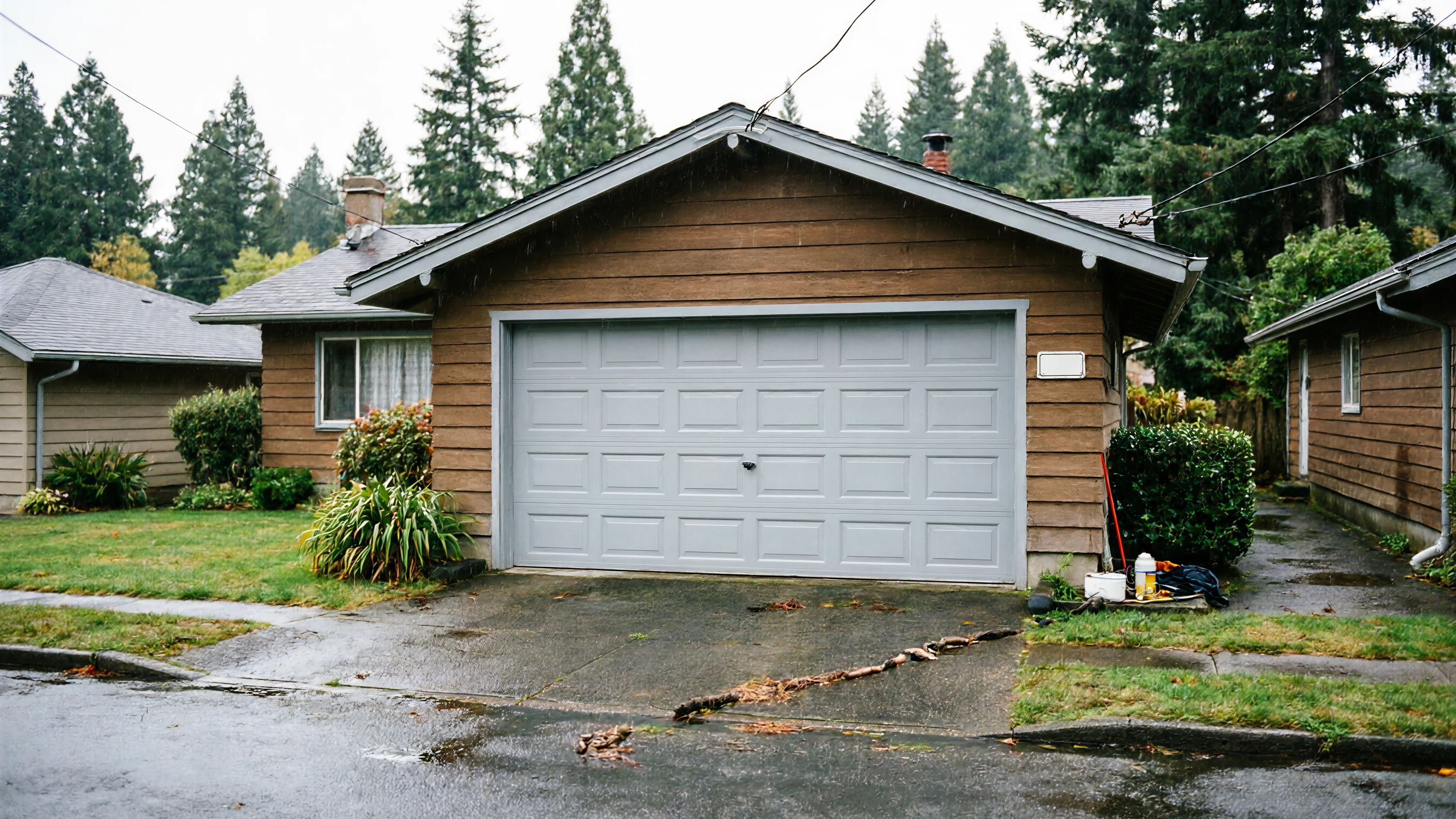
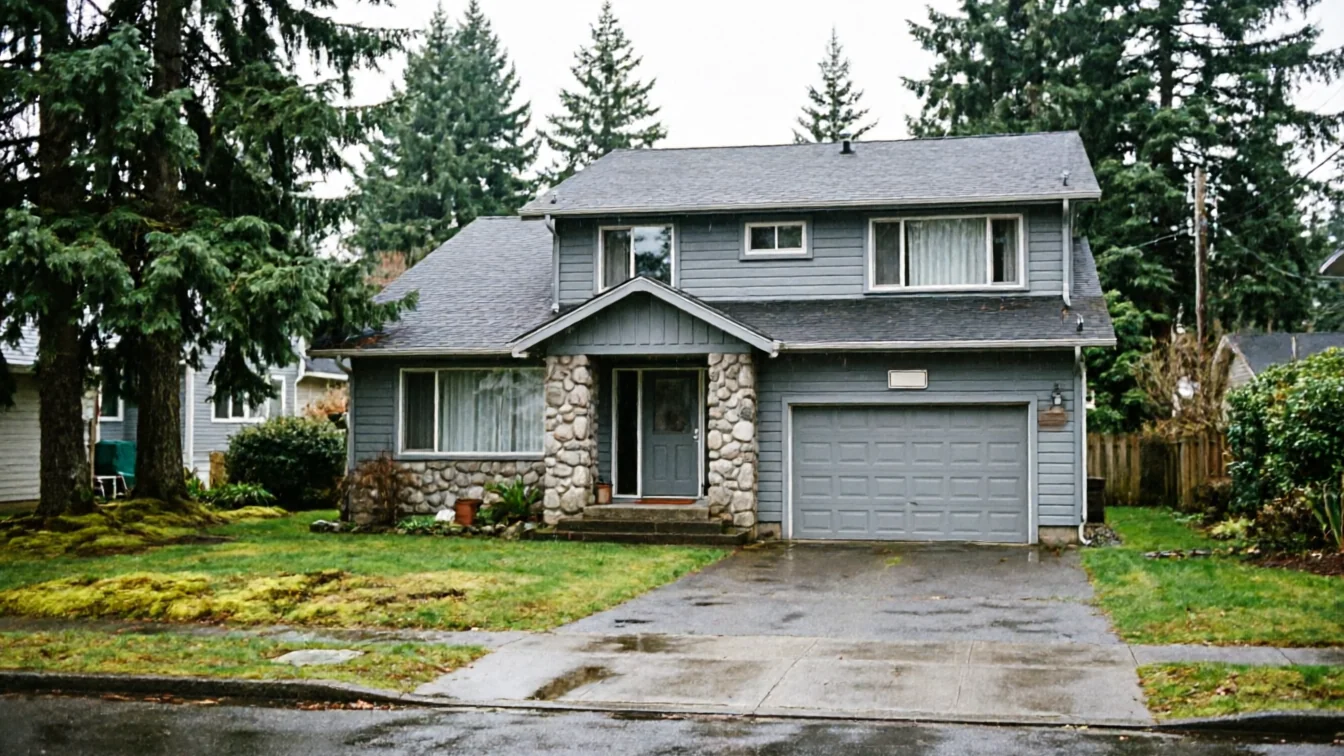
Sherwood's median household income runs $110,616, well above the wider service area's $103,015, and that number actually changes the math on this repair. At that income level, a full door replacement often pencils out faster than hunting down a matching panel, because the labor cost of a panel swap isn't that different from a full door and the finish mismatch bothers people who can afford to fix it right. The housing here was mostly built around 1997, newer than the 1964-2003 range you see across the rest of the area, so you're not dealing with the warped wood or rust-pitted steel of an older door. What you're dealing with is a dented or cracked steel sectional panel on a door that's otherwise sound, which is exactly the situation where a single-panel fix either saves real money or wastes it, depending on whether the manufacturer still makes that profile. We won't know which until we see the door.
On the truck
Serving Happy Valley, OR
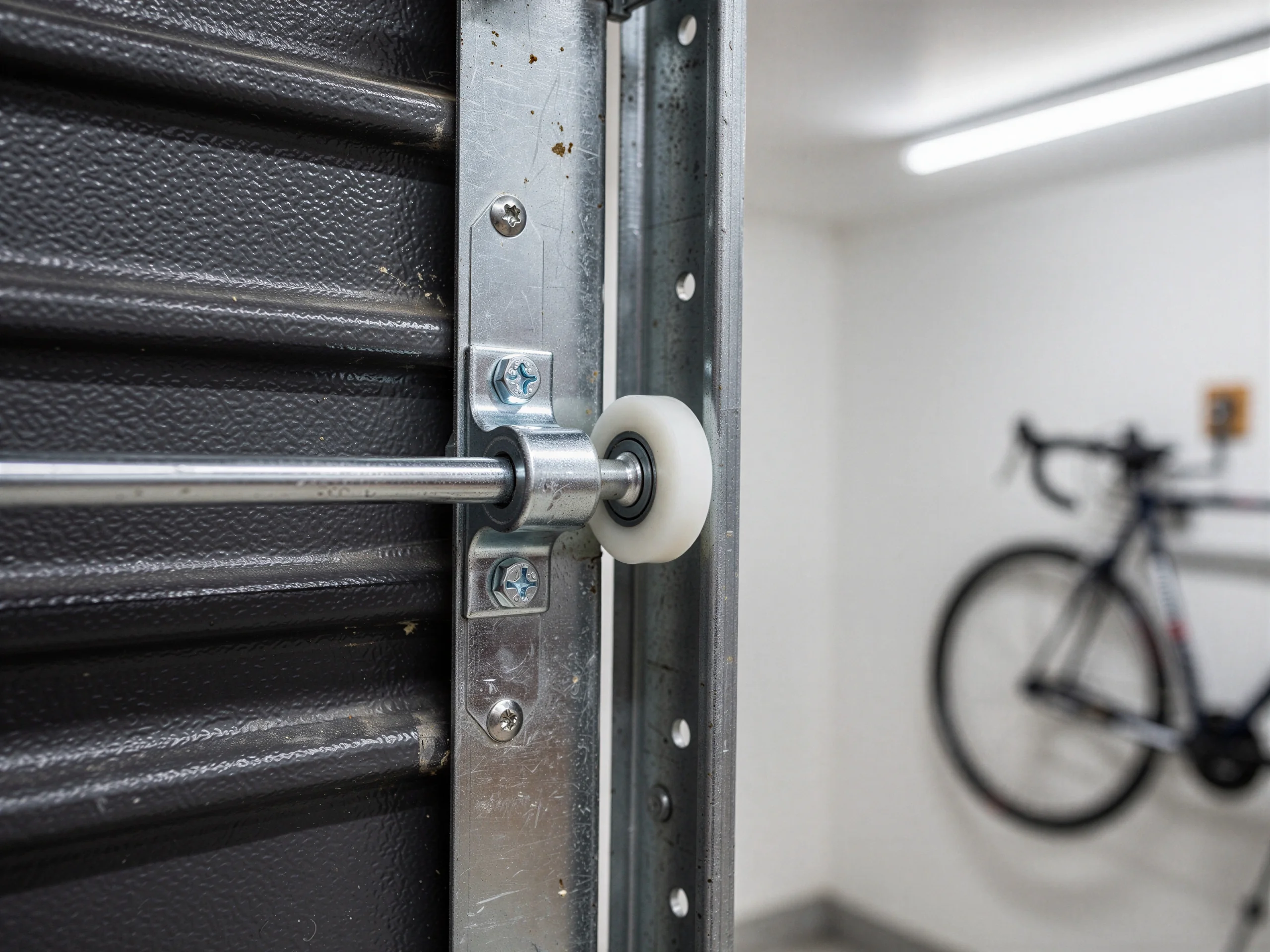
For doors built around the late 1990s, we carry common steel sectional panel sizes and standard rollers and end hinges that fit that generation of door. What we don't carry on the truck is an exact color and texture match for every builder-grade door from that era - some of those runs were discontinued years ago, and the paint batch on a 25-plus-year-old panel has faded in ways a new panel won't match exactly. We'll tell you straight if we think the mismatch will bother you before we order anything.
DIY or pro
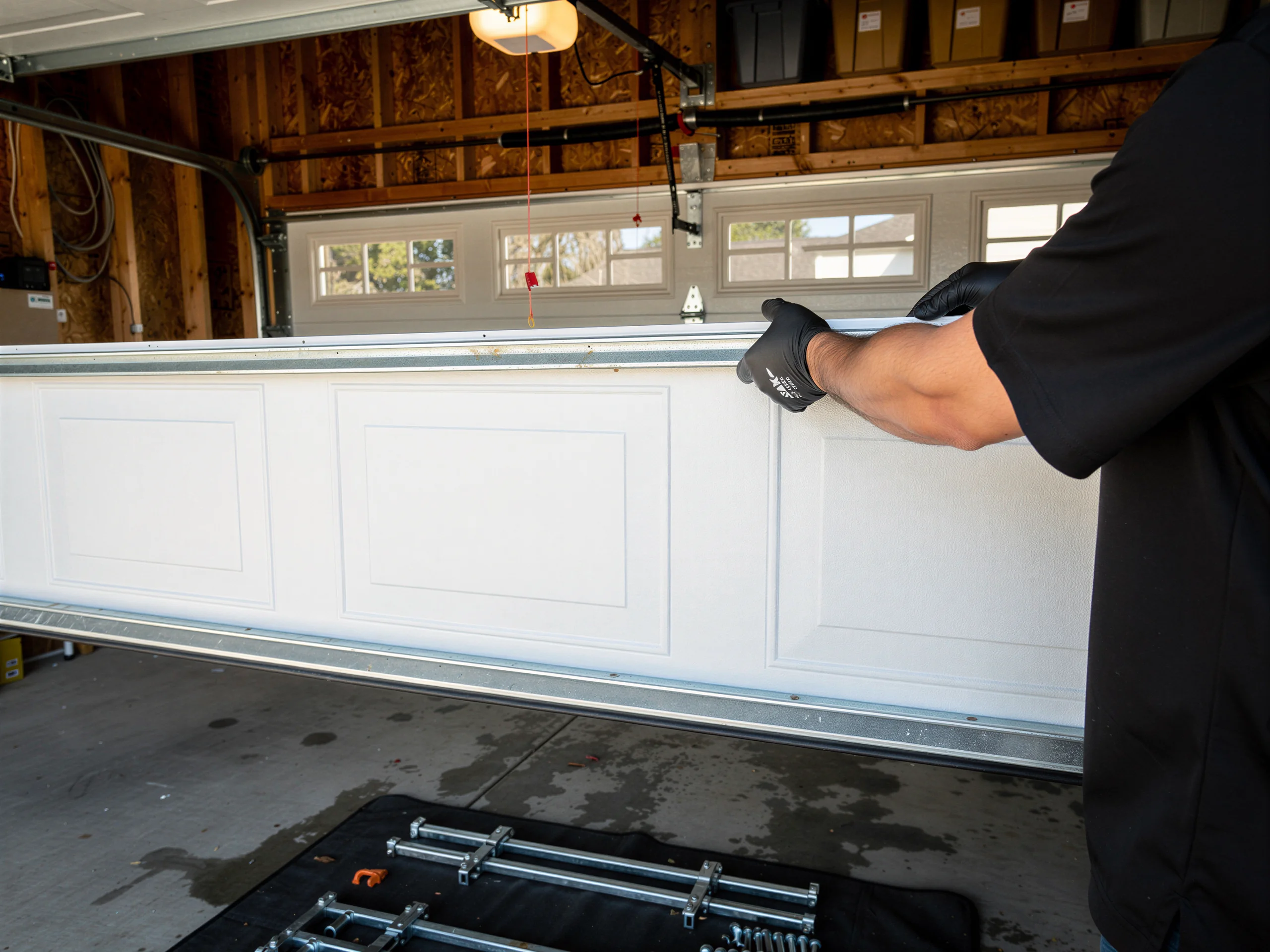
A single bottom panel with a dent but no cracked seams is sometimes a DIY-reasonable job if the door isn't a high-cycle insulated model - you unbolt the end hinges and rollers, slide the old section out, slide the new one in, reattach.
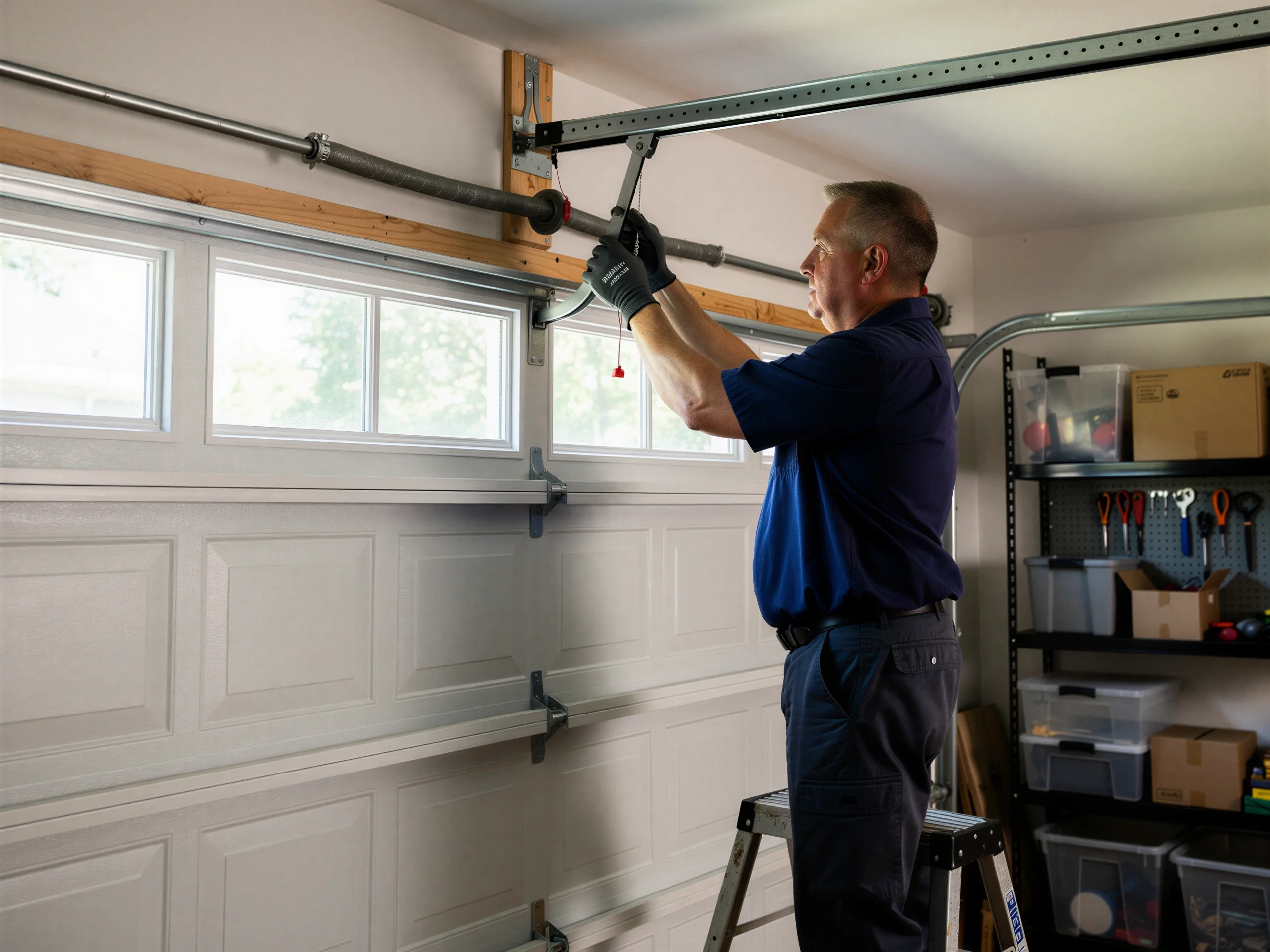
Where it stops being reasonable is anything above the bottom section on a door with the torsion spring still under tension, or any door where the track has to come off to free the panel.
That's not a place to learn on the job. If you're not sure which situation you're in, that's worth a call before you order a panel yourself and find out it doesn't fit.
Warning signs
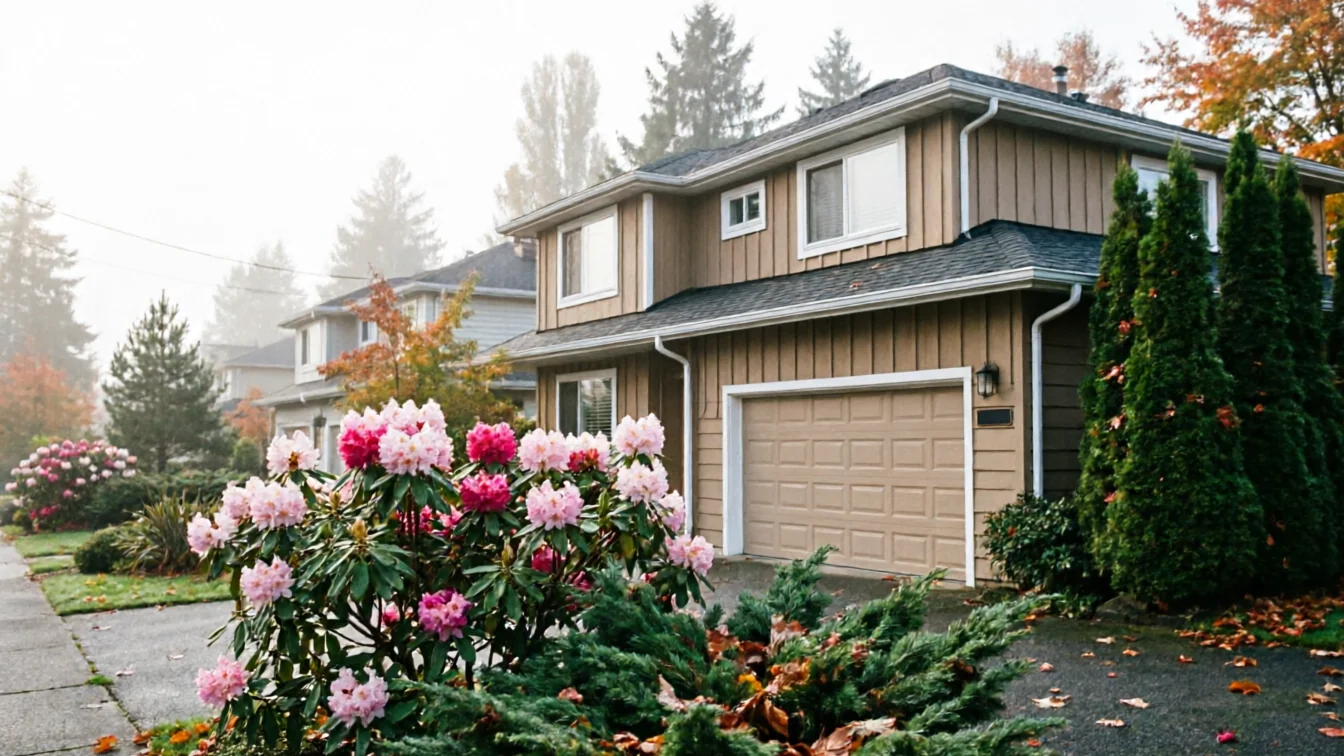
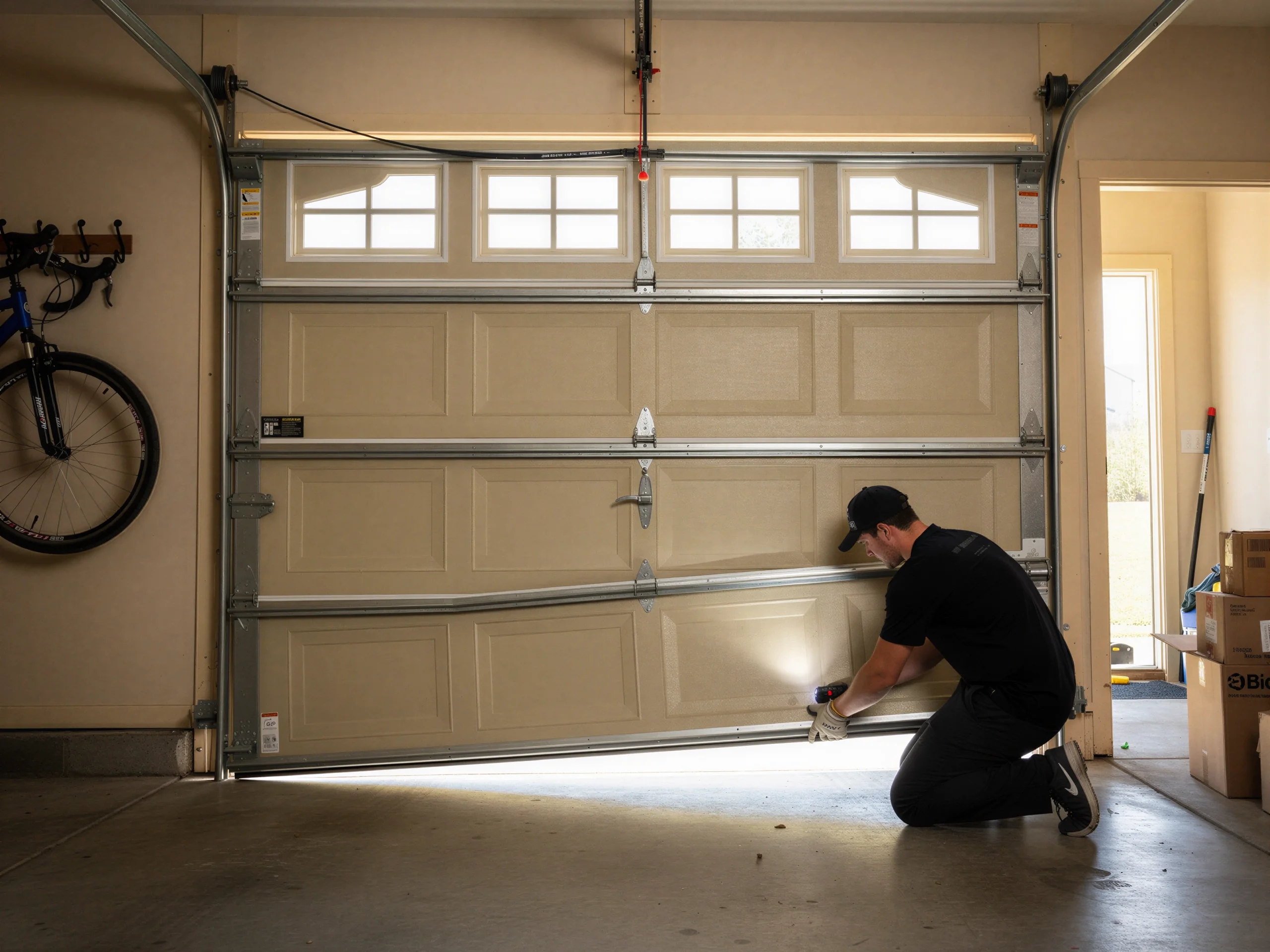
On a door from around 1997, the complaint is usually a cracked or dented steel panel from an impact - a car bumper, a stray ball, a trailer hitch backing in wrong - rather than the rot or rust you'd see on an older door. Sometimes it's a seam that's split along the embossed ridge line, which on these builder-grade steel doors is a weak point. You might also see the panel bowing slightly inward or outward where the foam insulation backing has separated from the steel skin, which is a structural issue even if the paint still looks fine from the driveway.
The repair
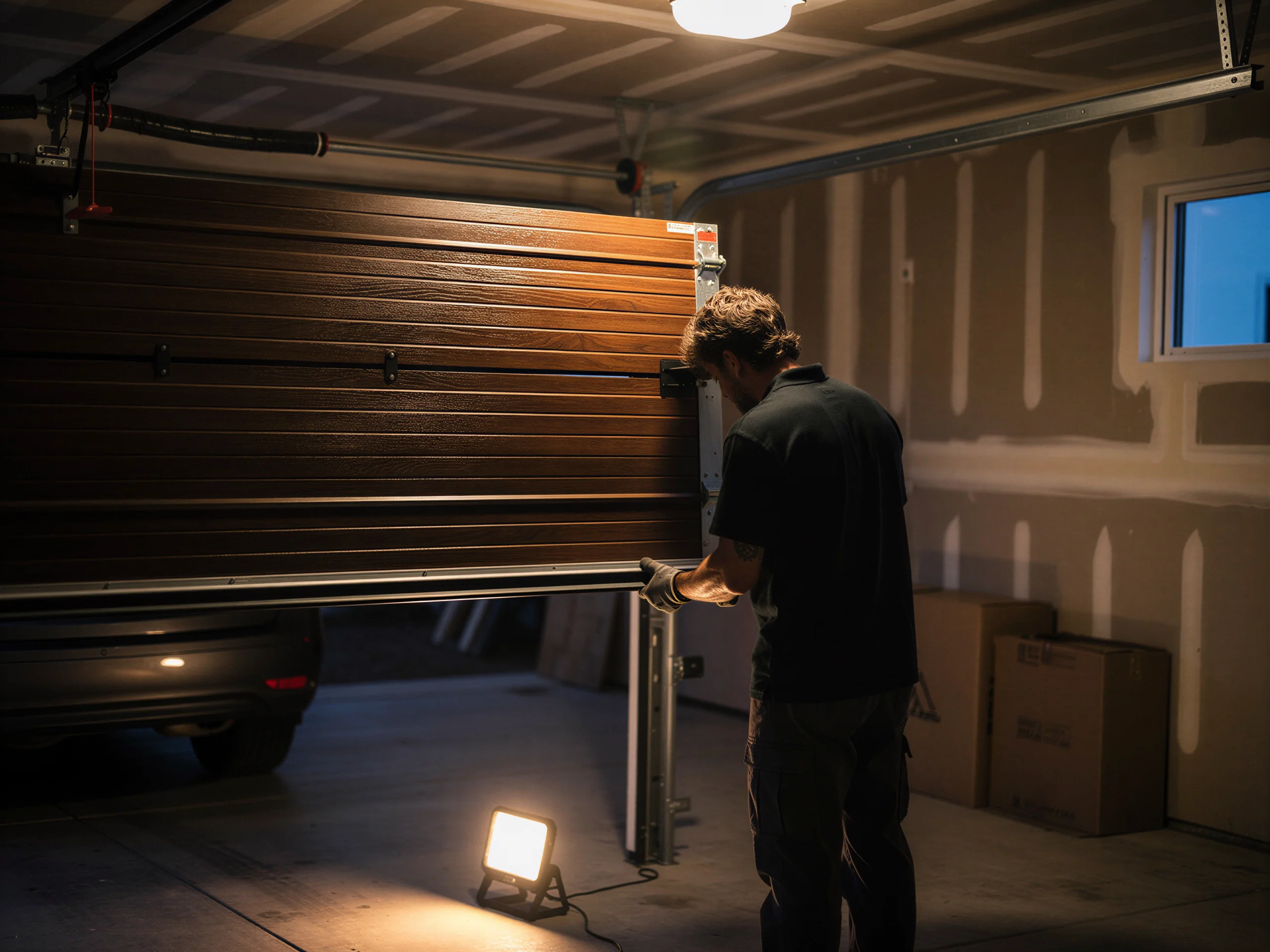
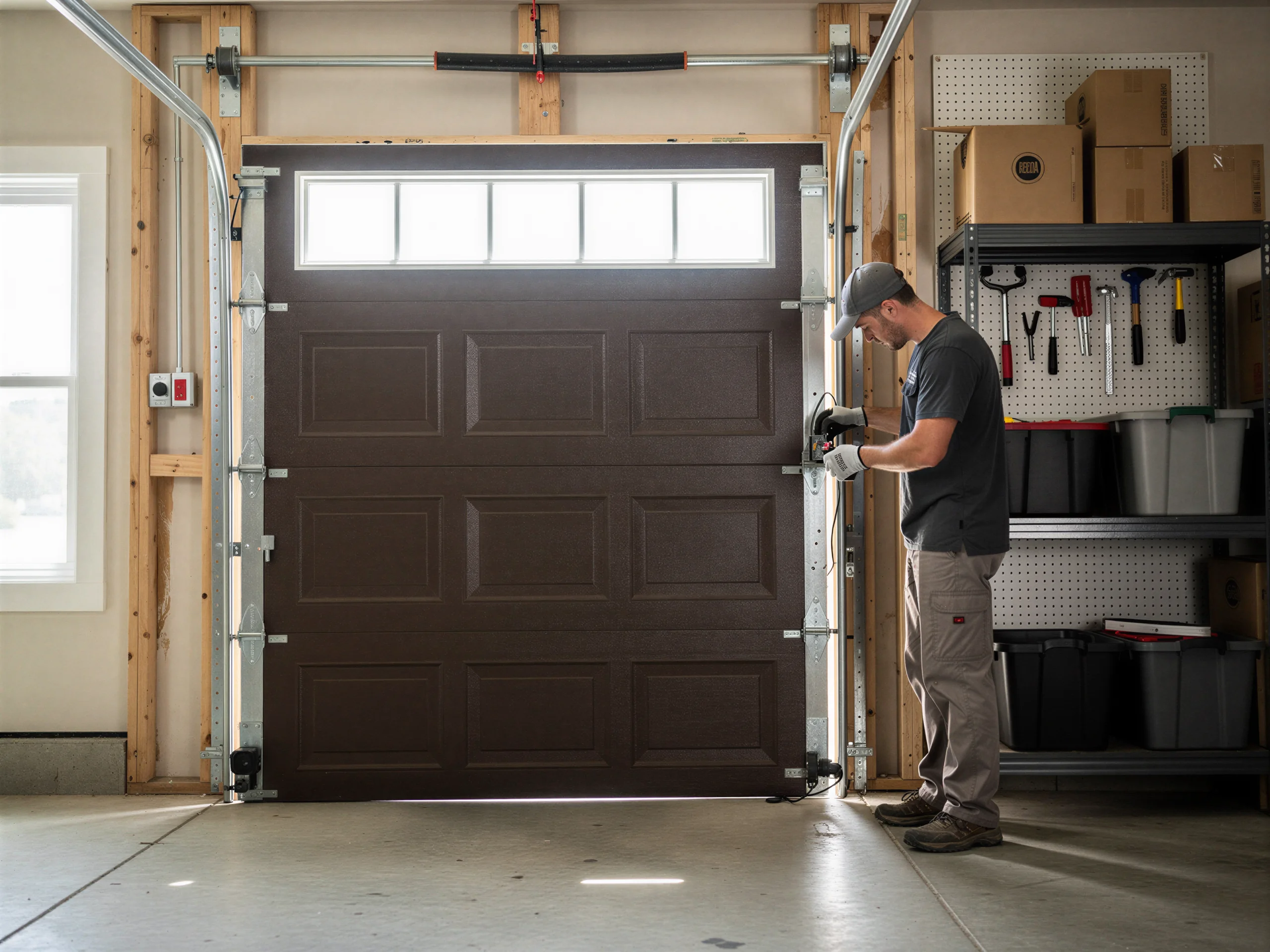
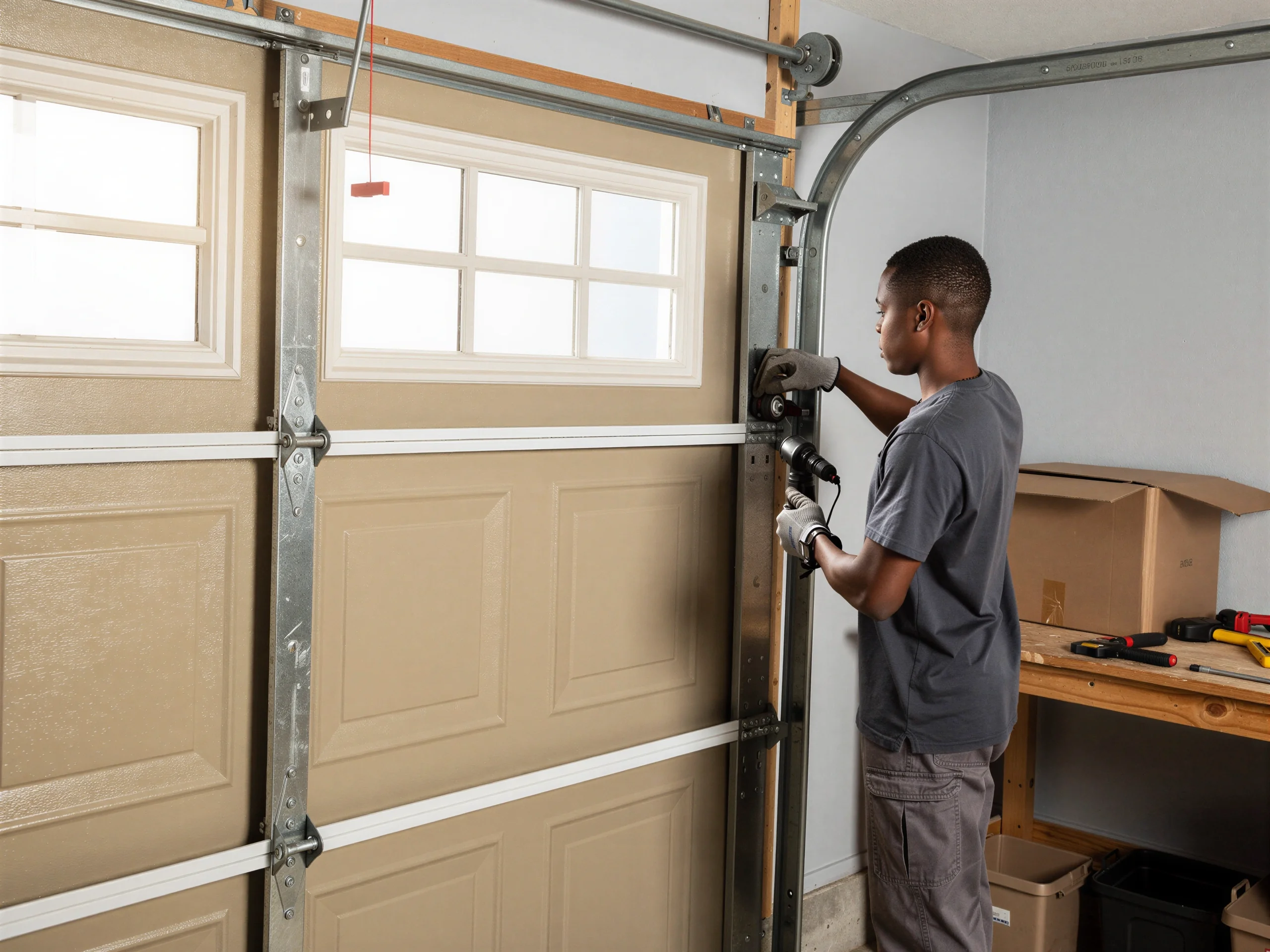
We pull the door down, disconnect the opener arm, and release the section by removing the rollers and hinges that tie it to the panels above and below.
If it's the bottom section, the track usually stays put. If it's a middle panel, we often have to lift and support the sections above it while we work, which takes more time and more hands than a bottom-panel swap.
Once the new section is in, we re-hang the rollers, reset the hinges, and run the door through a full cycle to check that it's not binding or dragging on the track before we call it done.
Watch-outs
The real complication on a 1997-era door is finding the exact panel profile - manufacturers changed embossing patterns and panel heights more than once through the 1990s, and a close-enough match isn't always close enough to install flush. If the door is insulated, the replacement panel has to match the R-value and thickness or the door will flex unevenly. And if the damage is on a double-wide door, the extra width means more weight on the hinges either side of the new section, which is worth checking even if the panel itself looks fine.
Questions
Depends on the door and the damage. On a newer door like most in Sherwood, one panel is often cheaper if we can source a close match. If the match won't be close, or if more than one panel is damaged, a full door often costs about the same and you get a uniform finish instead of a visible seam.
We'll try, but we can't promise an exact match on an older paint run. Late-1990s builder-grade doors have faded over two-plus decades, and a new panel will look slightly different until it weathers. We'll tell you how close we expect the match to be before you commit.
We don't run a retail counter - we bring the panel and install it on site. If you've already got a dented panel, call first so we can confirm the profile and order the right part before the visit.
Explore more
Ready when you are
Happy Valley Garage Door Pros repairs and installs garage doors, springs and openers in Happy Valley, OR and the surrounding area.