Price drivers on new installs
Price on a new install comes down to door size, insulation level, and opener choice, and we don't have a price list to post here - only a ballpark once we've seen the opening and measured the track run.
Oatfield, Happy Valley
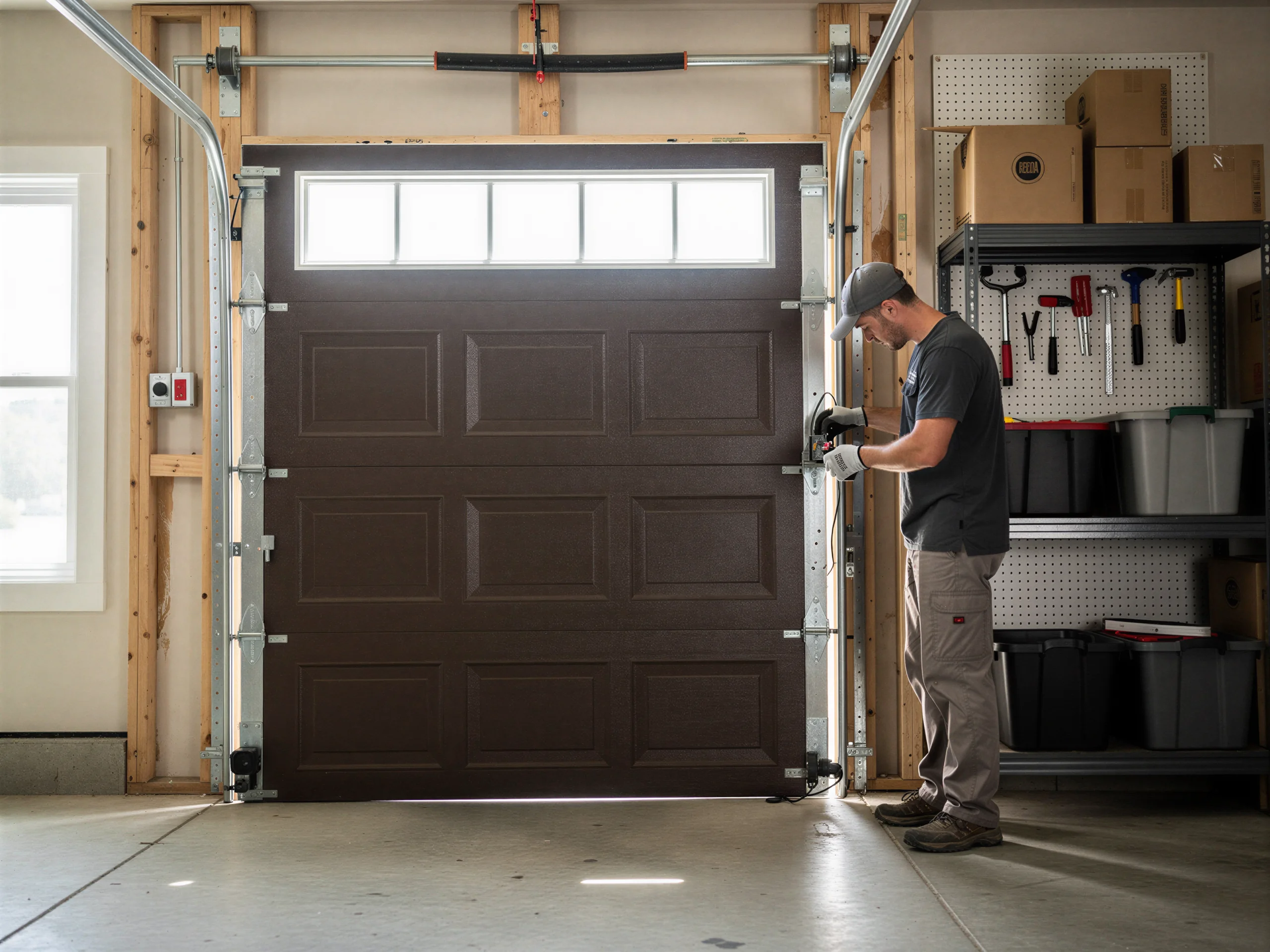
Oatfield homes mostly date to 1976, with older torsion hardware sized for lighter doors. We bring new installs out from Happy Valley, just 4 miles away.
Pricing
The drive from Happy Valley to Oatfield is about 4 miles, short enough that a new-door install here runs as a normal job, not a special trip with mileage tacked onto the estimate.
Price on a new install comes down to door size, insulation level, and opener choice, and we don't have a price list to post here - only a ballpark once we've seen the opening and measured the track run.
What we can say is this: with Oatfield's median household income at $103,483, most owners here end up quoting jobs in the mid-to-upper range of what we install, rather than the bare-minimum single-layer option.
Across the wider service area, 44,493 of 87,301 households own rather than rent, and owners tend to spend on insulation and a quieter opener rather than the cheapest door that fits the frame. One limitation worth saying plainly: we don't build custom wood doors to order, and we'll tell you that upfront.
If that's the look you want, we'll tell you that upfront instead of quoting a job we can't do well.
Warning signs
Oatfield's houses mostly date to 1976, sitting in the middle of the service area's broader 1964-2003 build-out of mostly 1960s-70s stock. A door from that era is almost always a single-layer steel panel hung on a torsion spring mounted over the opening, no insulation core, no window inserts, running off a chain-drive opener that's probably been swapped once already.
What that means on a service call: the track is often narrower than what current doors ship with, the header above the opening wasn't framed for a heavier insulated panel, and the spring sizing on file (if there ever was one) doesn't match anything you'd order new today. None of that is unusual for a house this age - it just means a new install isn't a straight panel swap. We measure the opening fresh every time rather than trusting what's already mounted there.
Timing
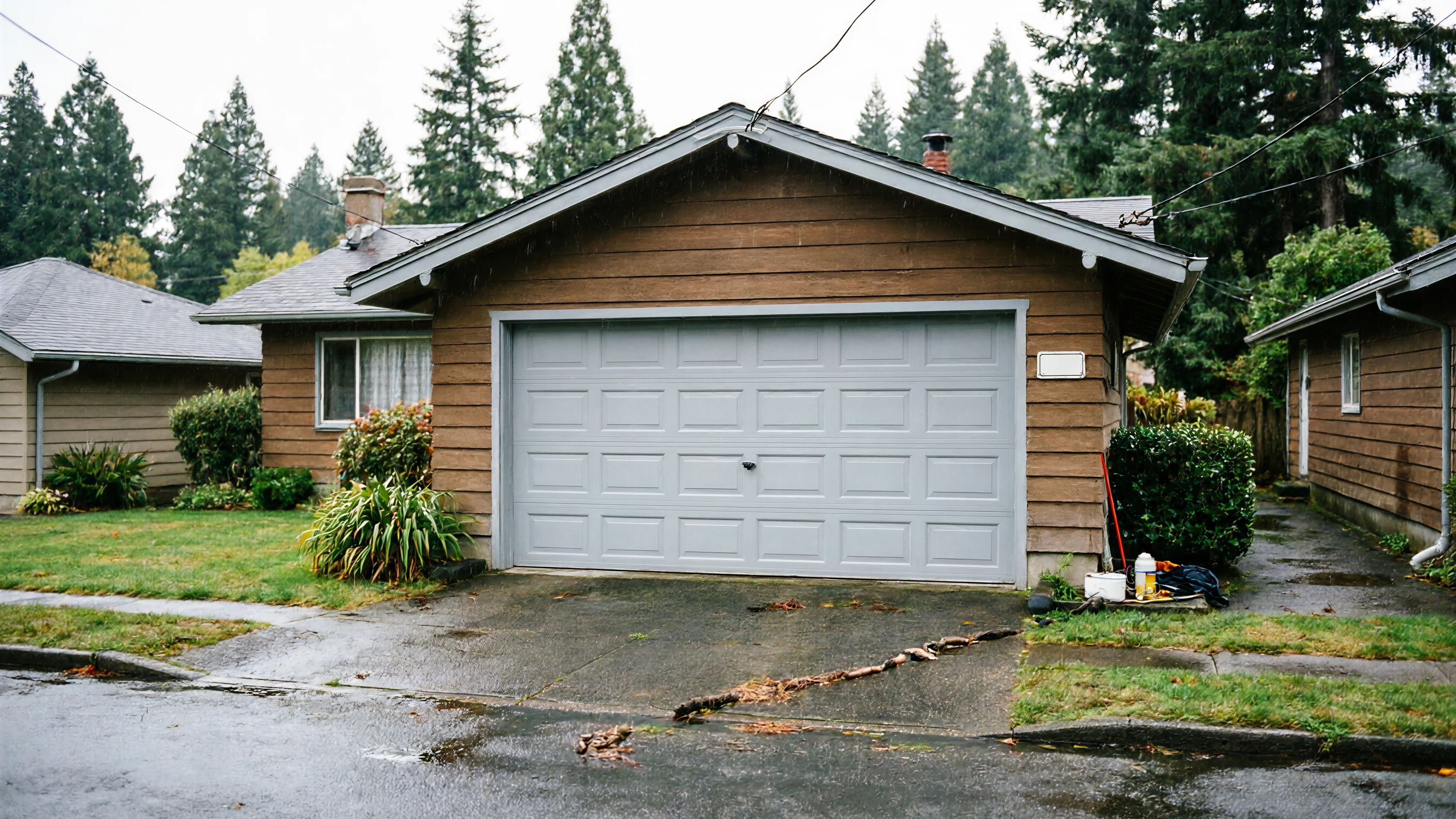
Because Oatfield sits only 4 miles out, travel doesn't eat into the install window the way it might on a longer run elsewhere in the area.
A single-door replacement on an opening that doesn't need header or track rework is typically a half-day job once the door and opener are on the truck. Double doors, or any opening where we have to widen or reframe for a new track, run closer to a full day.
The honest caveat is parts. If you want a specific insulated panel in a less common width, or a particular opener model, that's a special order and the lead time is set by the manufacturer, not by us - we can't promise a date until the order's placed and confirmed.
For stock sizes and the openers we keep on hand, we're not waiting on anything, and the short drive from Happy Valley means scheduling isn't the bottleneck either.
The repair
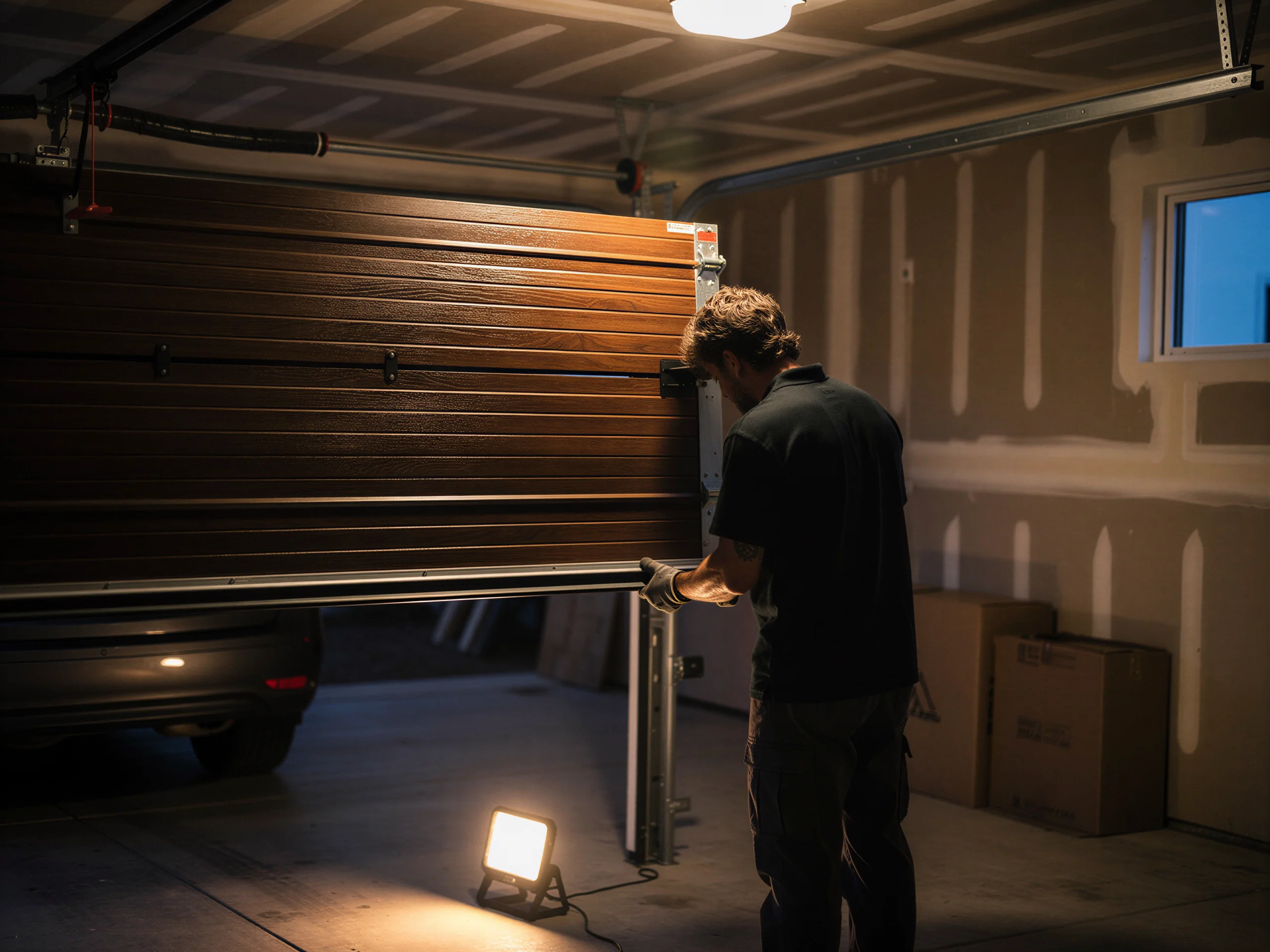
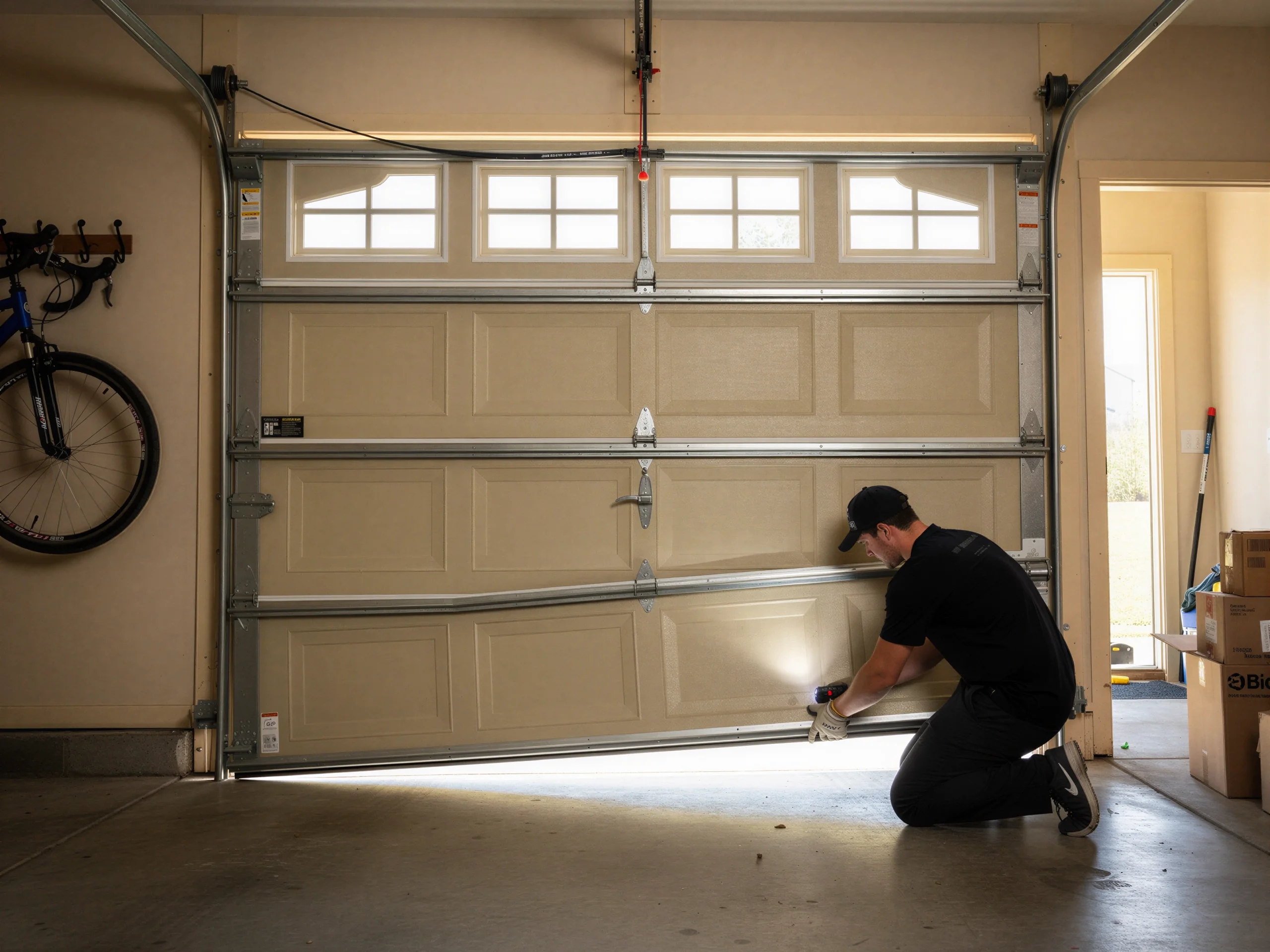
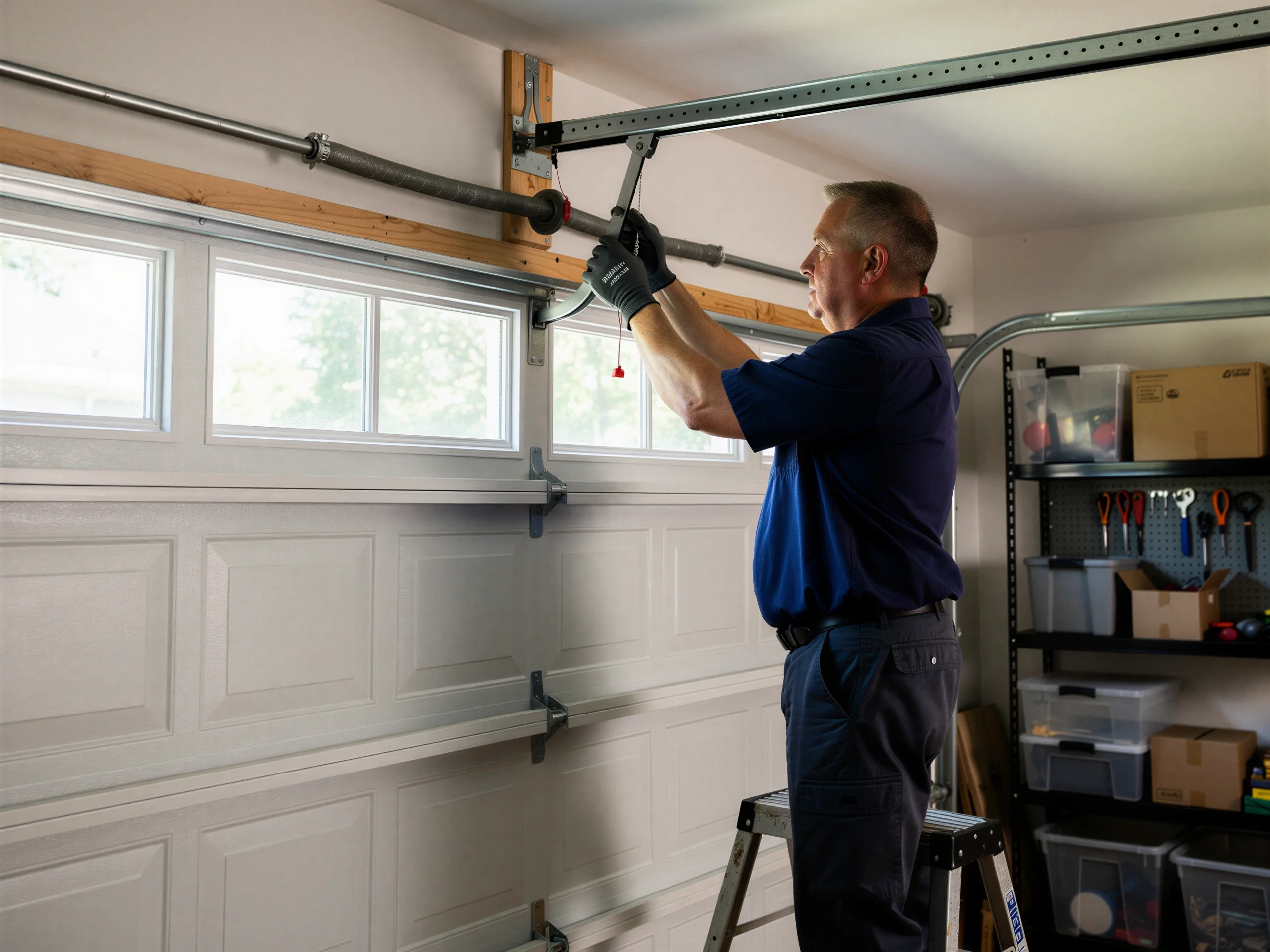
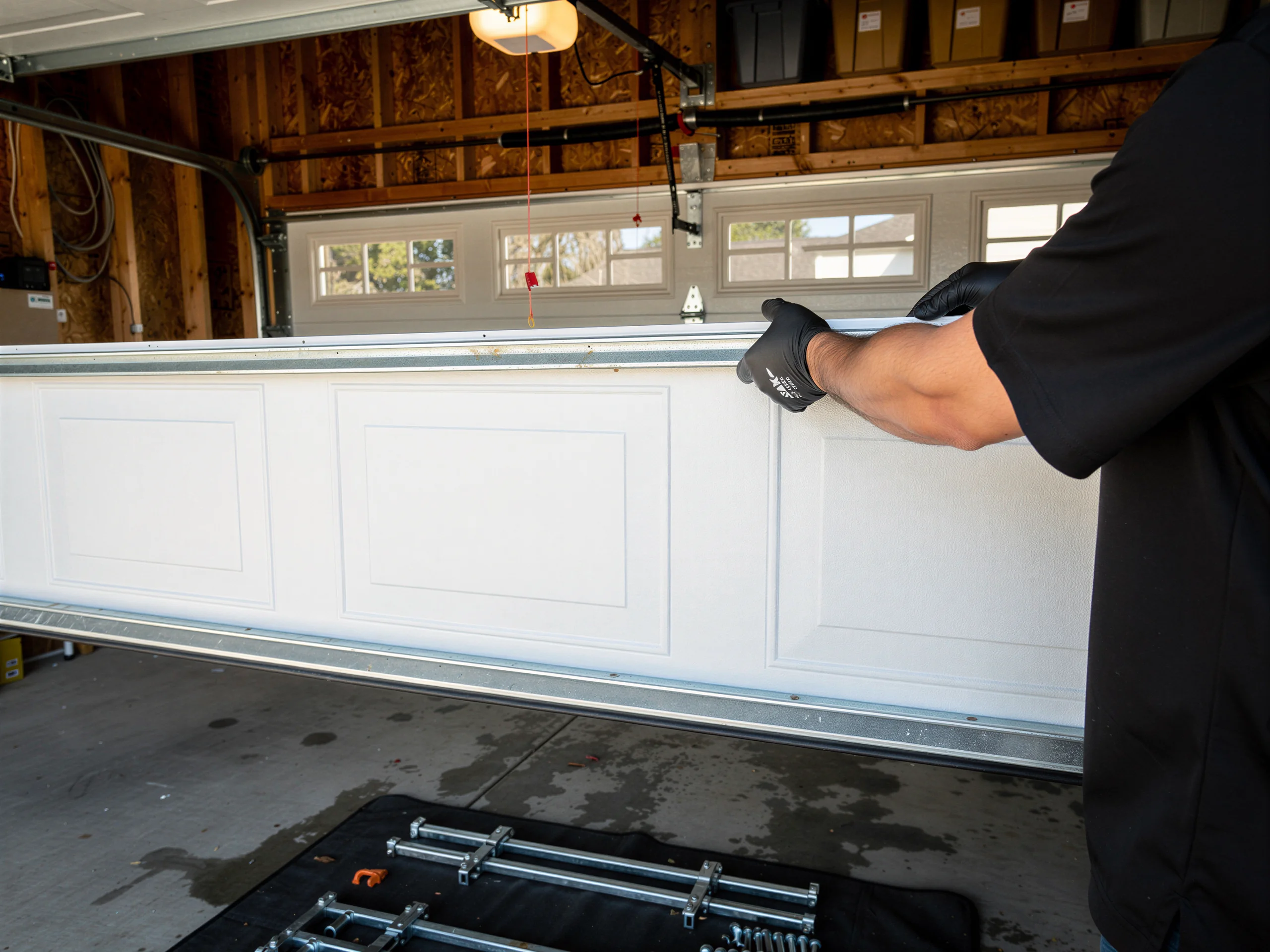
A new install starts with pulling the old panel, track, and springs off the opening - on a 1976-era house that's usually a single-layer door on side-mounted torsion hardware, so we're removing more steel than a newer insulated door weighs.
We check the header and jamb for rot or settling before anything new goes up, since houses from this build era have had forty-plus years for water to find a weak seam.
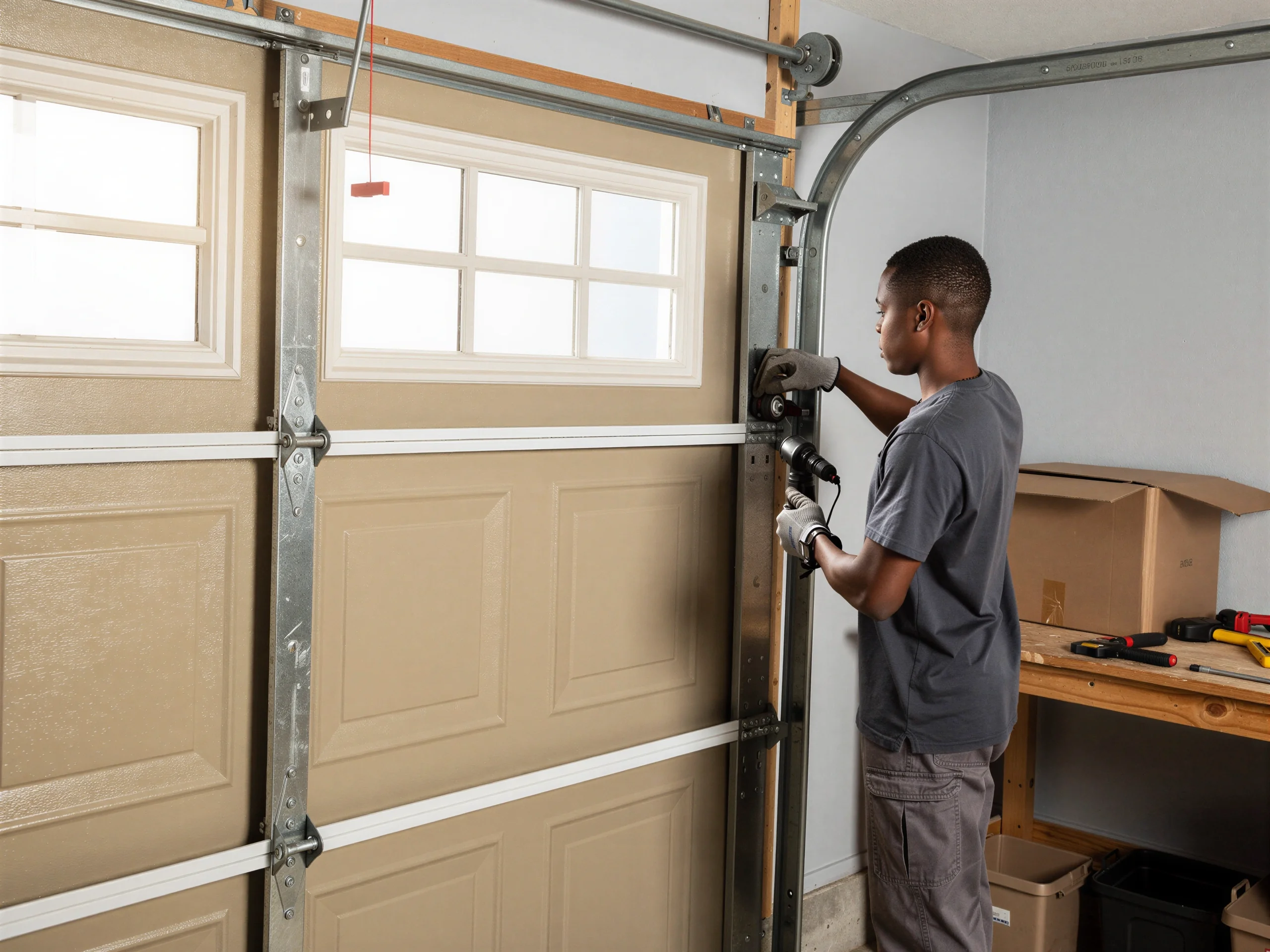
From there it's new track sized to the door we're hanging, springs wound to the actual weight of that door (not the old one), and the opener mounted and travel-limited so the door seats evenly without slamming the floor or stalling at the top.
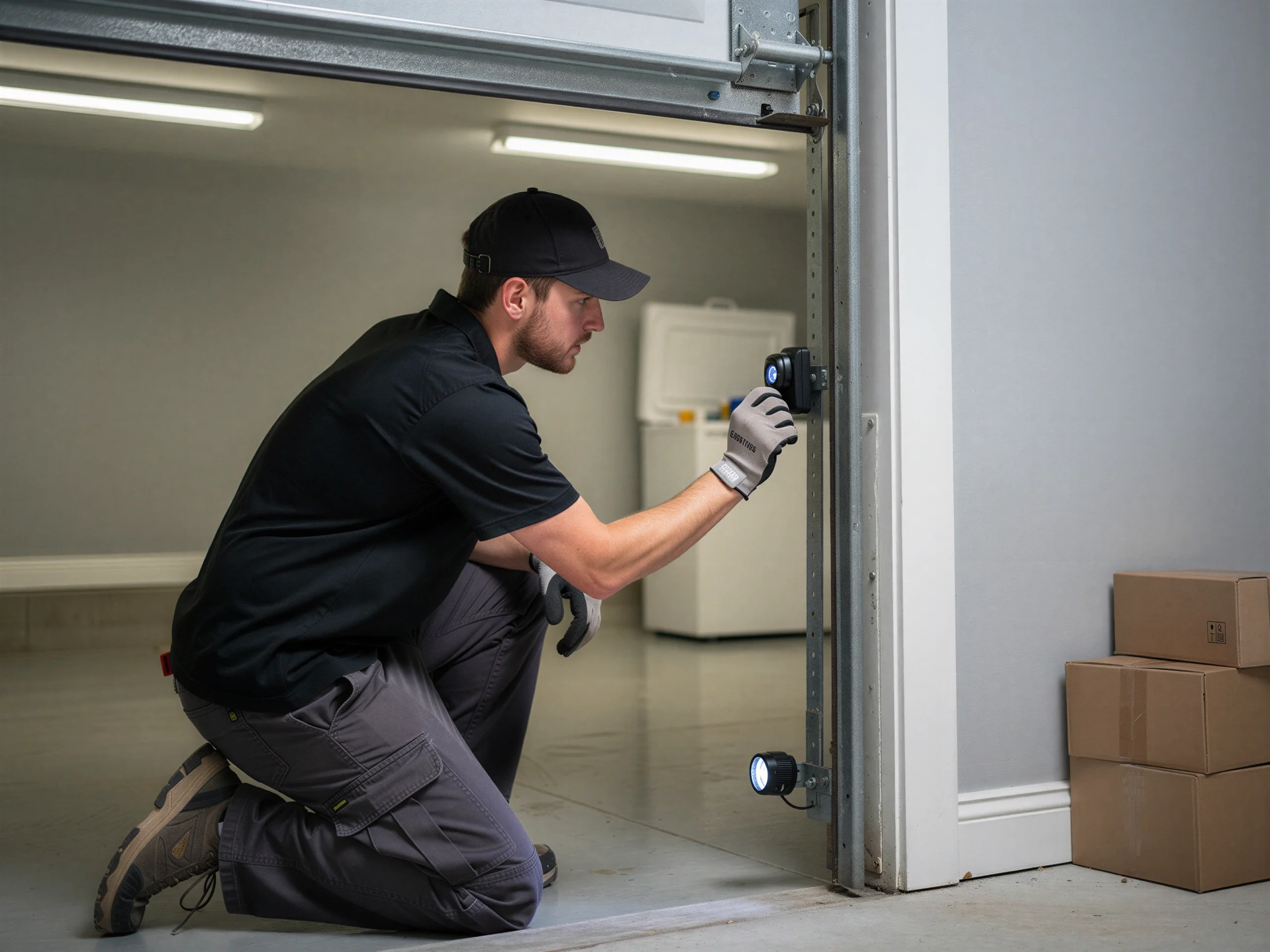
Last step is the sensor pair at the base of the track - a lot of openers on older Oatfield doors were installed before those were standard, so we're not just swapping an opener, we're bringing the whole setup up to a safer baseline.
On the truck
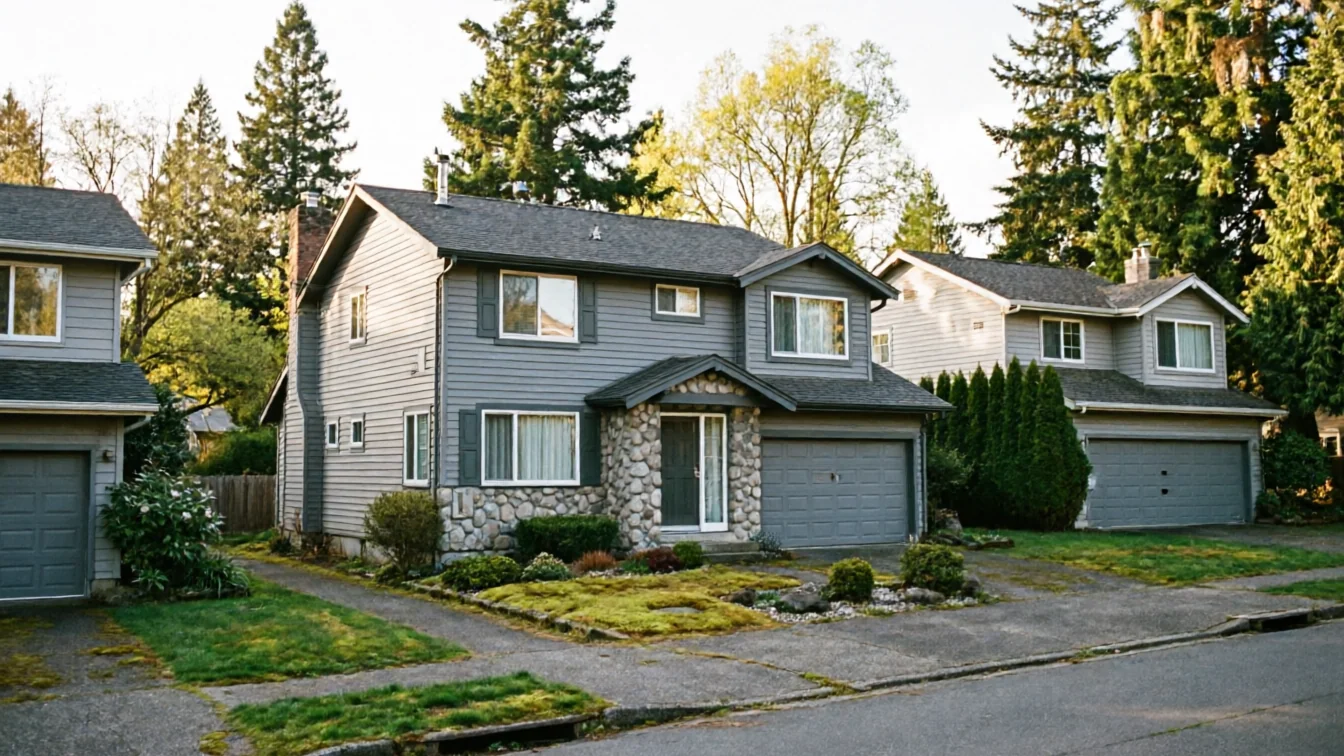
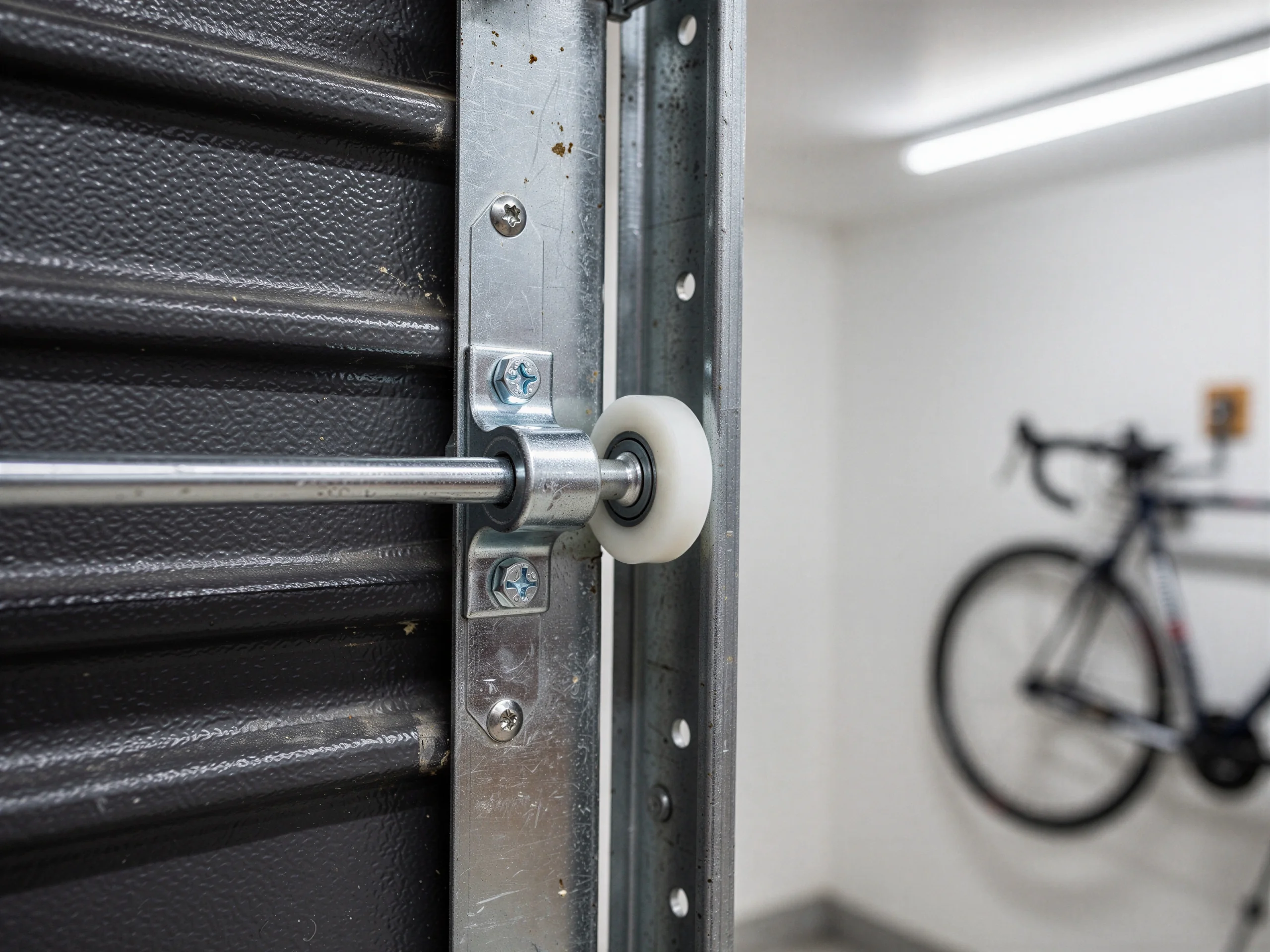
For a house built around 1976, we stock torsion springs sized for both the old single-layer steel panels and the heavier insulated doors owners often step up to, plus galvanized track in the widths that fit openings from that era without reframing. Opener stock runs chain-drive and belt-drive, since some owners want the quiet belt and others don't care and would rather save the difference.
The climate here runs mild with occasional freeze rather than hard winters, so we don't push the heavy-duty cold-climate weatherstrip packages we'd spec somewhere with real hard-freeze stretches - standard seal kits handle an Oatfield winter fine. What we don't carry on the truck is custom-width glass-panel doors; those are special order, same as anywhere else we work, and we'll say so before you commit to a timeline.
Questions
About 4 miles. It's a short drive, so an install here runs on the same schedule as jobs closer to Happy Valley - there's no separate trip charge or longer wait built into it, and we can usually fit a standard single-door job into an afternoon.
Most Oatfield houses date to around 1976, and openings from that era were framed for a single-layer steel door, not today's thicker insulated panels. Often it's a straight swap. Sometimes the header or track run needs minor rework to carry the extra weight - we check that before we quote, not after.
We carry torsion springs and track sized for the 1960s-70s stock common across the area, which covers most of what's already mounted on Oatfield doors. If your opener is a specific older model that's since been discontinued, we'll tell you straight if it's a special order rather than something on the truck.
Explore more
Ready when you are
Happy Valley Garage Door Pros repairs and installs garage doors, springs and openers in Happy Valley, OR and the surrounding area.