Junction box wiring surprises
Houses from this era sometimes have the wall switch wired through a junction box that was never meant to carry a dedicated circuit, and finding that out changes the scope mid-job.
Fairview, Happy Valley
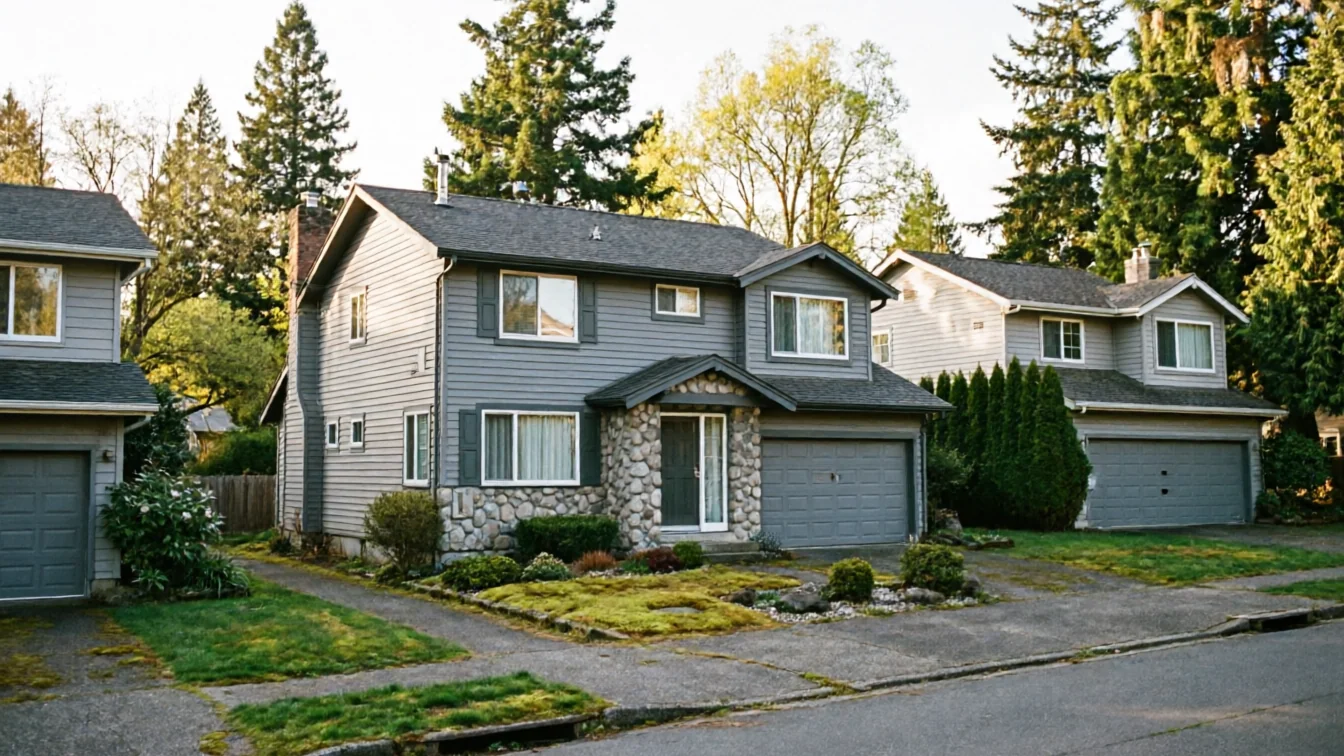
Fairview's typical house dates to 1995, a generation newer than the rest of the service area. Here's what that build era means for opener age, wiring, and replacement work.
The repair
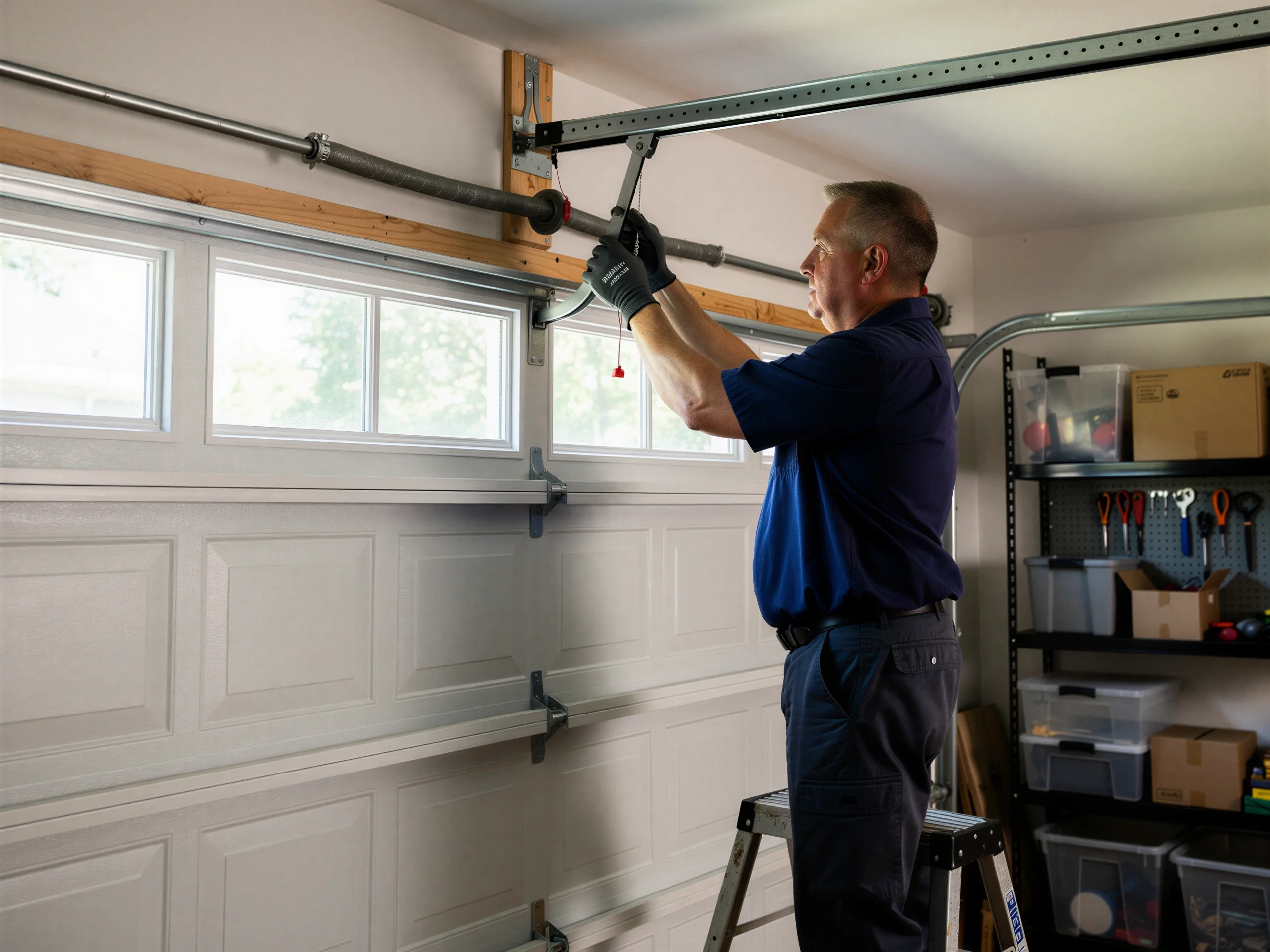
A typical Fairview house was framed around 1995, which means the garage already has a factory rough opening sized for a standard sectional door and a ceiling joist pattern built for a light chain-drive unit, not the heavier belt-drive and jackshaft models common today.
Installing a new opener here usually means pulling the old mounting bracket off the same joist, running fresh low-voltage wire to the wall console and safety sensors, and in a lot of cases swapping out a wall switch that was never grounded to code when the house went up.
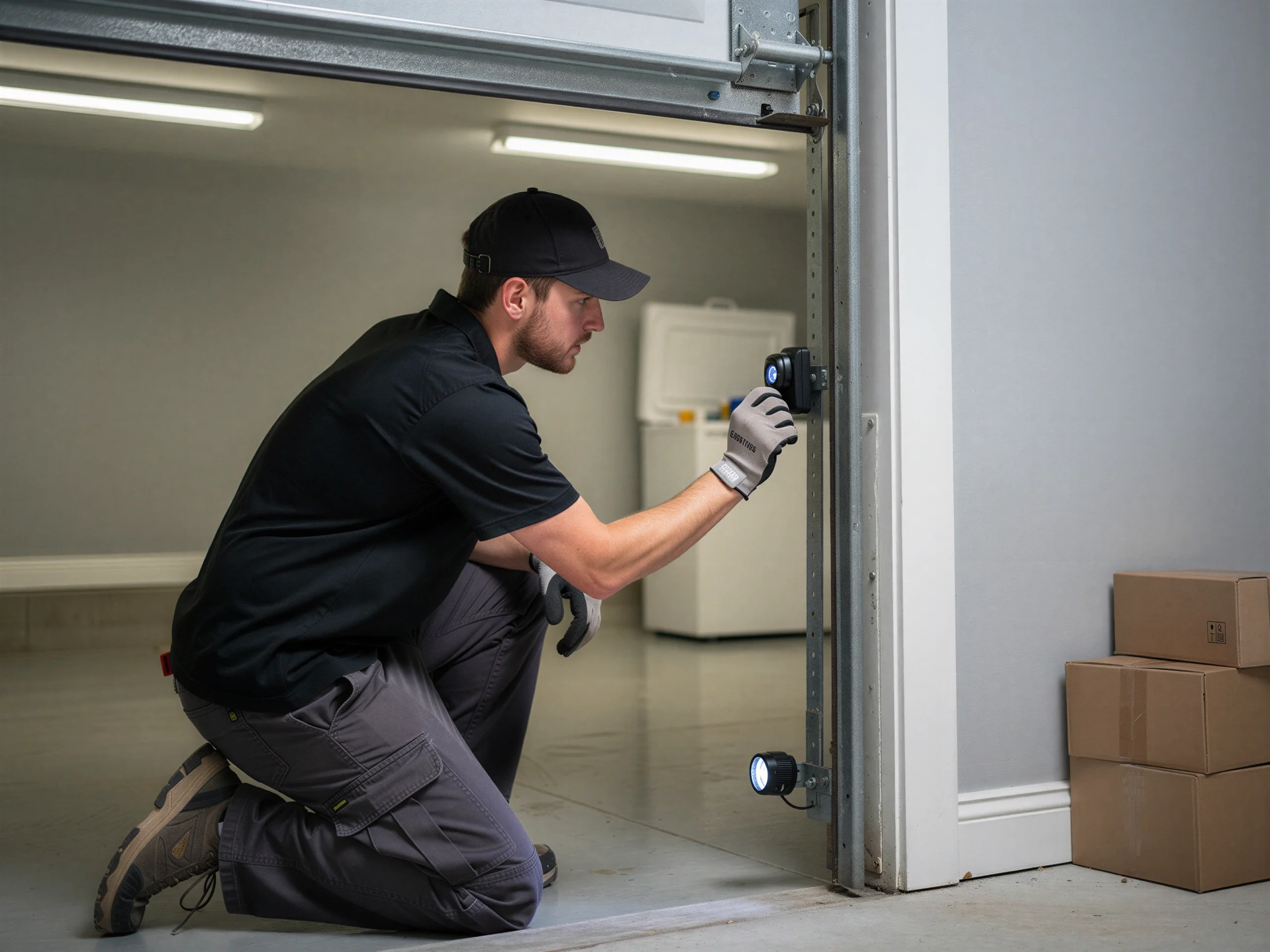
We mount the rail, set the travel limits, pair the remotes, and test the safety reverse on the sensors at the base of the track. If the existing header or bracing can't take the new unit's weight, we say so before we hang anything, not after.
We don't add structural bracing to a garage frame as part of this job. If the ceiling joist is split or undersized for anything heavier than what's already there, that's a separate conversation and a separate scope.
Local causes
The typical Fairview house went up in 1995, a full generation after the 1978 median build year across the wider territory we cover from Happy Valley. That gap matters because an opener installed when the house was built is now pushing thirty years old - well past the point where the circuit board, the chain, and the drive gear hold up. Owners in the older 1960s and 70s stock nearby are often replacing a second or third opener; a lot of Fairview garages are still running the original unit from construction, and it's failing all at once rather than wearing down slowly.
The region's mild climate with occasional freeze (per regional climate data) isn't the main stress here - it's age and duty cycle. A nylon drive gear stripped from thirty years of use doesn't care what the weather did. When the gear goes, the motor keeps running but the door doesn't move, which is the single most common call we get from houses built in this window.
Timing
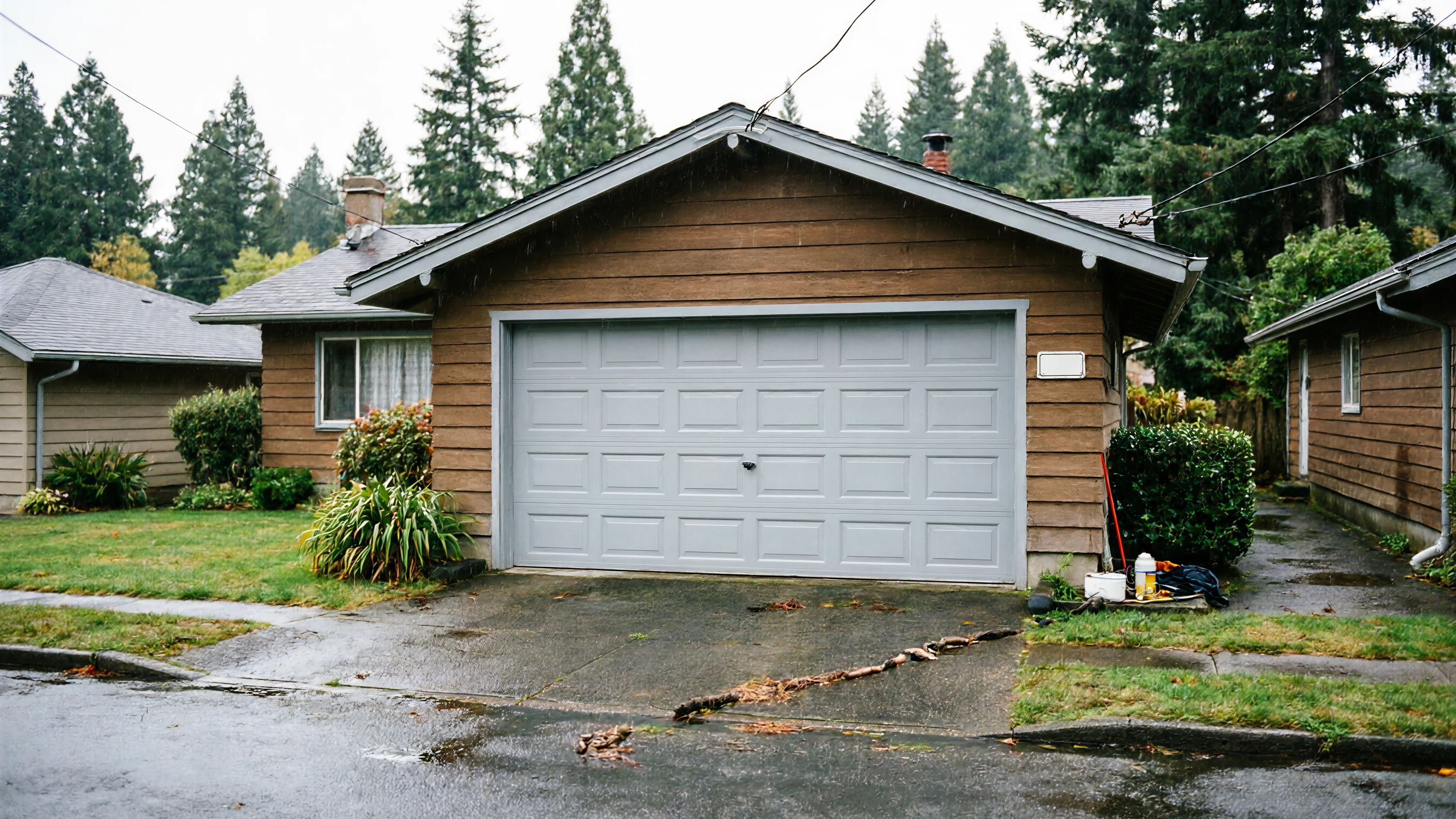
We're not going to give you a number that doesn't hold up, because the real variable in Fairview isn't the opener itself, it's what's hiding above the ceiling.
Houses from this era sometimes have the wall switch wired through a junction box that was never meant to carry a dedicated circuit, and finding that out changes the scope mid-job.
If the existing wiring is sound and the mounting bracket is solid, swapping one chain-drive unit for a new belt-drive opener is a contained job. If we find a cracked header, rotted bracing, or wiring that needs to be run fresh from the panel, that adds a trip and a different conversation about cost.
We drive the 8 miles out from Happy Valley to do this work - there's no branch or depot in Fairview, so the job gets scheduled around the route, not around a storefront on your street.
Warning signs
If your opener dates to when the house was built, the symptoms tend to show up as a cluster, not one clean failure. The motor runs but the door doesn't lift, or it lifts a few inches and stops.
The remote works from inside the garage but not from the driveway. The wall button clicks but nothing happens for a second or two first. Any of those point to a drive mechanism or board nearing the end of a long service life rather than a one-off glitch.
A blinking light on the motor housing with no door movement at all usually means the safety sensors have drifted out of alignment or the gear inside has stripped.
Neither is worth chasing with a reset - by the time an opener installed when a Fairview house like this was built starts acting up, it's usually telling you it's done, not that it needs a tune-up.
DIY or pro
Swapping a wall console or reprogramming a remote is within reach for most homeowners. Mounting a new opener rail, wiring it into the house circuit, and setting the safety sensor alignment correctly is a different job - get the sensor height or the travel limit wrong and the door can close on something without reversing.
If your garage still runs on the original run of wire from 1995, we'd rather look at it before you start pulling down the old unit, because what's behind the drywall isn't always what's on the wiring diagram.
What we won't do is talk you into a new opener if the one you've got is still within its working life and just needs a sensor realignment or a new remote battery.
Replacement makes sense when the drive mechanism is worn out or the board is failing intermittently, not as a default fix for a door that's just acting a little slow.
On the truck
For houses in this part of the territory we carry belt-drive and chain-drive openers in the ranges that fit a standard sectional door on a single garage, along with replacement safety sensor pairs, wall-mounted keypads, and battery backup units for the power blips that come with an older electrical panel. If your current opener is the original chain-drive unit from construction, the belt-drive upgrade runs quieter and doesn't rely on a metal chain stretching over decades the way the old one did.
We stock what fits the openings and bracket patterns common to this build era; anything outside that range may mean a short wait on a specific part, and we'll tell you up front if that's the case rather than guess at a timeline.
Questions
If your Fairview house was built around 1995, which is typical for the area, there's a good chance the opener bolted to the ceiling is the original unit from construction. Thirty years of chain drive and board wear shows up as intermittent failures, not a single dramatic breakdown, so it can feel sudden even though the wear has been building the whole time.
No. Happy Valley Garage Door Pros covers Fairview from Happy Valley, about 8 miles away. We schedule the job around the route rather than a local storefront, so there's no walk-in counter here, just a truck that comes out for the install.
Yes. If your opener is failing because a sensor has drifted or a remote needs reprogramming, that's a cheaper fix than a full replacement and we'll say so. Replacement makes sense when the drive gear or board has actually worn out, not as a default answer to a slow or noisy door.
Explore more
Ready when you are
Happy Valley Garage Door Pros repairs and installs garage doors, springs and openers in Happy Valley, OR and the surrounding area.