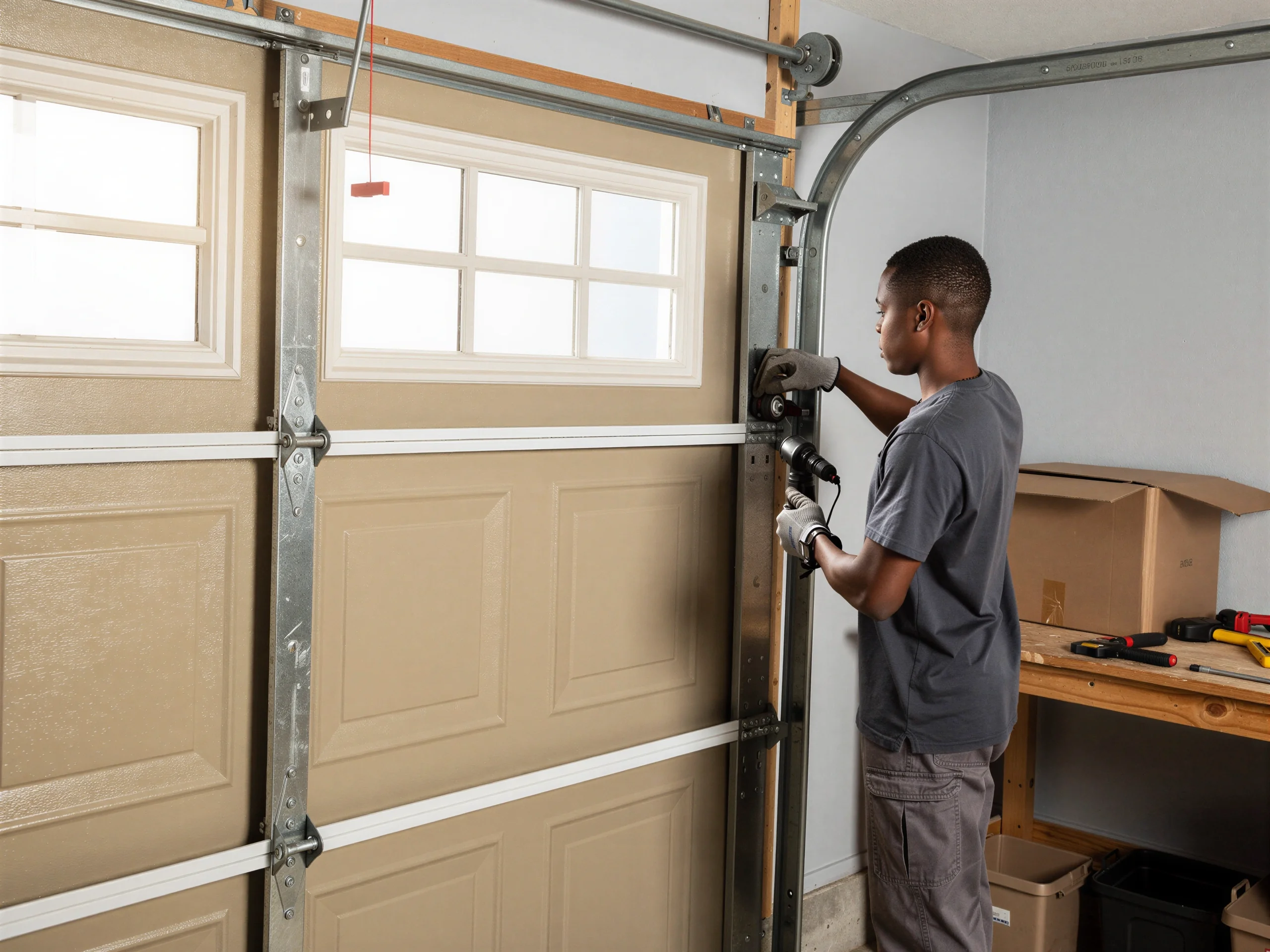
Scraping on one track side
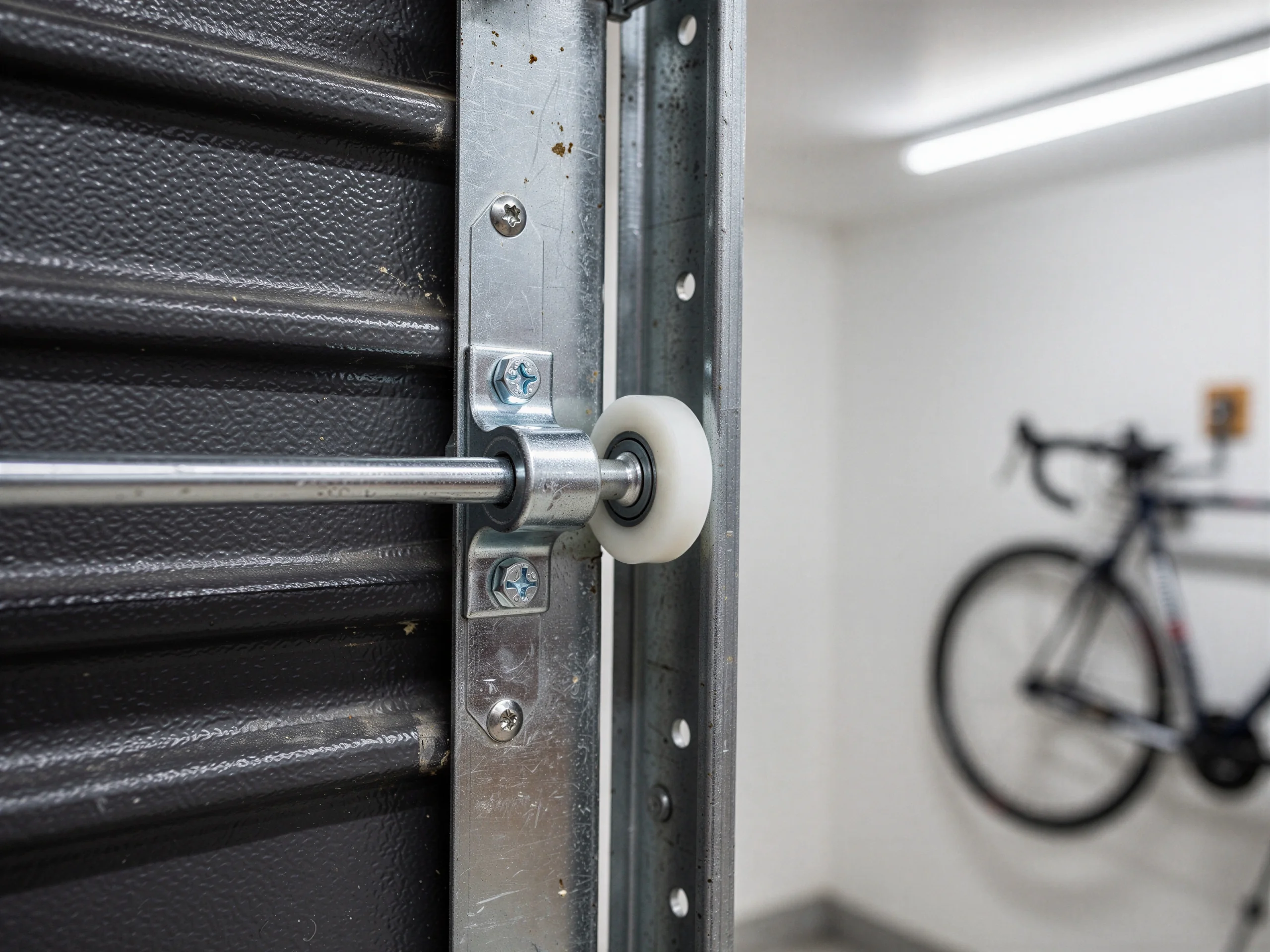
Sometimes you'll hear a grinding or scraping sound from one side of the track that wasn't there before, which is usually the roller riding the edge of the rail instead of sitting inside it.
Fairview, Happy Valley
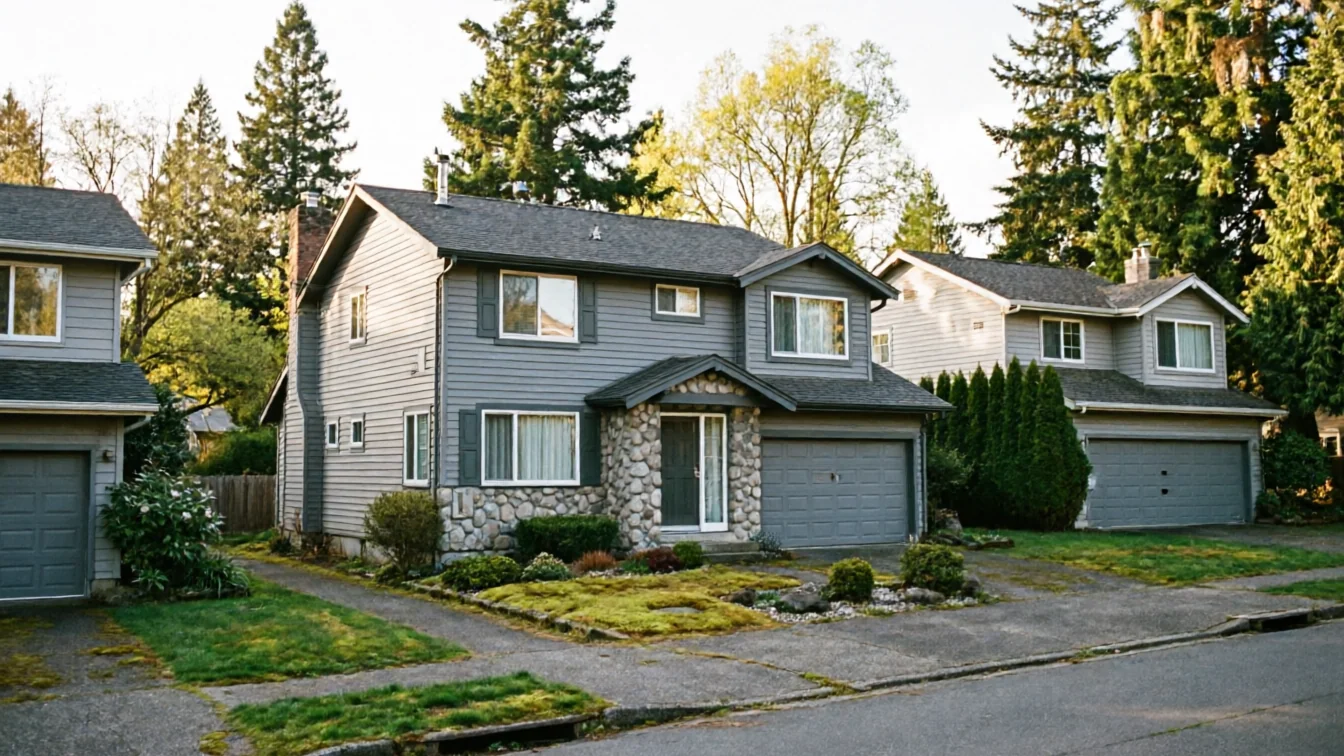
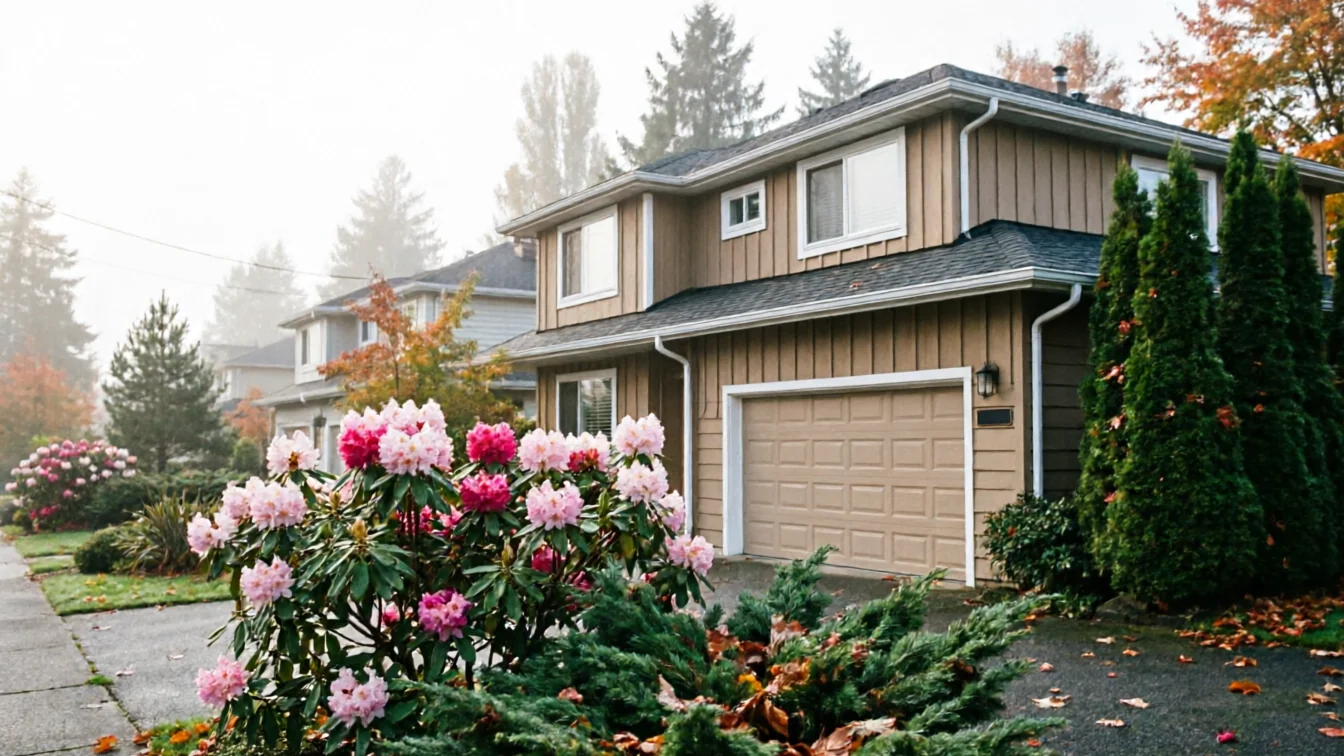
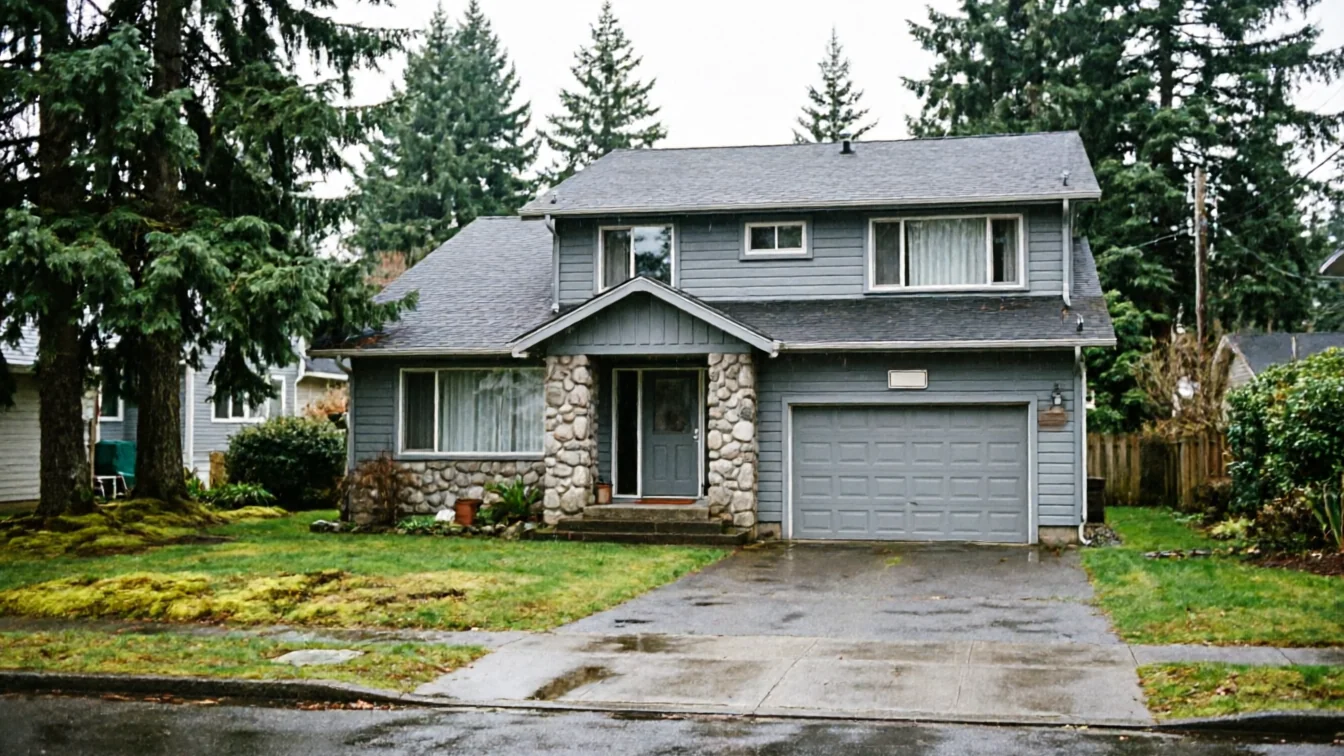
Fairview homes built mostly after 1995 run steel roller-track doors, not the older flat-panel stock nearby. Here's what off-track failure looks like on that hardware.
The repair
Fairview went up mostly after the mid-1990s, which means the doors on most garages here are steel sectional panels on nylon or steel rollers riding galvanized track, hung on torsion springs mounted on a single center shaft above the opening.
That's a different animal from the flat-panel, track-roller setups common on the older housing closer to Happy Valley, where the median build year sits around 1978. A 1995-era door track is lighter-gauge and the roller stems are shorter, so when a track bracket works loose or a roller jumps the rail, the panel binds or drops at an angle instead of riding smooth.
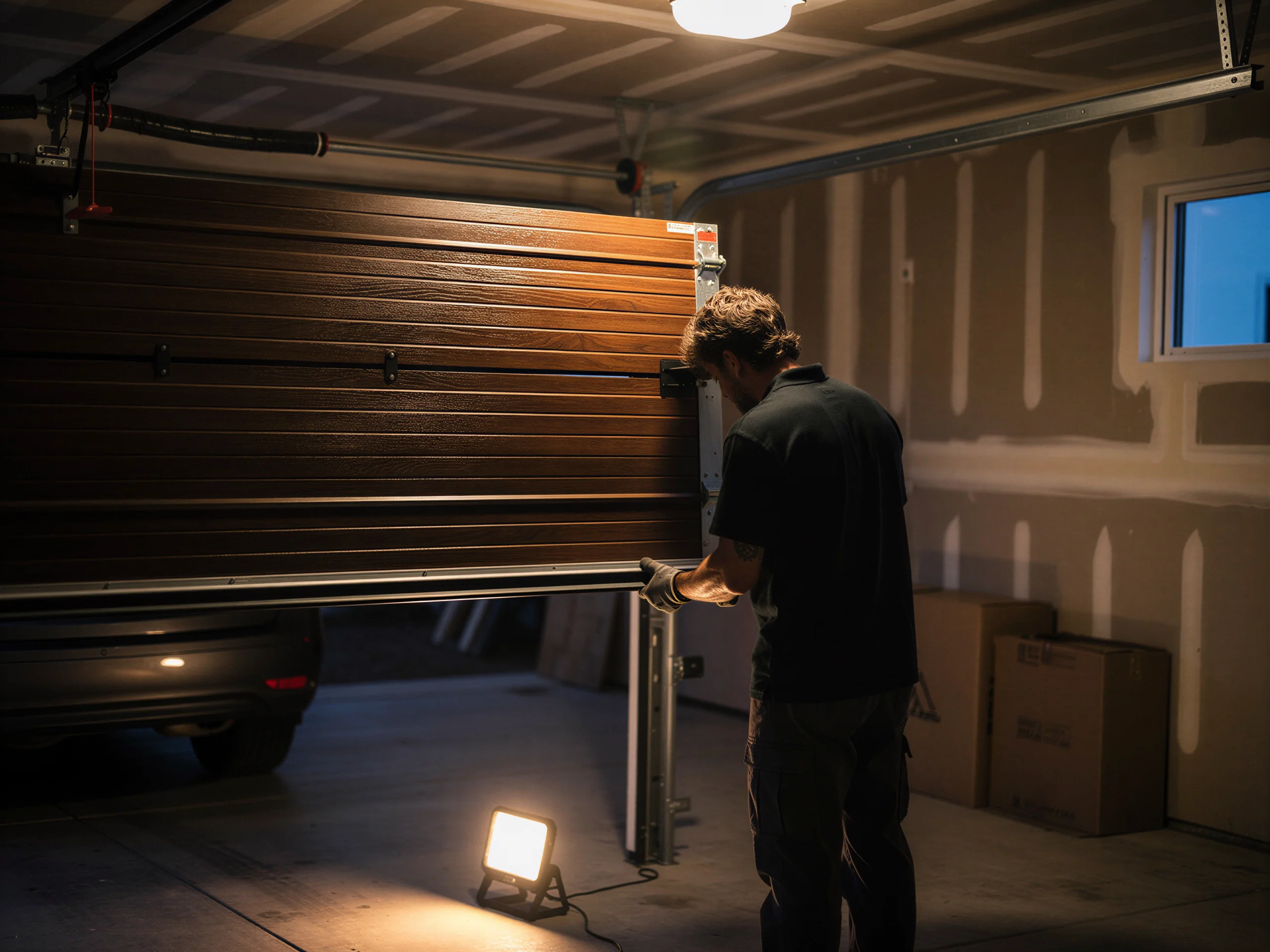
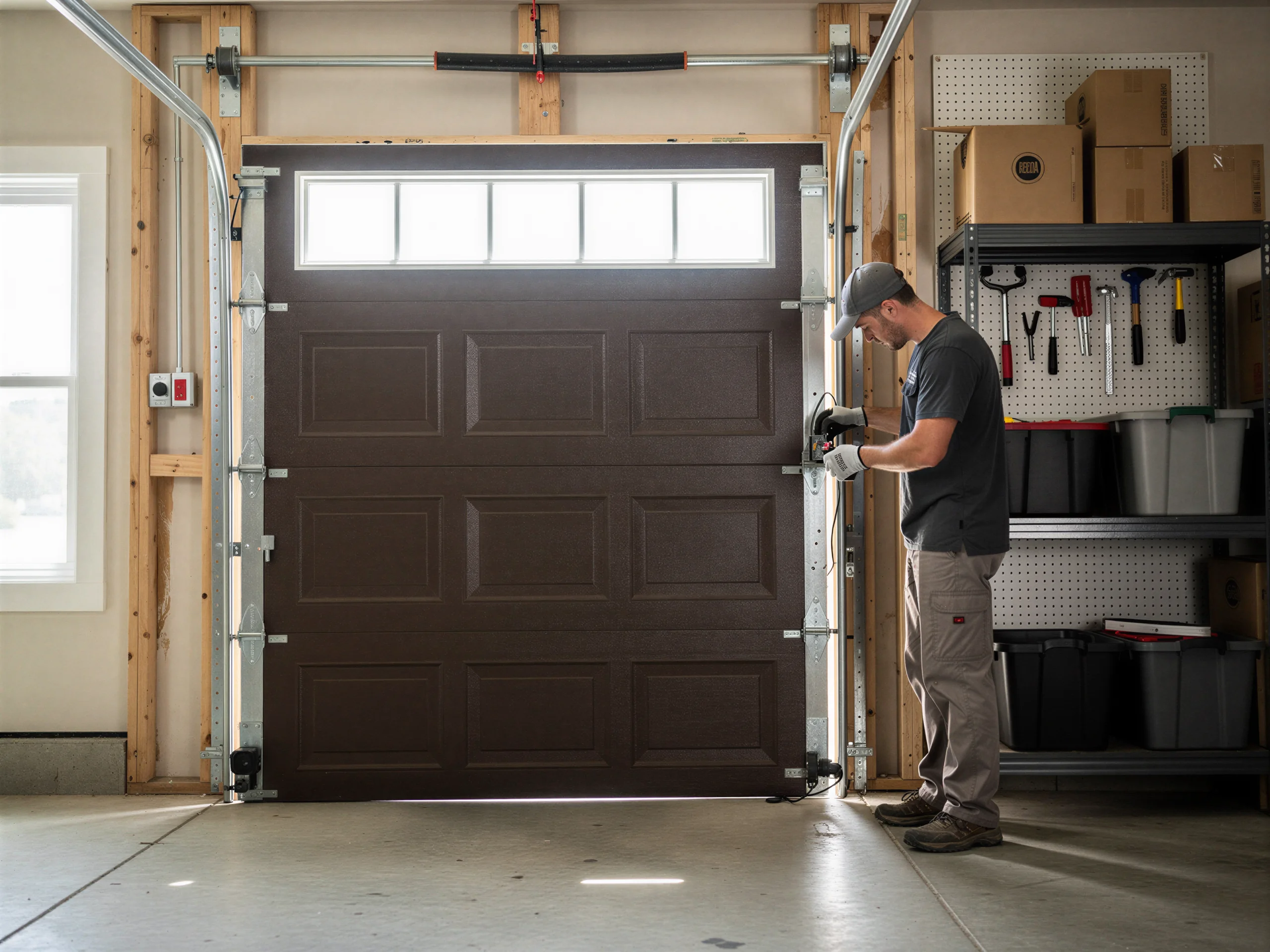
The fix starts with freeing the door from whatever position it's stuck in, usually by releasing tension at the spring rather than forcing the panel. From there we check every track bracket against the jamb, re-seat or replace rollers that have flat-spotted or cracked, and true up the track so it's parallel top to bottom on both sides.
If a bracket pulled loose from the framing, we re-anchor it into solid wood, not just into the drywall or trim that's often what gave way first on this era of build.
Local causes
The climate here runs mild with occasional freeze, which doesn't crack hardware the way a hard freeze-thaw cycle does, but it does mean moisture sits in track channels through the wet months without a hard freeze to dry things out fast. On a steel track that's 25-30 years old, that's enough to start light surface rust at the bracket bolts, and a rusted bolt backs out slower but it still backs out. Add a door that's been lifted and lowered a few times a day for three decades and the bracket eventually shifts just enough that the roller walks off the rail on the next cold, damp morning when the steel's slightly stiffer.
We also see it from impact - a car mirror or a bike clipping the bottom panel hard enough to rack the track rather than dent the skin. On the lighter aluminum track used in a lot of builds from this period, that kind of hit bends the rail enough to throw the roller off on the next cycle, even if nothing looks bent to the eye.
Timing
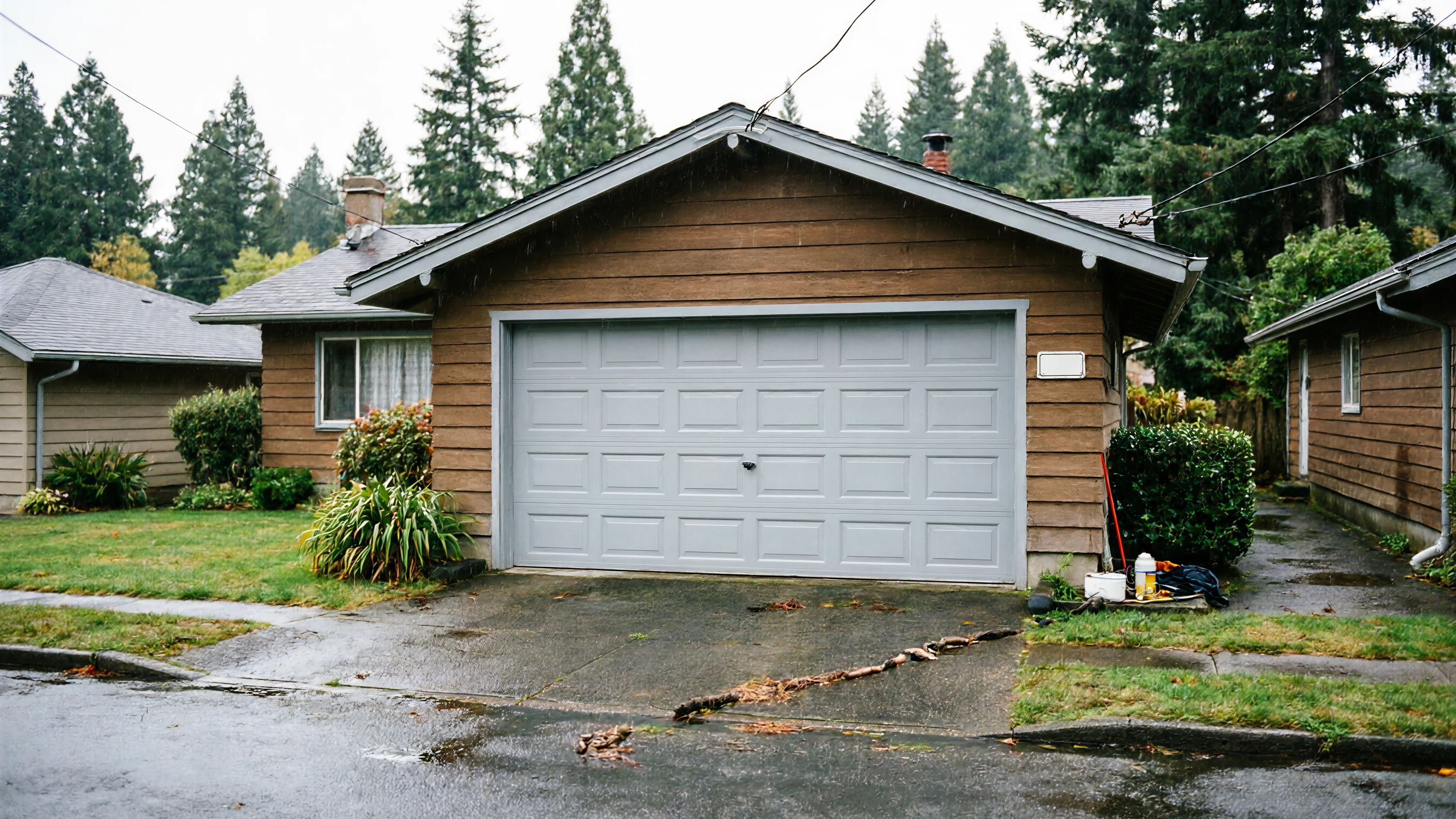
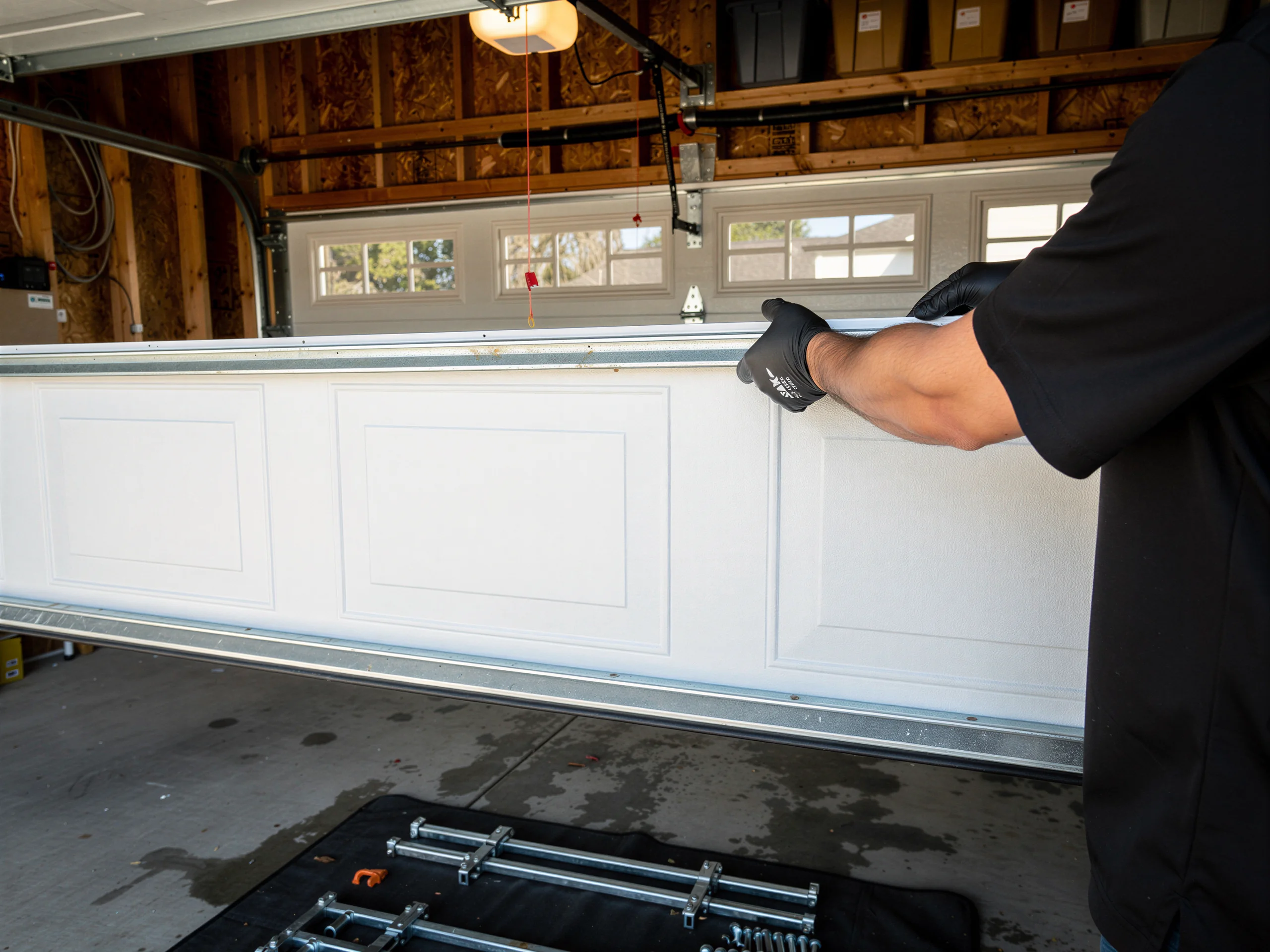
Most off-track calls on this kind of door run on the shorter side once we're on-site - freeing the panel, re-seating rollers, and resetting a bracket or two is usually a contained job, not a half-day project. It runs longer if the track itself is bent rather than just knocked loose, since a bent section needs to come off and get replaced rather than re-aligned, and longer still if the door came down hard enough to crack a stile or warp a panel on the way.
We're coming from Happy Valley, about 8 miles out, so factor that into when we can be on-site rather than how long the repair itself takes once we're there - the job length doesn't change with the drive.
Warning signs
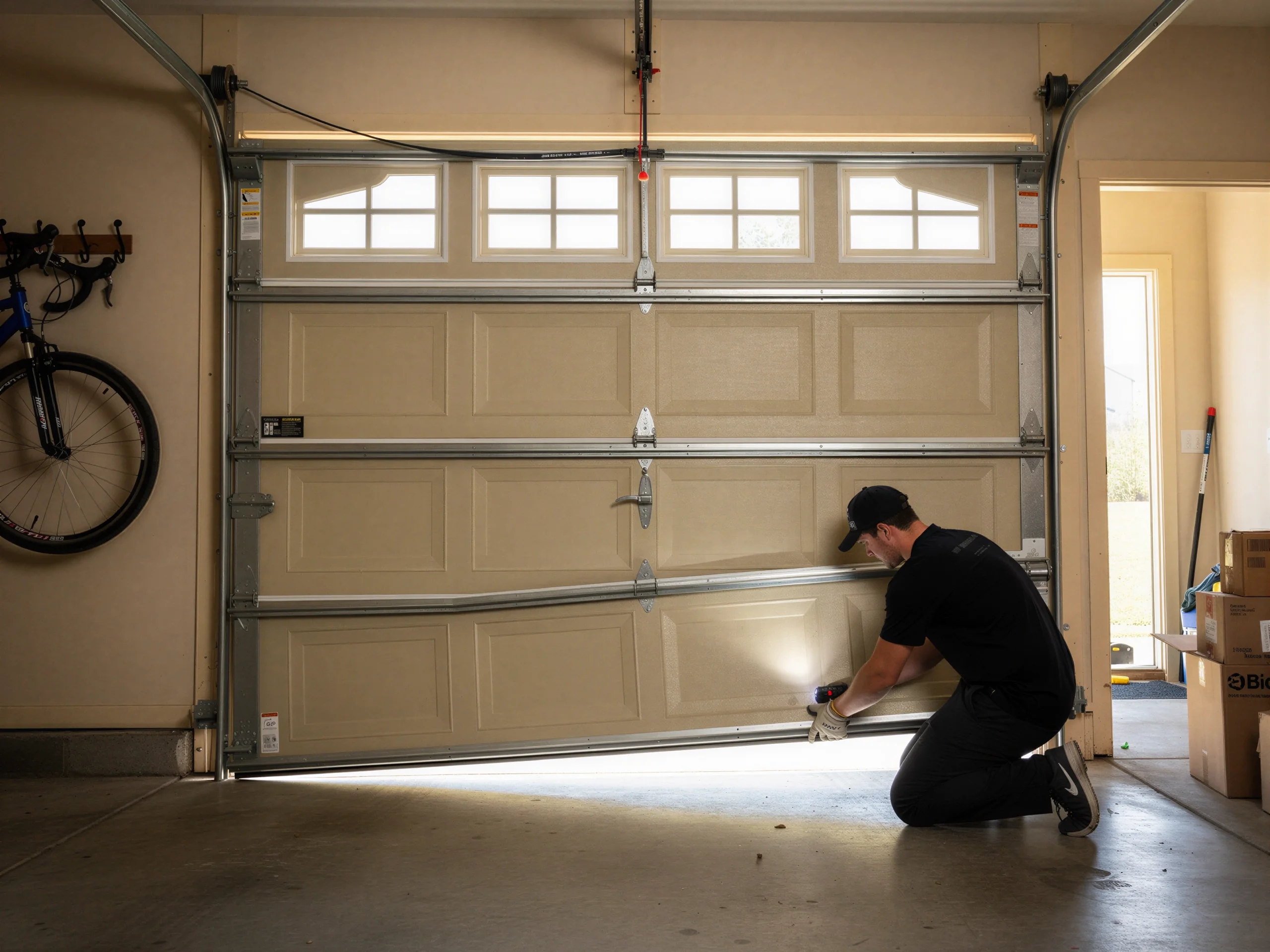
The door stops mid-travel and won't go up or down from the opener, or it moves but one corner sits visibly lower than the other as it travels.
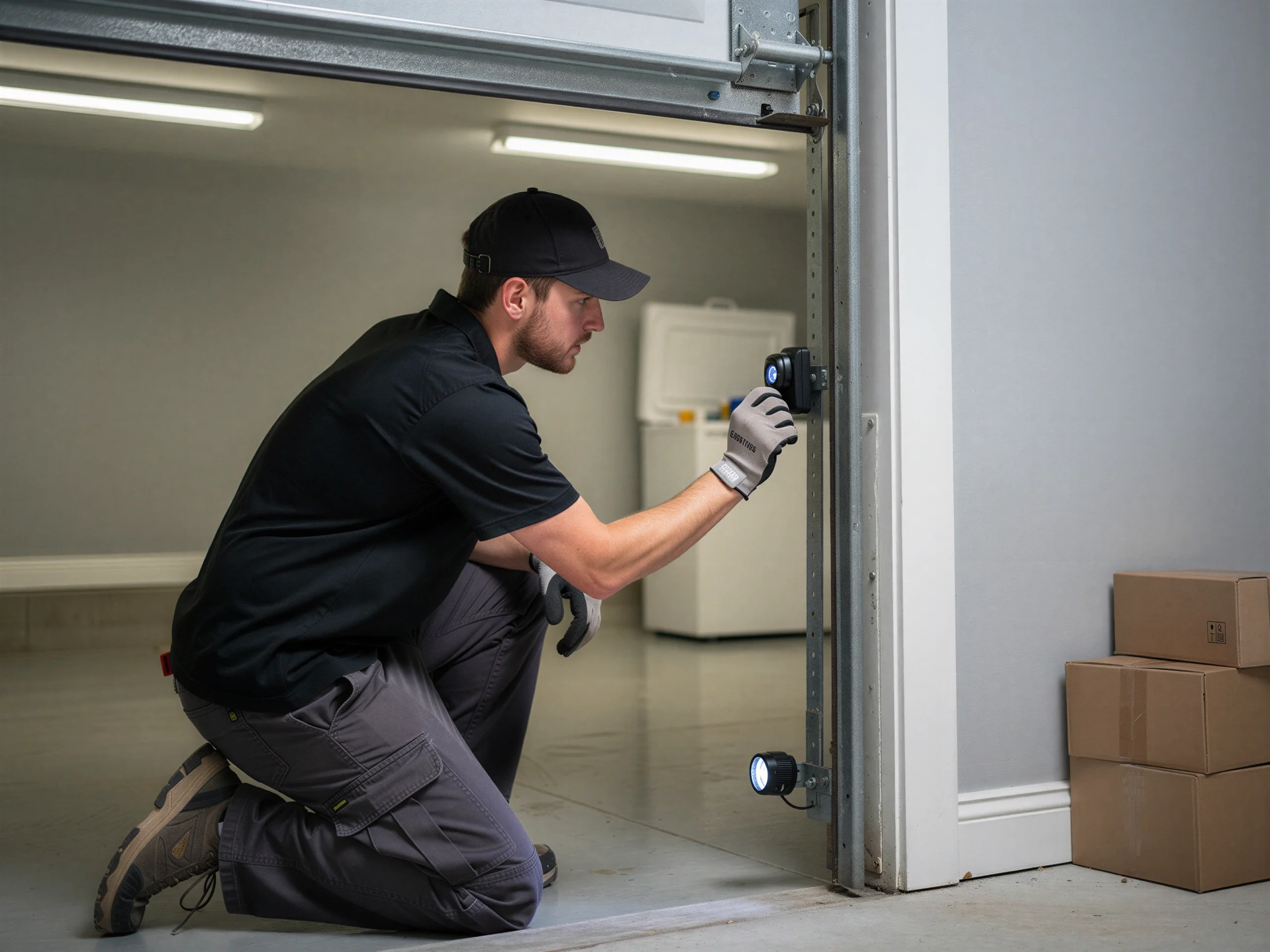
Sometimes you'll hear a grinding or scraping sound from one side of the track that wasn't there before, which is usually the roller riding the edge of the rail instead of sitting inside it.
On a steel sectional door from this era, you may also see a visible gap where the track has pulled away from the framing, usually a few inches below the top of the opening where the bracket takes the most leverage when the door's fully raised.
If the opener keeps trying to run the motor against a stuck door, you'll hear the motor straining or the opener will reverse and retry a few times before giving up - that's the opener doing its job by refusing to force a door that's binding against misaligned track.
DIY or pro
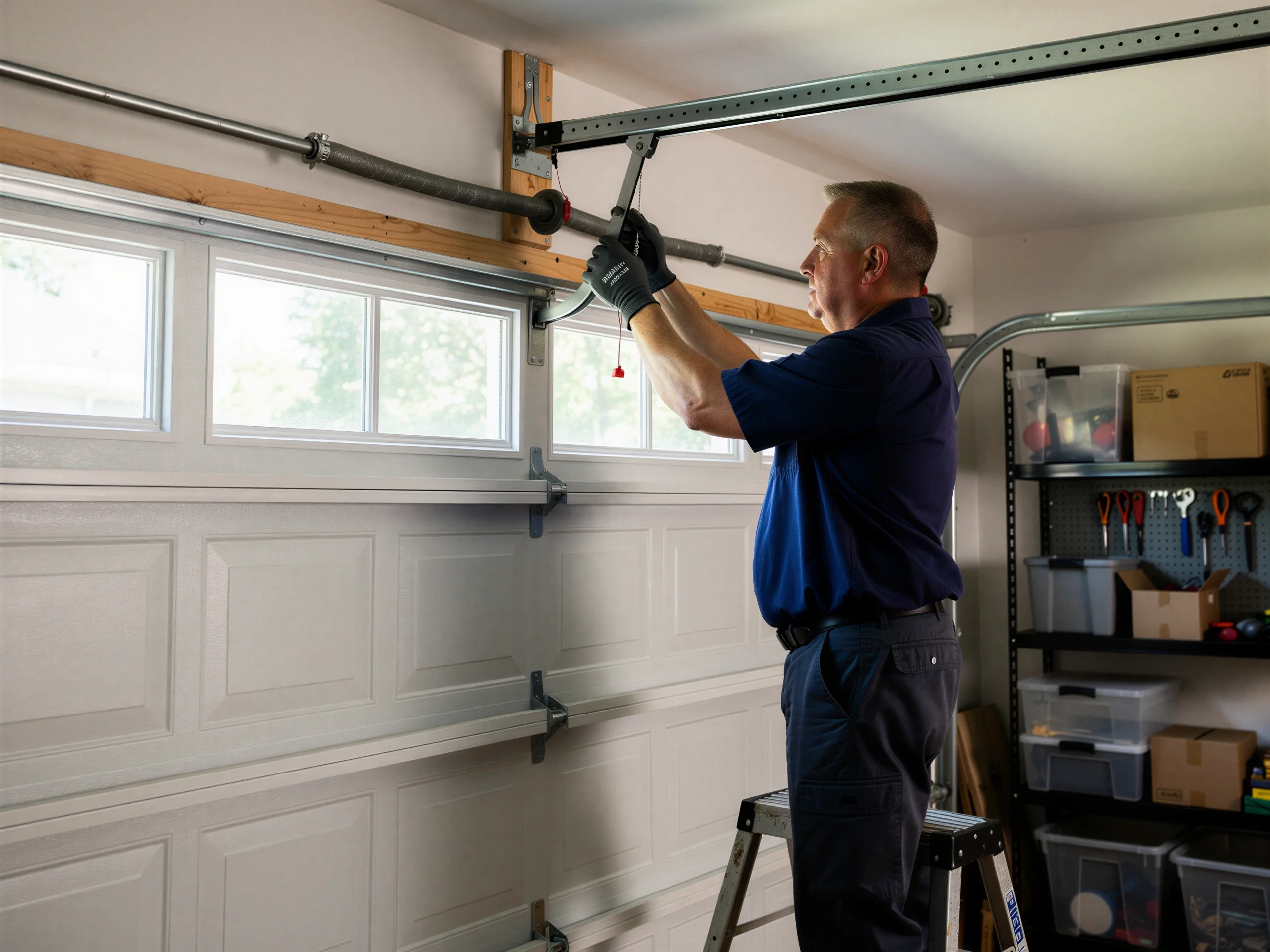
If the door is just sitting a little crooked and nothing's bent, some homeowners can get a roller back onto the rail by hand after releasing the opener and manually guiding the panel - that's a reasonable DIY move if you're comfortable working near a door under spring tension. What's not a DIY move is anything involving the torsion spring itself, or trying to force a door back onto a track that's visibly bent, since a bent track under load can let go suddenly.
Our honest limit here: if the bracket has pulled out of the framing and the wood underneath is split or soft, that's a carpentry repair before it's a door repair, and we'll say so rather than bolt a bracket into wood that won't hold it.
On the truck
For doors from Fairview's build era we stock standard-gauge steel track sections, nylon and steel rollers in the common stem lengths used on 1990s-2000s sectional doors, and the bracket hardware that mounts track to framing. We don't stock track for custom or oversized doors outside the standard residential widths, and if a panel's warped rather than just off-track, replacement panel availability depends on the door's original manufacturer, which we'll check on-site rather than promise in advance.
Questions
Usually it wasn't sudden - a bracket loosens or a roller wears down gradually over years, and the door finally jumps the rail on an ordinary open or close cycle. On doors built in the mid-1990s through early 2000s, light surface rust at bracket bolts from our mild, damp winters is a common slow cause.
If the door is stuck fully open and not sagging or leaning, you can usually drive out, but don't force the door shut by hand afterward. Leave it as-is and call, since a door that's off-track can drop unexpectedly if something shifts further.
We stock hardware sized for the standard residential doors common across this era of construction. If your door is custom-width or from an uncommon manufacturer, we check parts availability on-site before quoting a fix rather than guessing.
Explore more
Ready when you are
Happy Valley Garage Door Pros repairs and installs garage doors, springs and openers in Happy Valley, OR and the surrounding area.