Gear past rated cycles
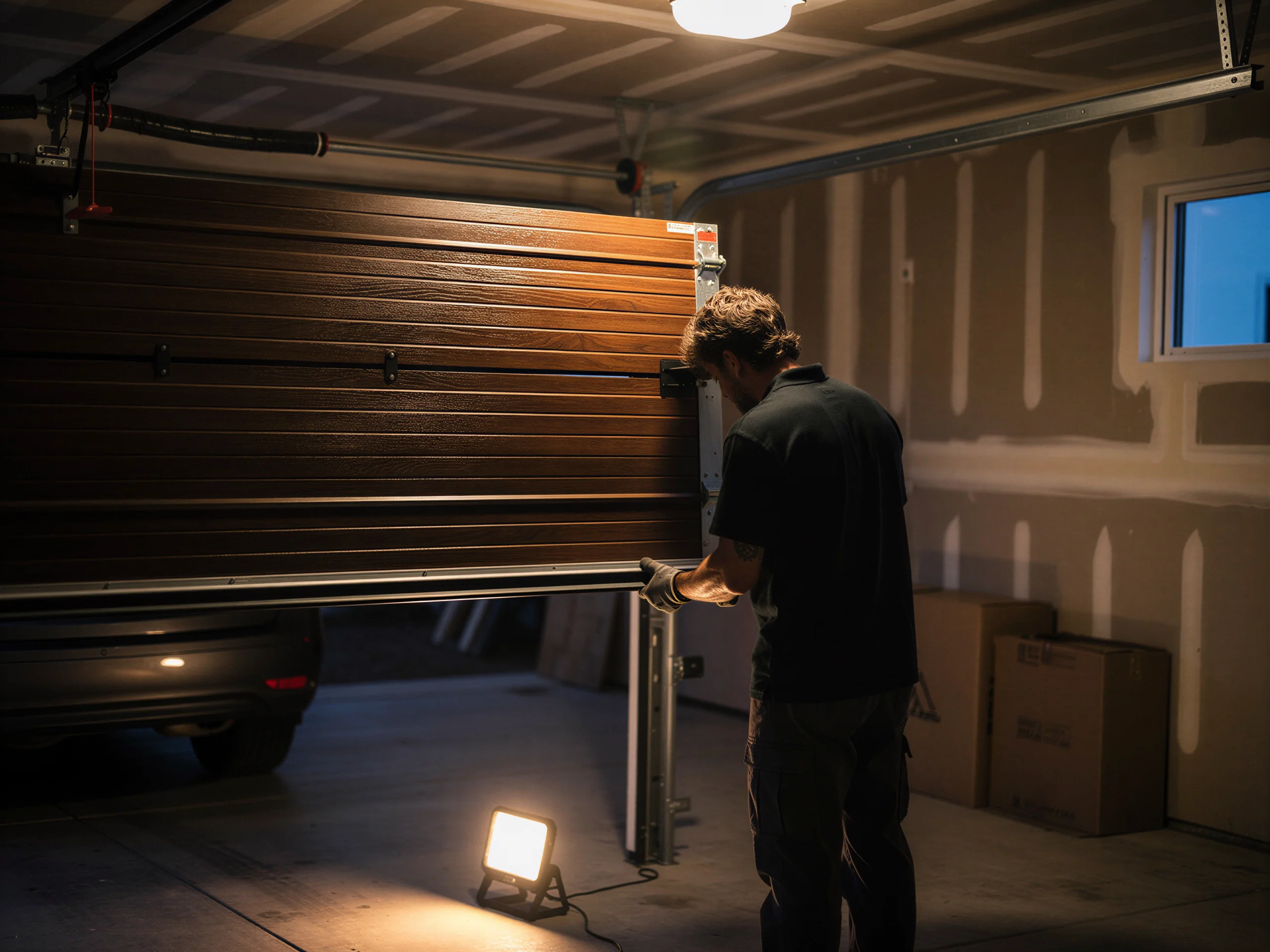
Some of that gear is long past its rated cycle count, and when it fails it tends to fail all at once - a spring snaps, a cable frays through, or a drum cracks.
Damascus, Happy Valley
Broken spring or dead opener in Damascus? We cover this stretch of 1970s-era homes from Happy Valley, just 3 miles out, with repairs matched to original hardware.
Pricing
What a broken door costs to fix in Damascus depends mostly on what's actually failed and how old the hardware is. Most houses out here went up around 1978, give or take a decade either side, which means a lot of garages still run the torsion springs, extension cables, and openers that came standard on mid-to-late-70s construction.
Some of that gear is long past its rated cycle count, and when it fails it tends to fail all at once - a spring snaps, a cable frays through, or a drum cracks.
We don't quote a price blind over the phone, because a snapped spring on a single door and a seized opener motor on a double door are two different jobs with two different parts lists.
What we can tell you is that older torsion hardware, the kind common on homes from this era, sometimes needs a part that isn't sitting on a standard truck shelf, which can add a day if it has to come in. We'll tell you straight if that's the case before we start, not after.
Warning signs
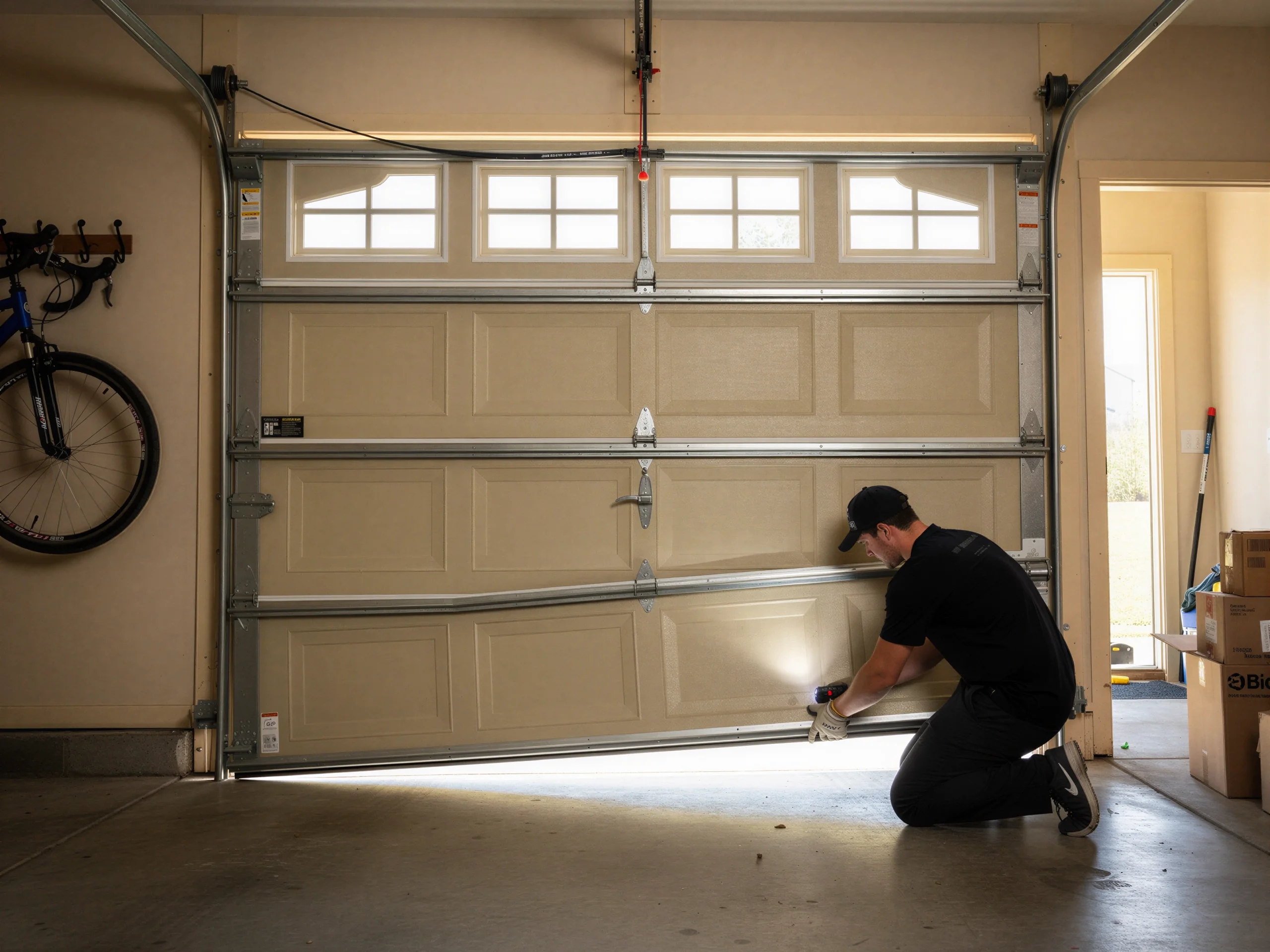
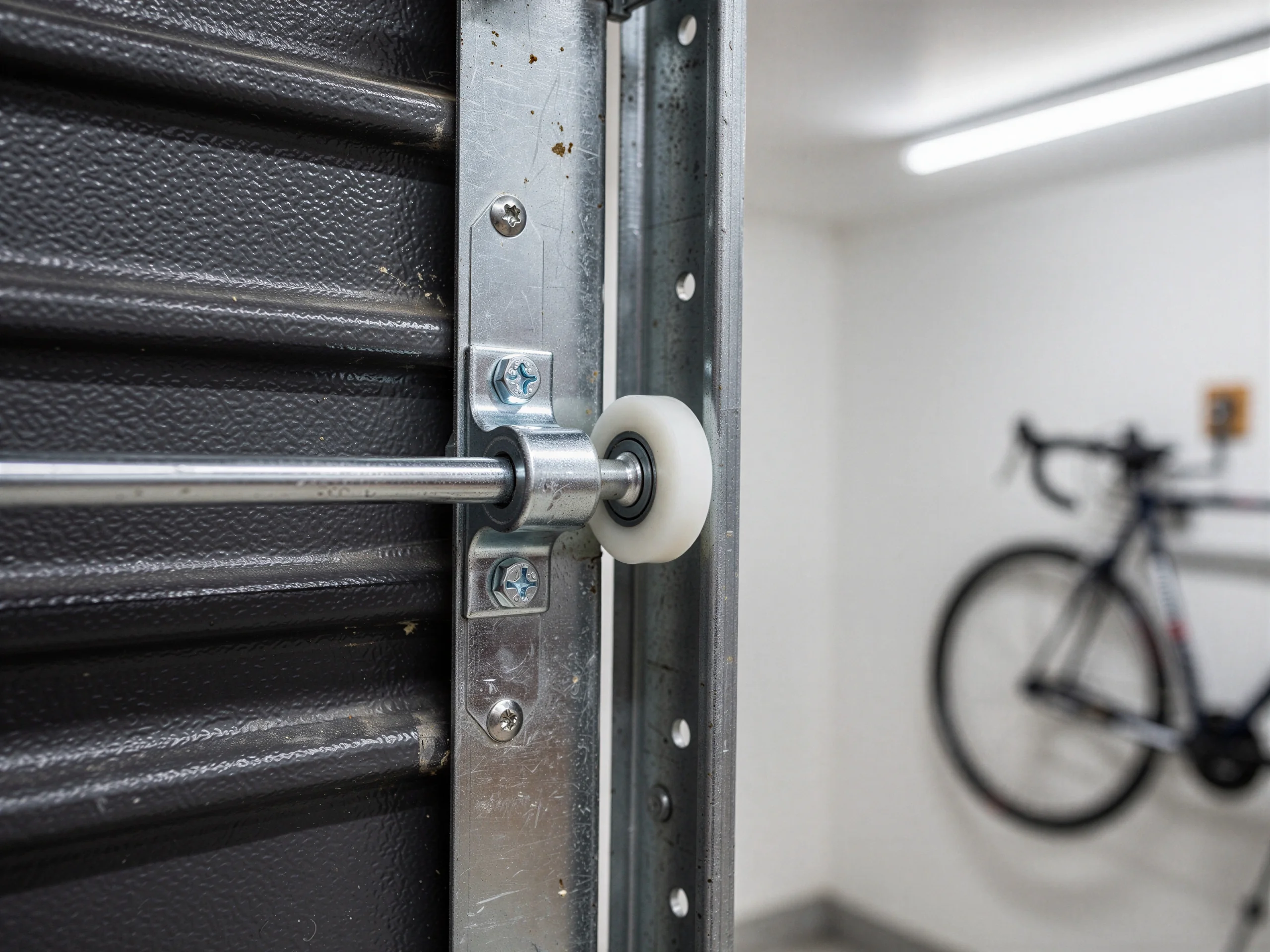
If your door won't budge, won't stay up, or dropped suddenly with a loud bang, you're likely dealing with a spring that's given out - common on doors installed when this part of Damascus was first built out, since torsion springs have a service life measured in cycles, not years, and a few decades of daily use adds up. If the opener hums but the door doesn't move, that's usually a stripped gear or a dead capacitor, not the motor itself. Damascus sits in a mild climate with occasional freeze nights, and cold mornings can make a tired spring or a gummed-up track show its weakness first thing - the door that struggled all winter finally quits on the coldest morning of the year. Rollers that have gone from round to flat-sided, cables with visible fraying at the drum, or a track that's pulled away from the wall are all signs the door was already on its way out before today. None of this is really about the weather causing damage - it's about weather exposing hardware that was already near the end of its working life.
DIY or pro
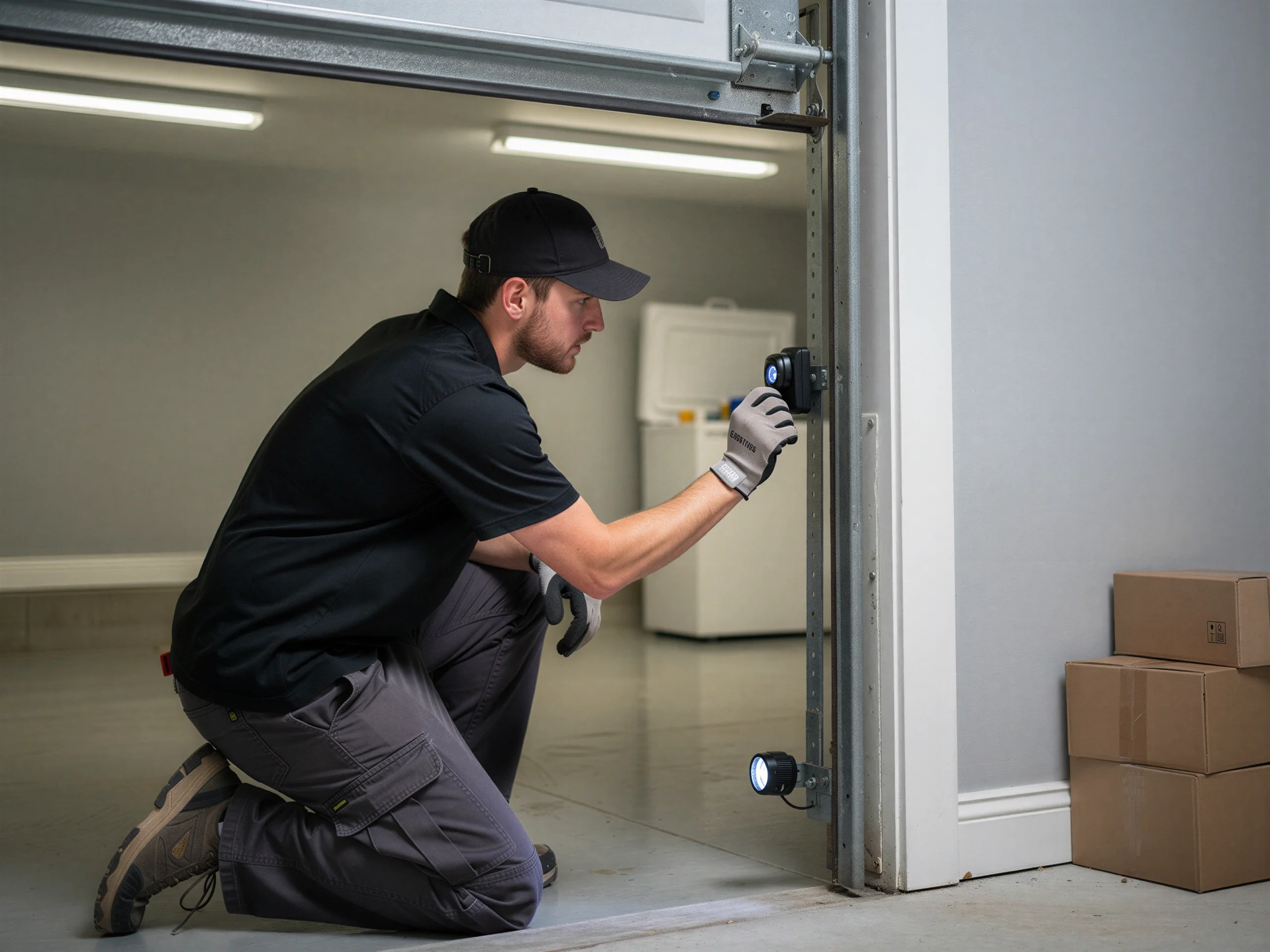
A loose bracket or a sensor that's been knocked out of alignment is something a lot of homeowners can handle themselves - wipe the sensor eyes, check they're pointed at each other, and you're often done.
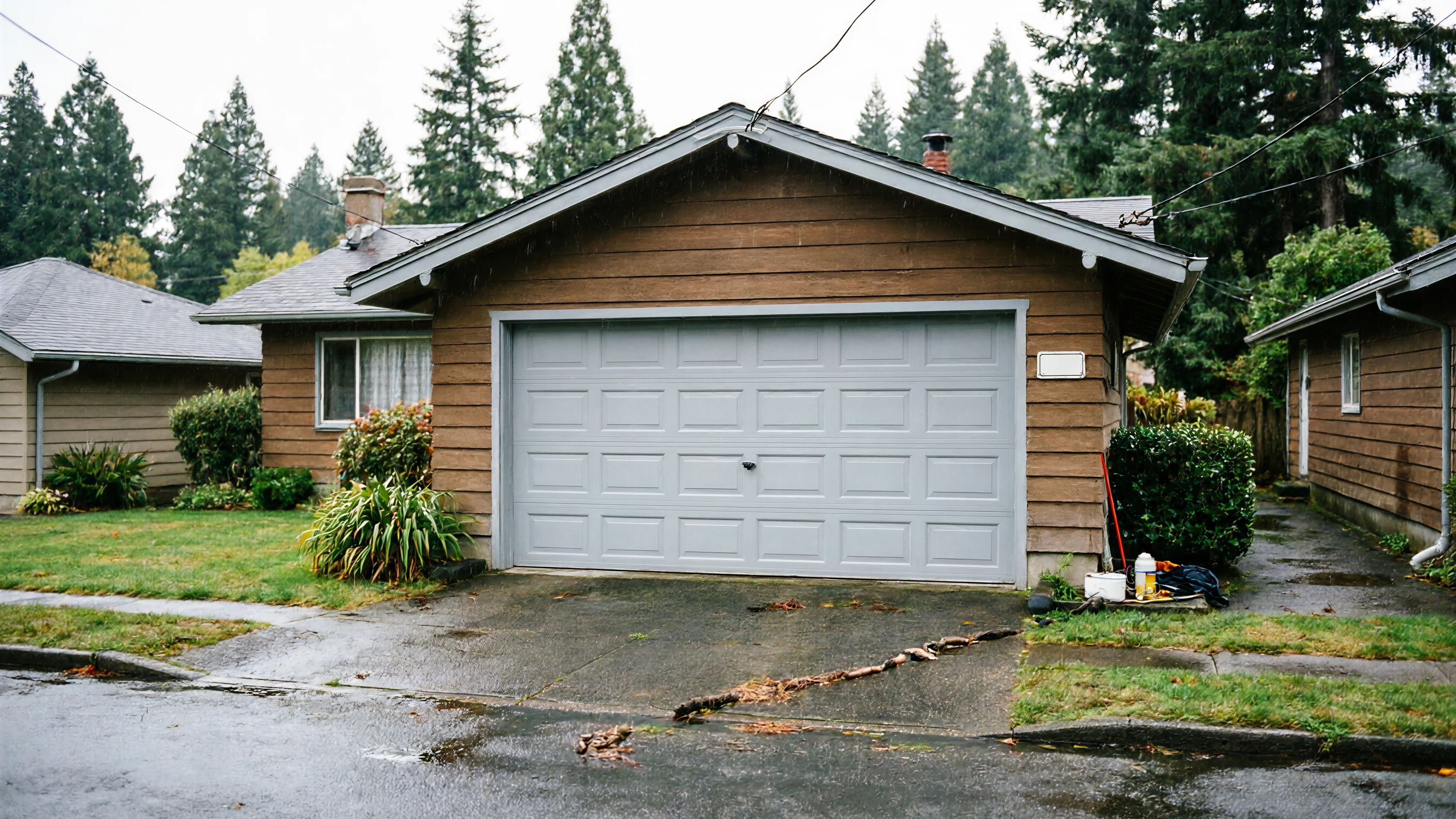
A broken spring is not that job. Torsion springs are under enough tension to break bones, and on the older setups still common around Damascus, the drums and cable attachment points aren't always the same as what's sold in a big-box repair kit today.
If the door is off its track, or a cable has snapped and left the door hanging crooked, don't try to muscle it back into place or cut the cable free - that's exactly how people get hurt.
Our honest limit here: we don't recommend DIY spring or cable work on any door, full stop, and we won't walk you through it over the phone. Sensor alignment, loose screws, lubricating a track - fine. Anything under tension - call it in.
The repair
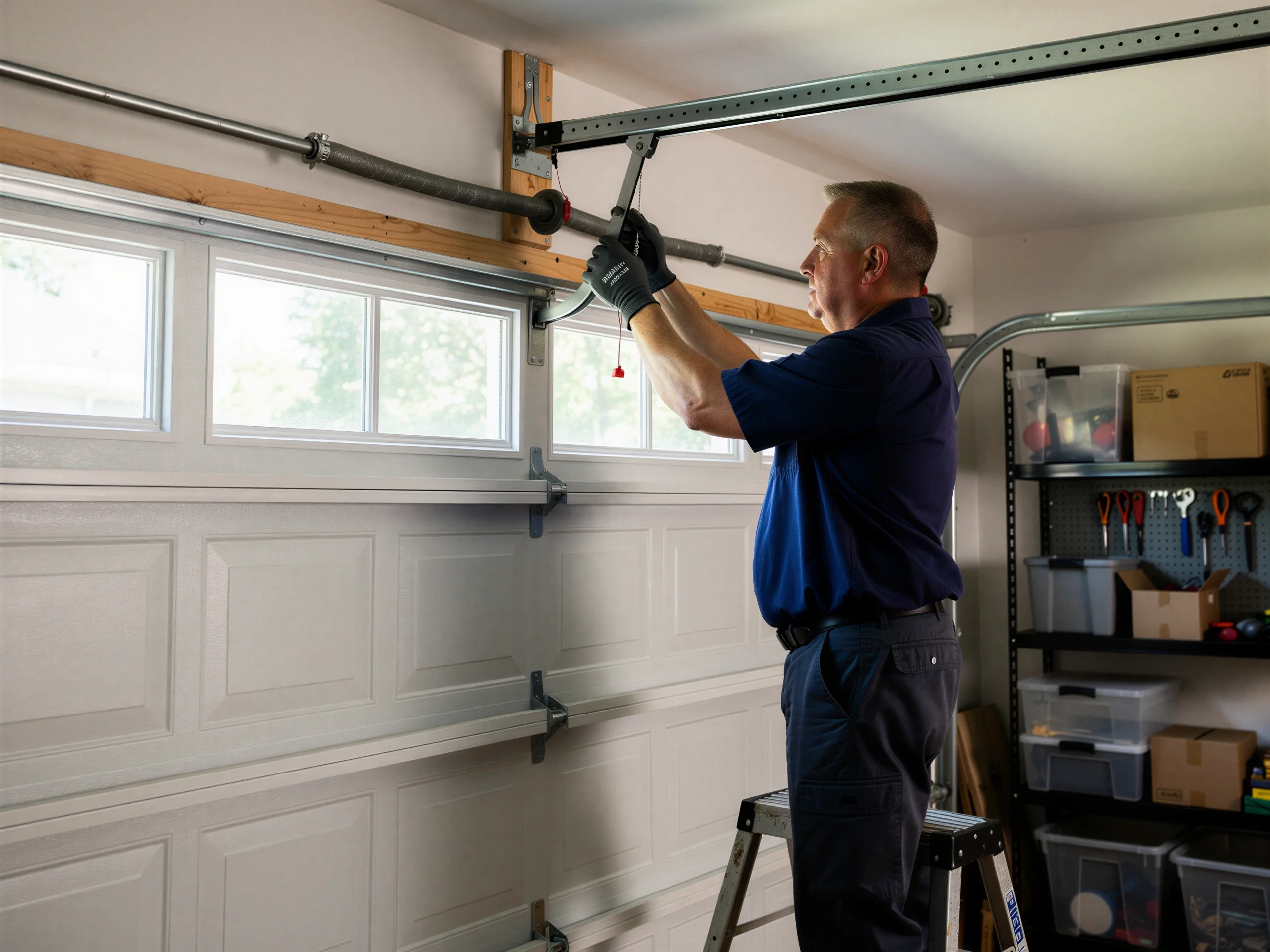
Once we're on site, the first step is figuring out whether we're looking at a worn part that needs replacing or an opener system that's simply outdated for the door it's running.
Given that most garages in this area were built with hardware standard to the late 1970s, we often find mismatched replacement parts from past repairs - a newer cable on an old drum, or an opener swapped in without updating the travel limits to match.
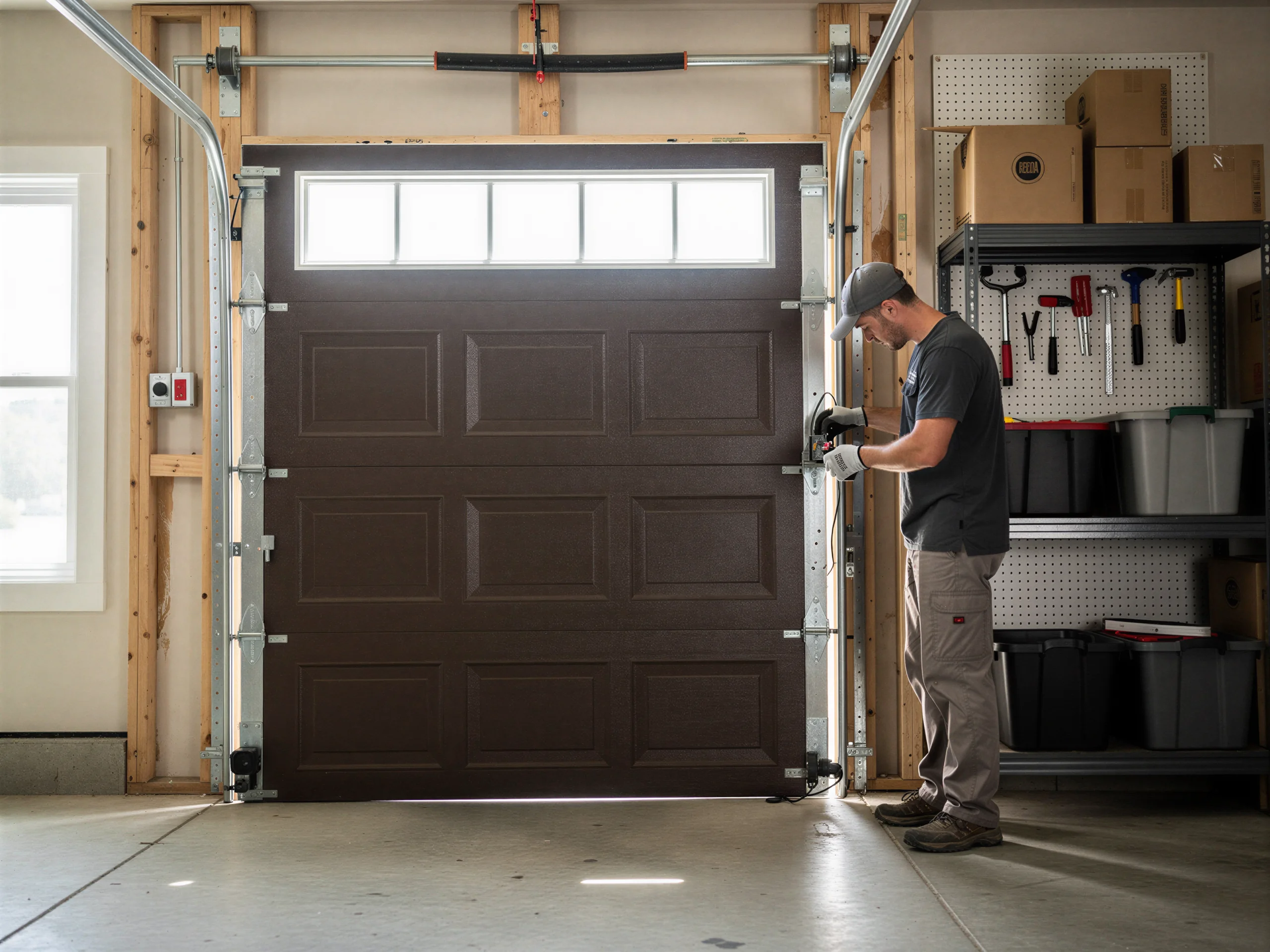
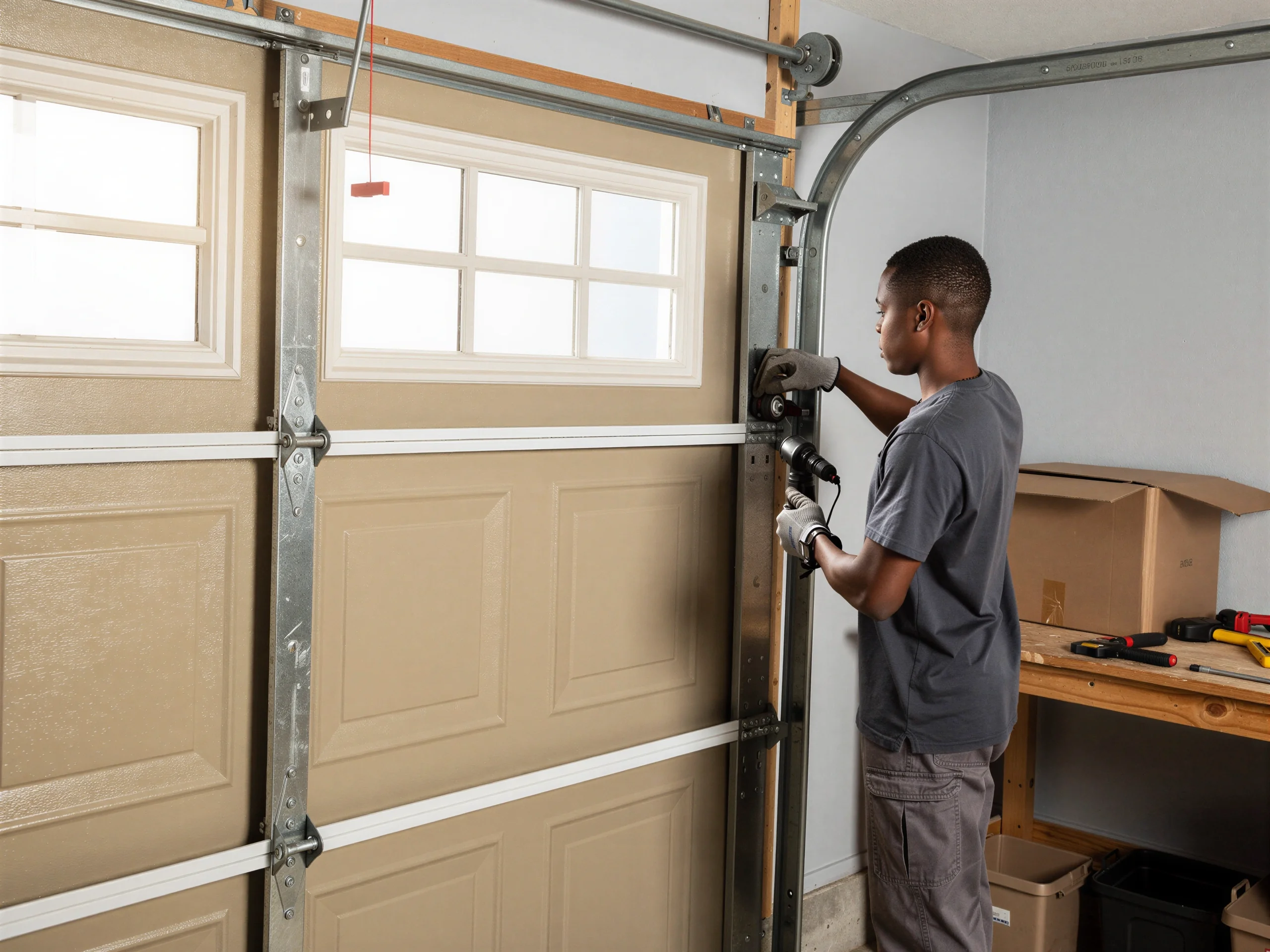
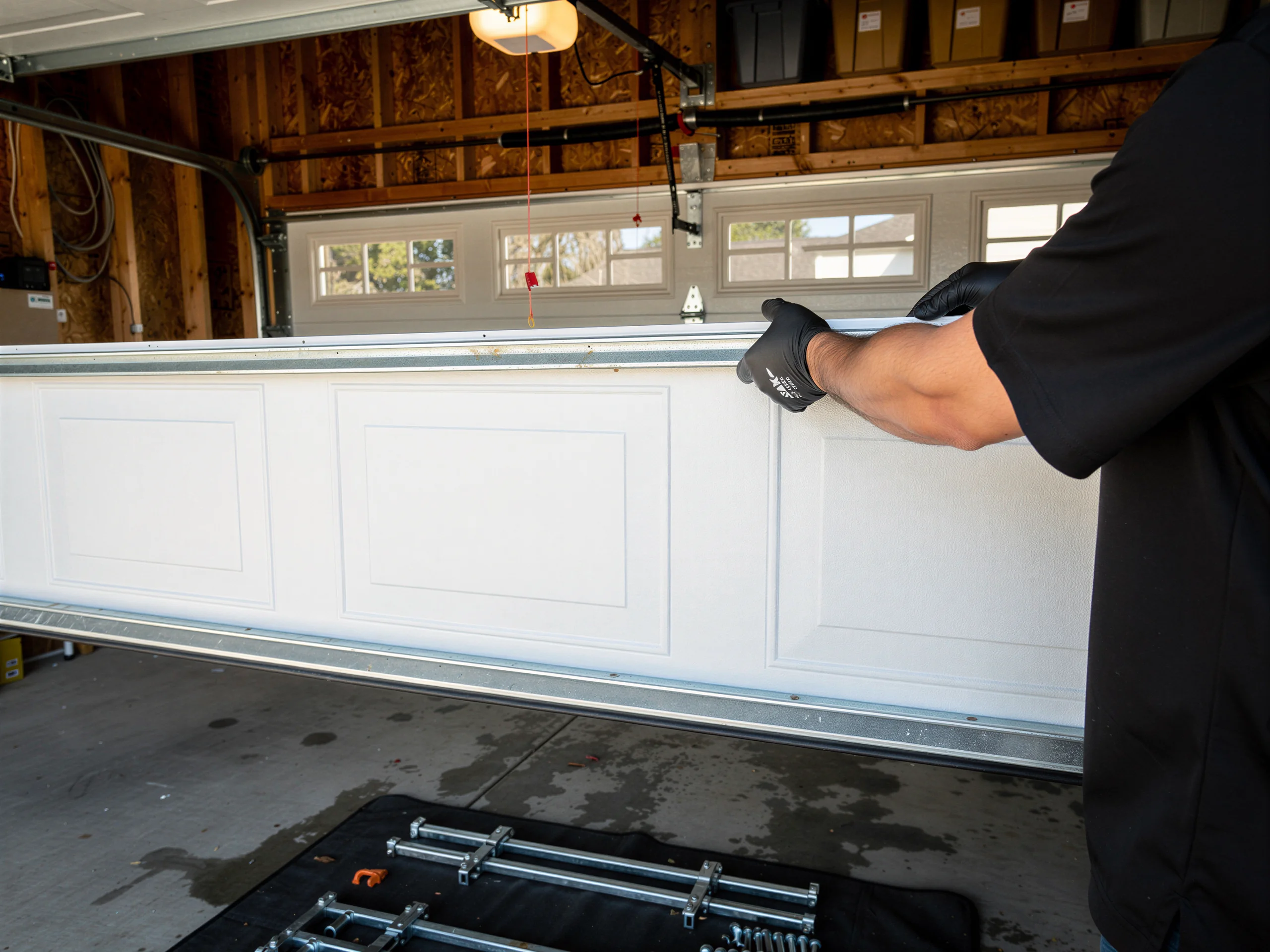
We replace springs in matched pairs where that's the safer call, swap cables and rollers as a set rather than piecemeal, and reset the opener's travel and force settings once new hardware is in.
If the door itself is still sound but the opener's circuit board has failed, sometimes replacing just the opener is the more sensible fix than touching the door hardware at all. We'll show you what failed and why before we close anything up.
Timing
Damascus is about 3 miles out from our base in Happy Valley, so travel time here isn't the long pole in the job - the job itself is. A straightforward spring replacement is usually a same-visit fix once we're there. Where it stretches out is parts: if your setup uses an older drum or cable configuration from the original 1978-era installation that isn't a stock size, that piece sometimes has to be ordered, which can push the full fix a day or two out even though we can usually get the door safe and closable the same day we see it. We'd rather tell you that up front than promise a one-visit fix and miss it.
Questions
Torsion springs fail by cycle count, not a calendar. A lot of Damascus garages still have springs from the home's original 1970s-era build, and once a spring nears the end of its rated cycles, it can let go suddenly rather than gradually weakening - often on a cold morning when the metal is stiffer.
No. We're based in Happy Valley, about 3 miles away, and cover Damascus from there. That's close enough that travel isn't the bottleneck on most jobs - the hardware and parts involved are what determines timing.
We don't recommend it. Torsion springs hold enough stored tension to cause serious injury, and older torsion setups common on homes from this area don't always match parts sold in standard repair kits. Sensor and track adjustments are fine to DIY - spring and cable work isn't.
Not always. If the door hardware is sound but the opener's board or motor has failed, replacing just the opener is often the more sensible call than touching the door itself. We check both before recommending either.
Explore more
Ready when you are
Happy Valley Garage Door Pros repairs and installs garage doors, springs and openers in Happy Valley, OR and the surrounding area.